| Location: | Admire, USA |
|---|---|
| Age: | 4.5 Billion Years |
| Size: | H24.8cm W19.5cm D2.5mm |
| Availability: | Sold |
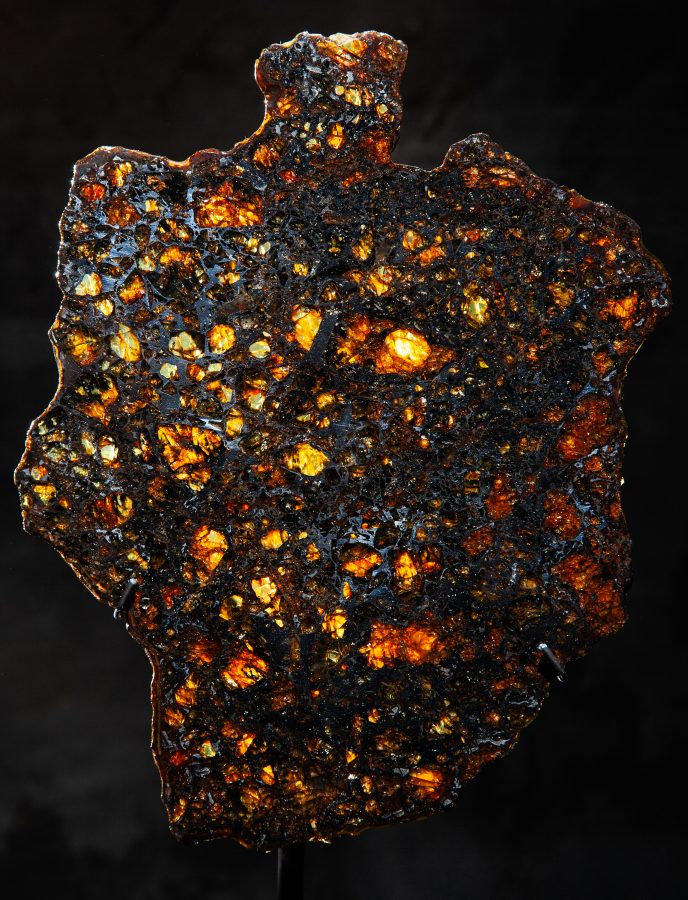
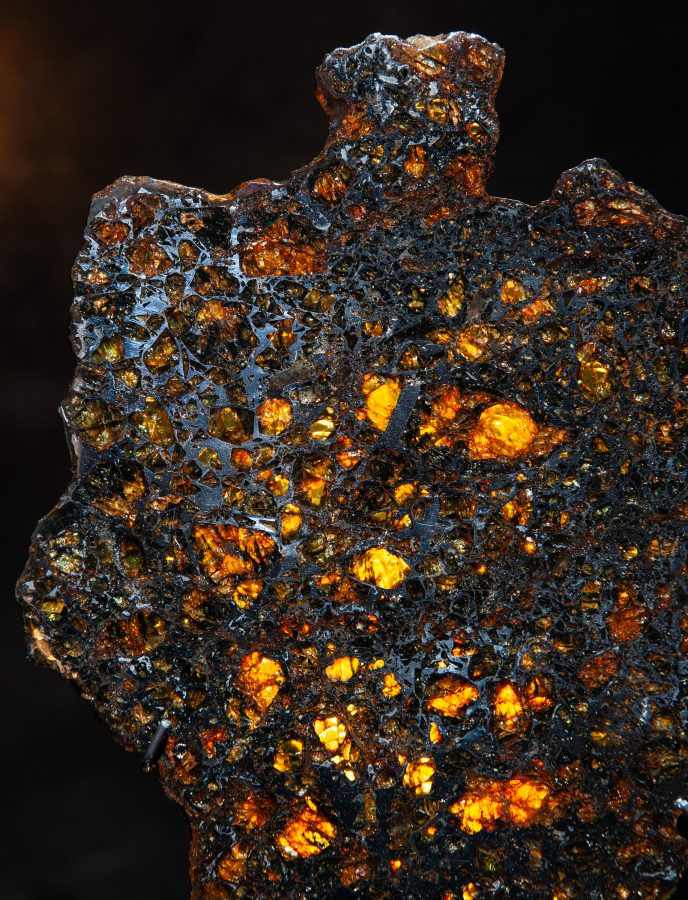
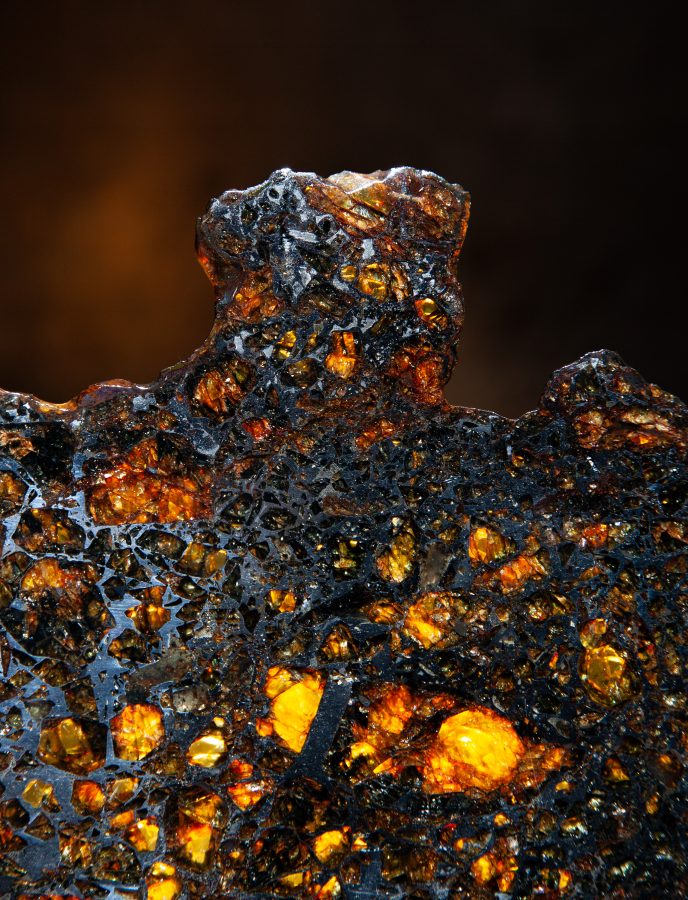
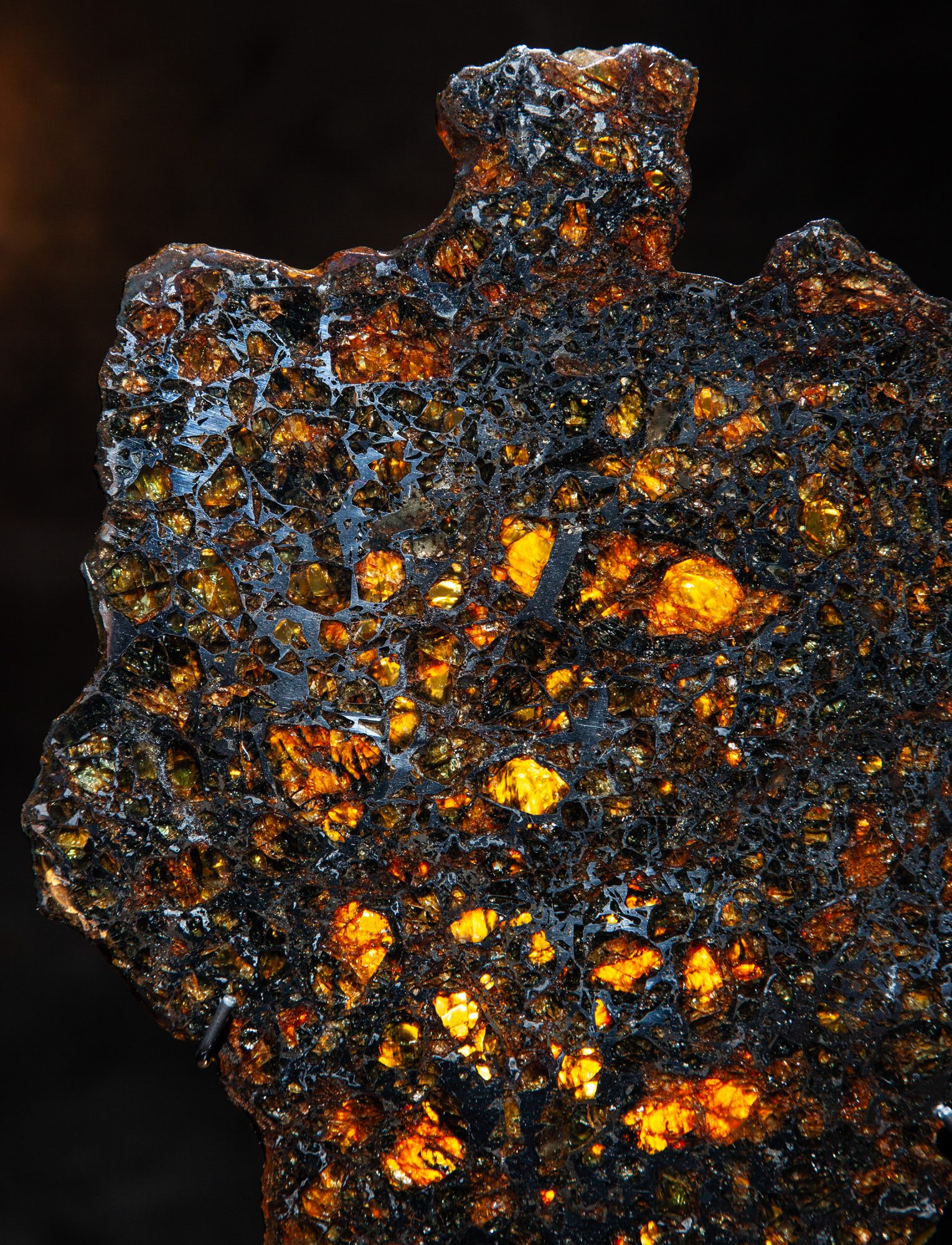
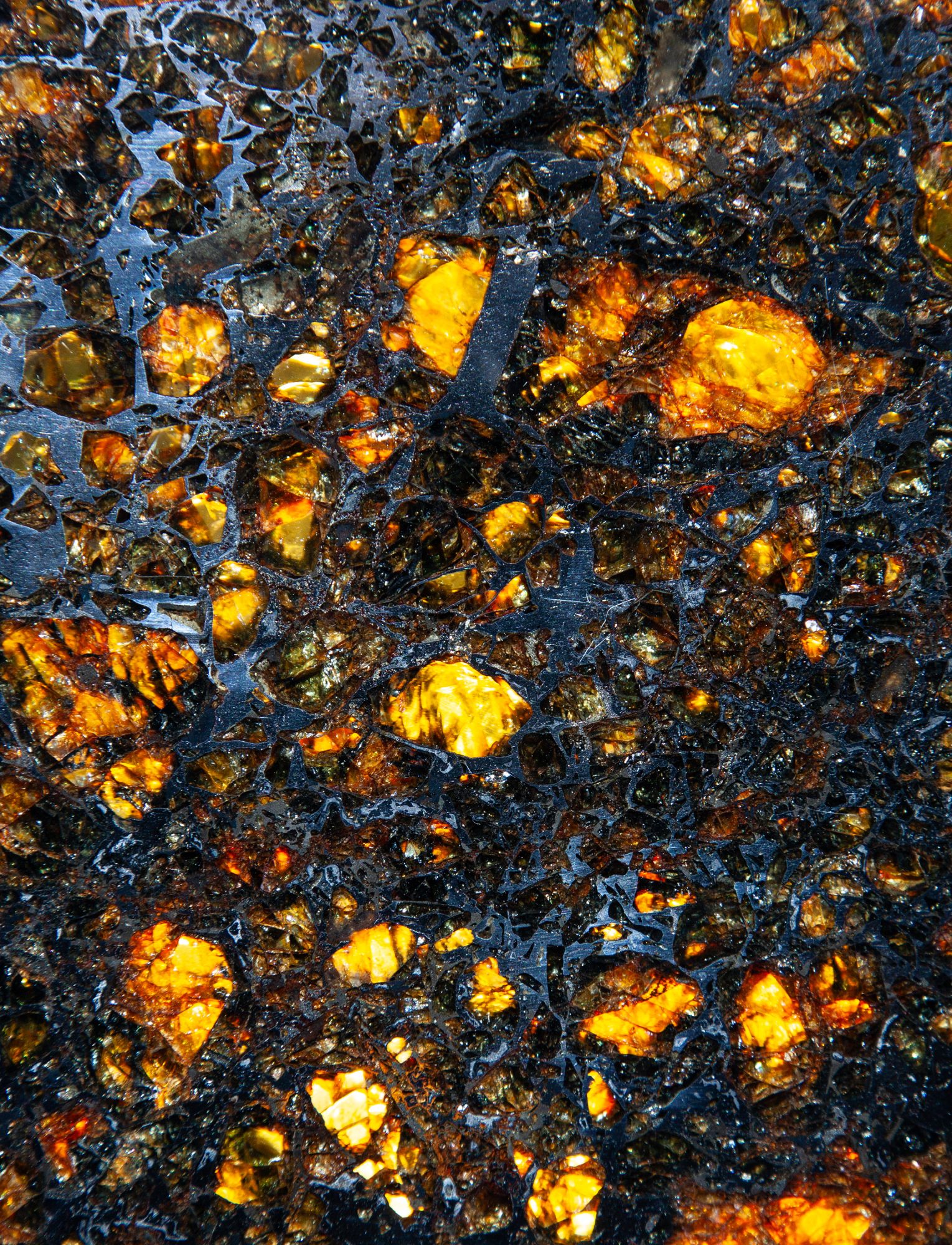
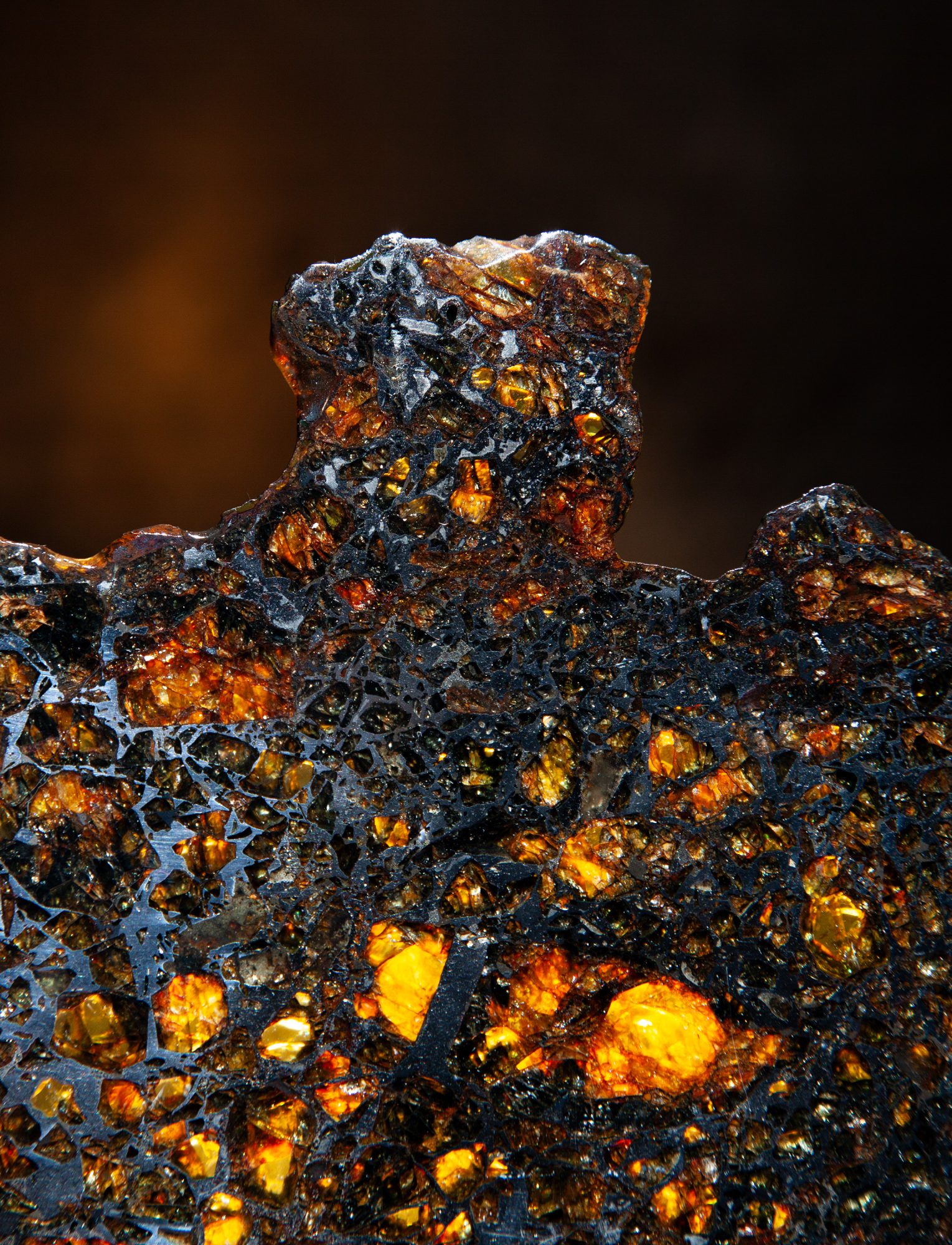
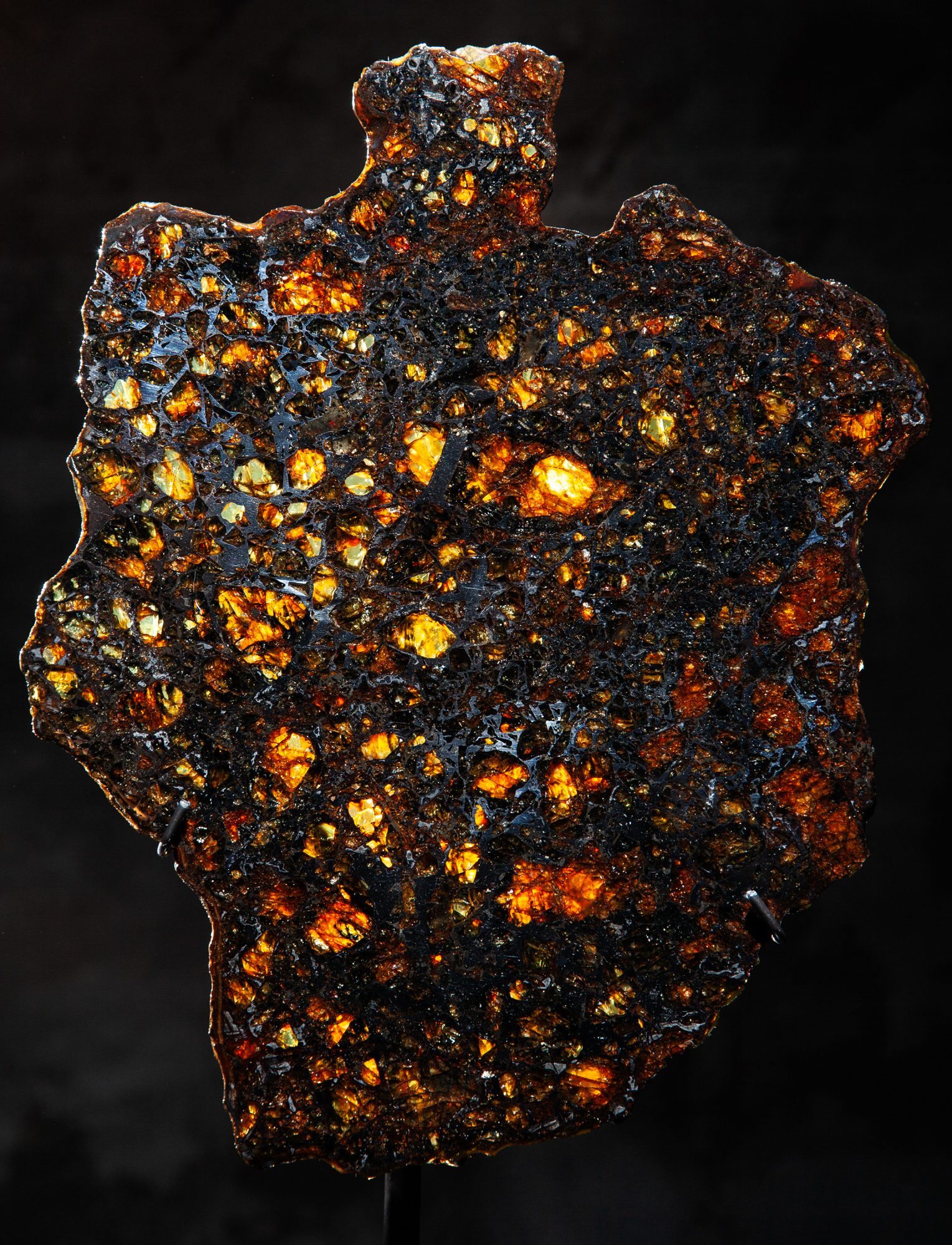
Admire is one of the most celebrated meteorites on Earth—a stunning example of a pallasite, a rare and spectacular class that sits at the boundary between metal and stone. Pallasites are thought to form at the core–mantle boundary of differentiated asteroids, where iron-nickel metal separated and mingled with droplets of olivine-rich silicate melt. Admire’s composition captures that dramatic mix: a gleaming iron-nickel alloy matrix studded with gleaming golden olivine crystals, like jewel-tone gems embedded in a metallic matrix. This dual nature gives Admire a beauty that is equally scientific and cinematic, a tangible link between planetary cores and the crust above them.
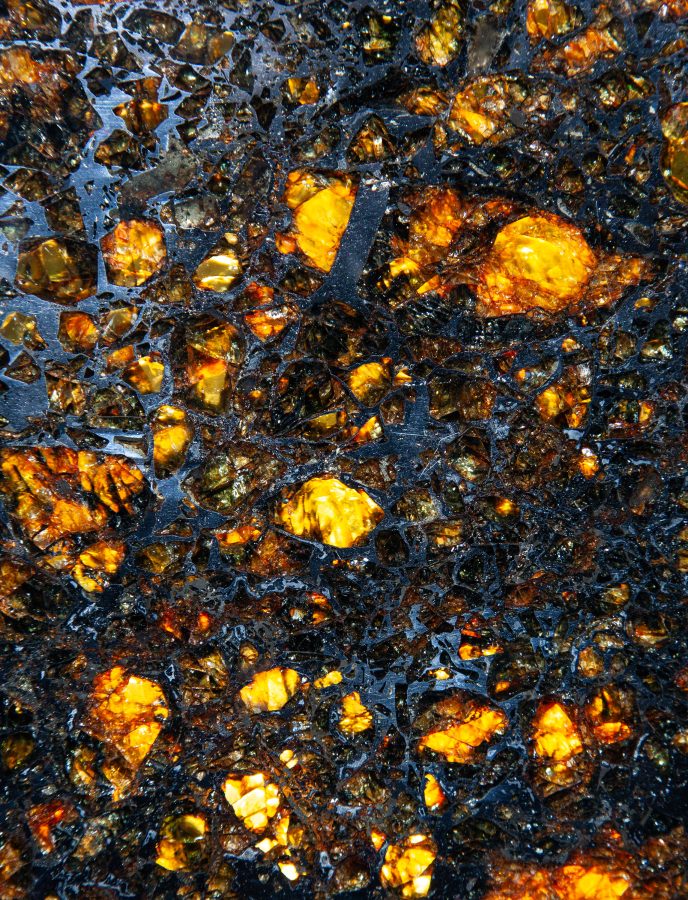
What makes Admire especially remarkable is its olivine crystals. Among pallasites, Admire hosts some of the largest olivine crystals known from meteorites, measuring many centimetres across in some specimens. These giants are not just pretty; they shed light on the conditions inside the parent asteroid where slow cooling allowed olivine crystals to grow to impressive sizes before being trapped in metal. The size and clarity of these crystals contribute to Admire’s striking appearance when the rock is sliced: a mosaic of translucent, golden-yellow blades of olivine set within a polished, reflective metallic backdrop. This contrast—crystal clarity against a silvery sheen—renders each cut a miniature work of planetary art.
The discovery of Admire occurred in the United States in the 19th century, though the precise date and finder are a part of meteorite lore that has been refined over time. Found in a prairie landscape that offered unassuming access to geologic treasures, Admire quickly earned renown for its dramatic aesthetics and rarity. As a forged product of a distant, ancient asteroid, Admire’s journey from the depths of space to a field in North America embodies the romance and mystery of meteorite hunting. Today we can marvel at the dramatic fusion of metal and crystal and contemplate the processes that shape planetary bodies light-years away.