| Species: | Sabalites sp |
|---|---|
| Location: | Wyoming, USA |
| Age: | 50 Million Years (Eocene) |
| Size: | H132cm W142cm D4cm |
| Price: | P.O.A |
| Availability: | Available | Enquire |
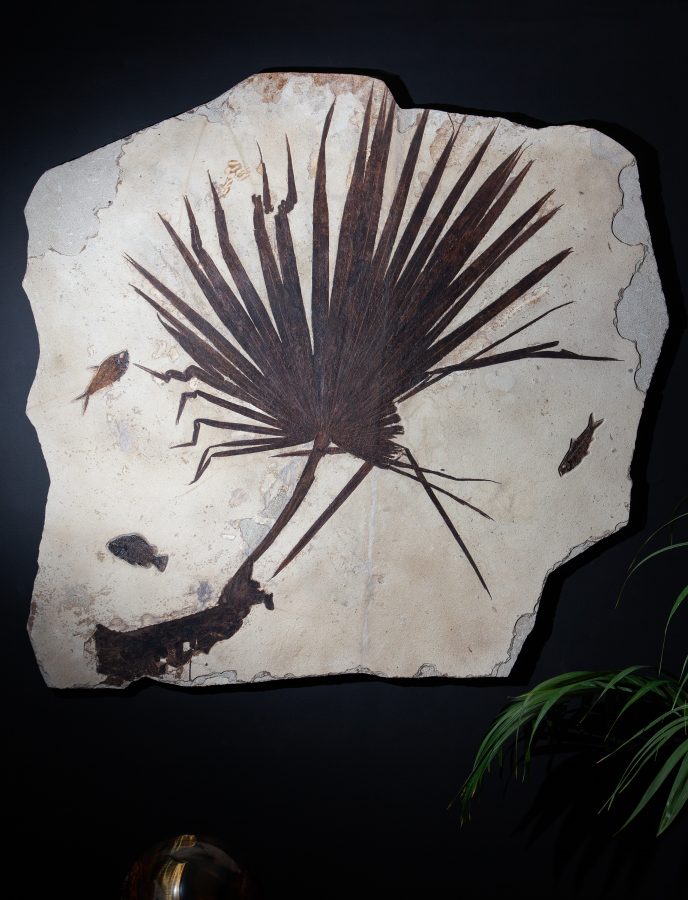
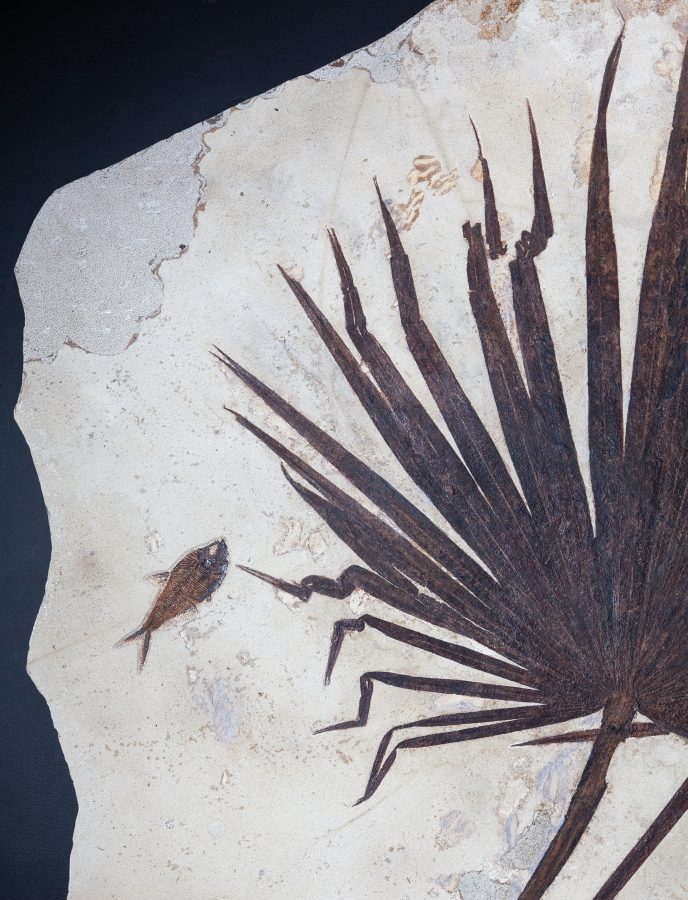
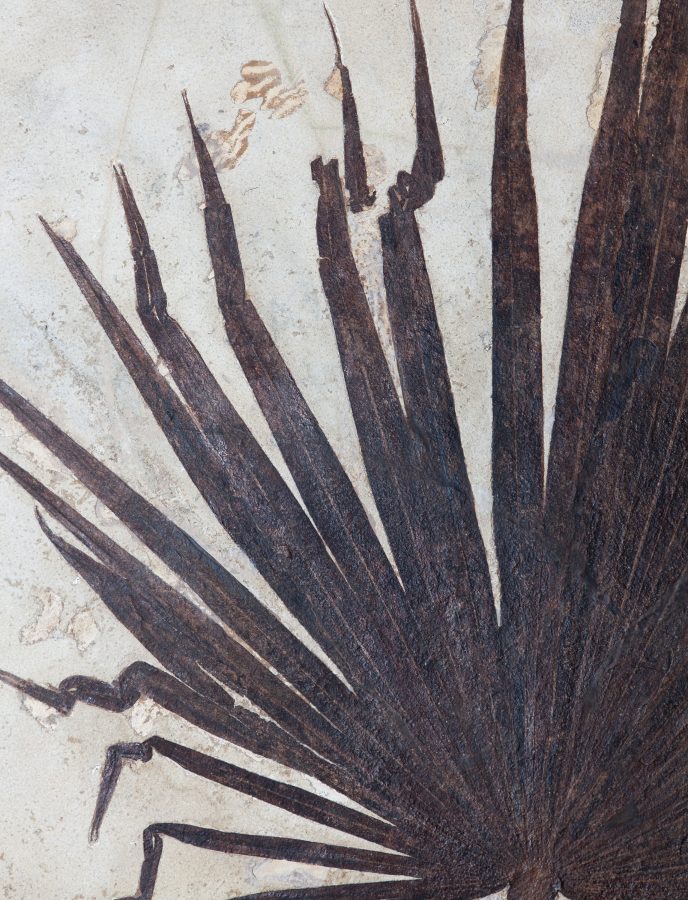
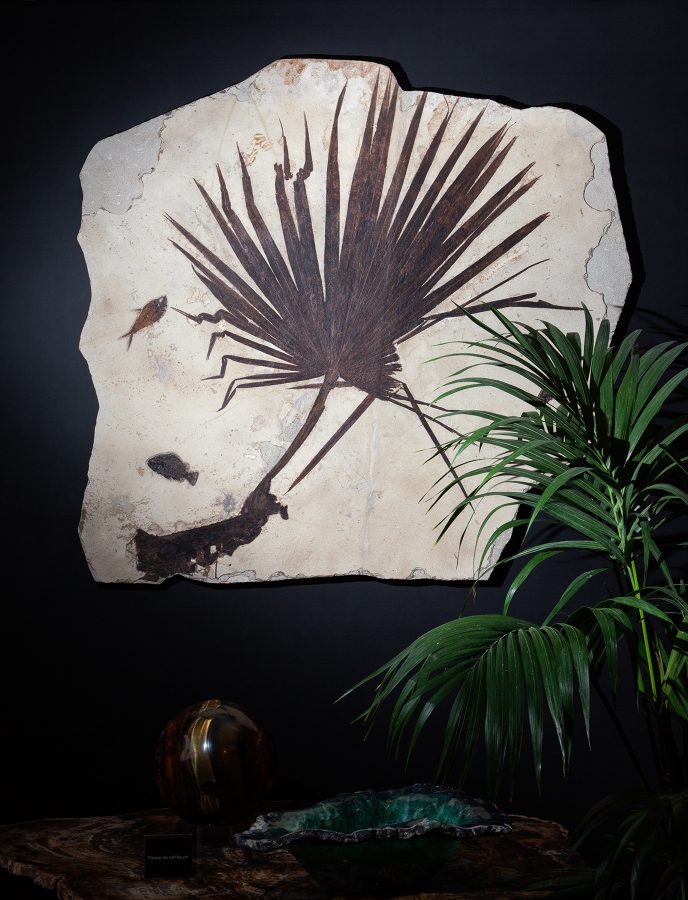
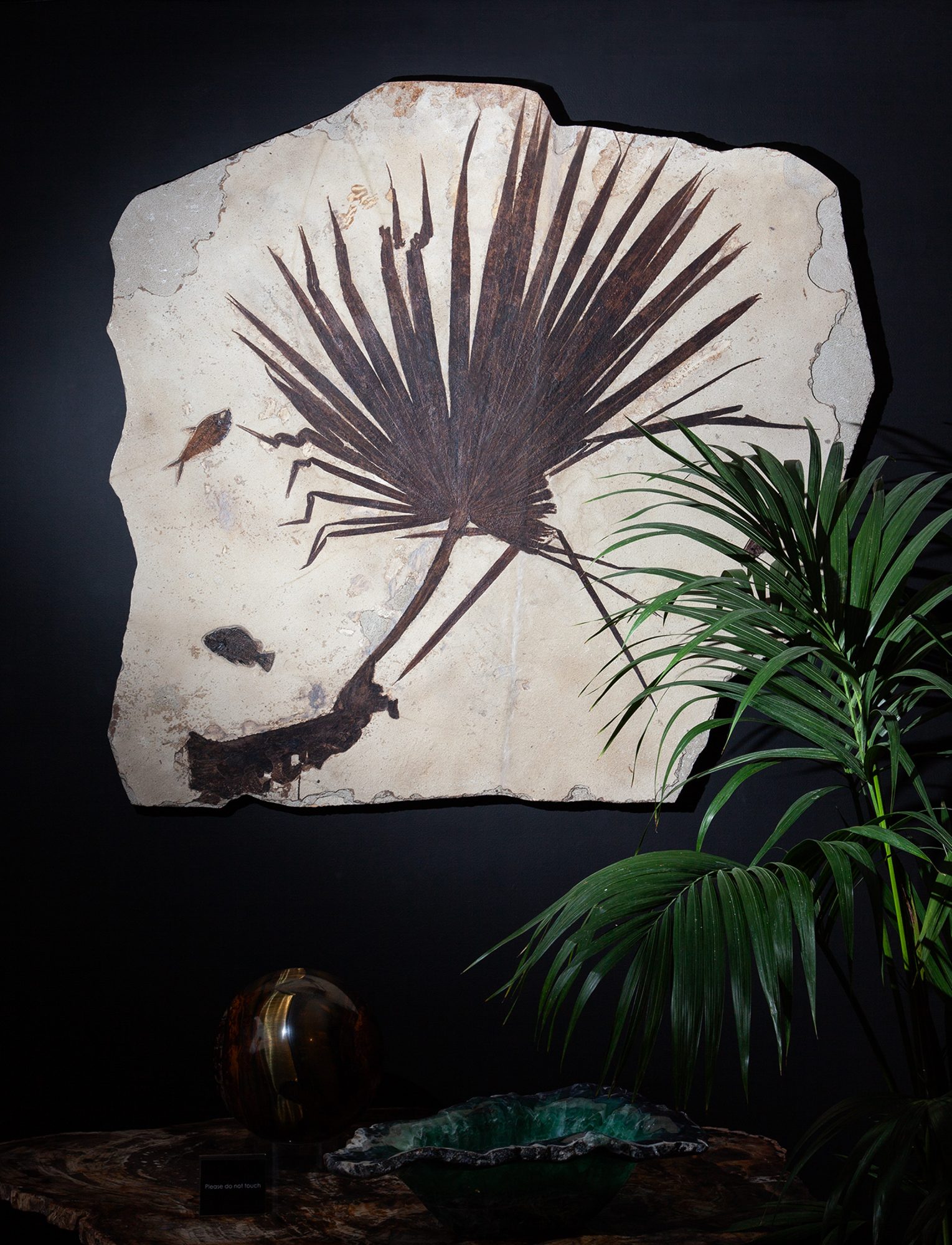
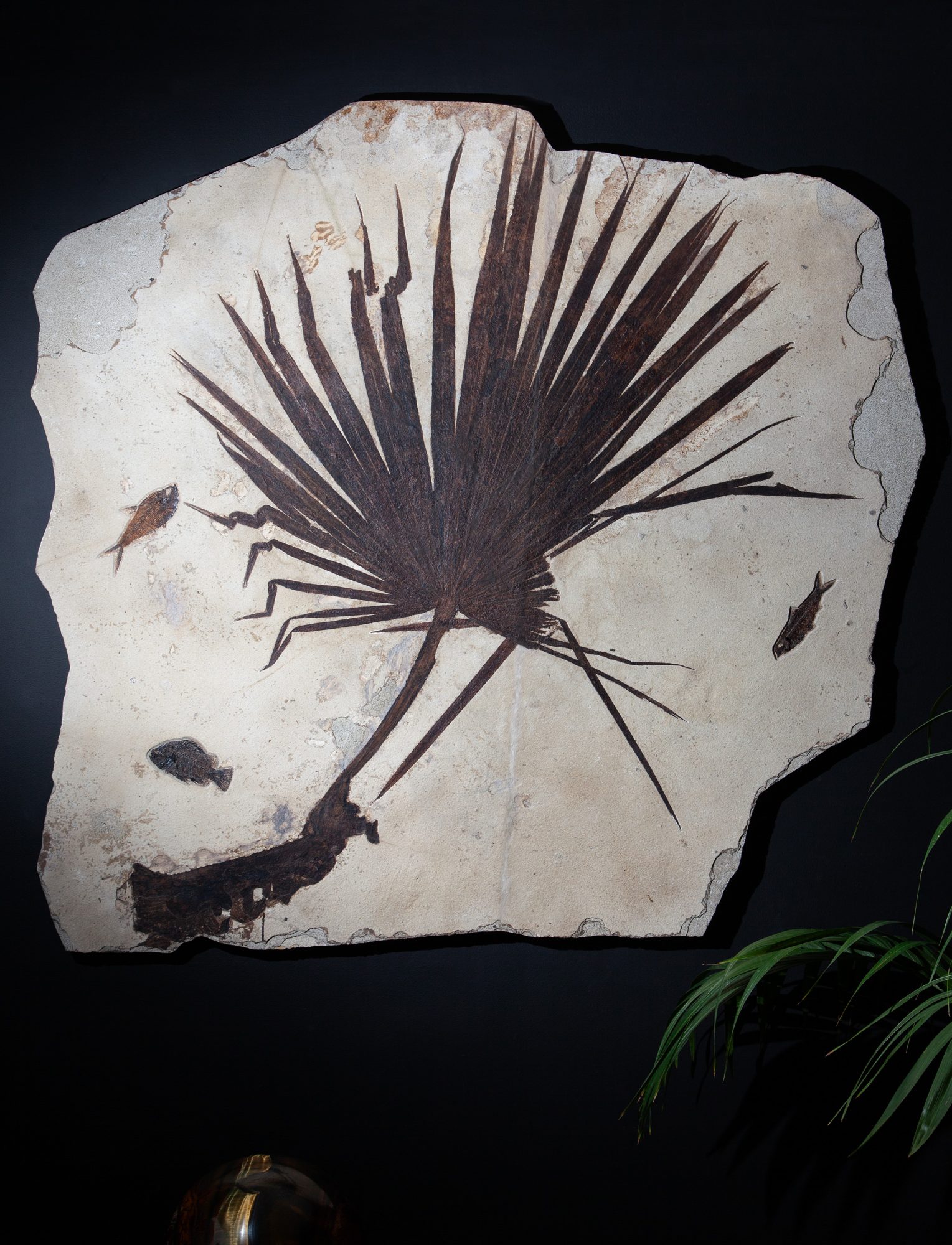
A Sabalites fossil palm frond from Wyoming speaks to a rare intersection of science and refined taste. These pieces carry a quiet, timeless elegance, evoking a subtropical world that once flourished along ancient riverways in the American West. Sabalites leaves reveal themselves as graceful silhouettes—their sword-like blades and parallel venation inviting close, contemplative viewing. For the discerning collector, these fossils offer more than a scientific record; they provide a tangible connection to deep time, a natural sculpture that pairs beautifully with contemporary interiors or classical display contexts.
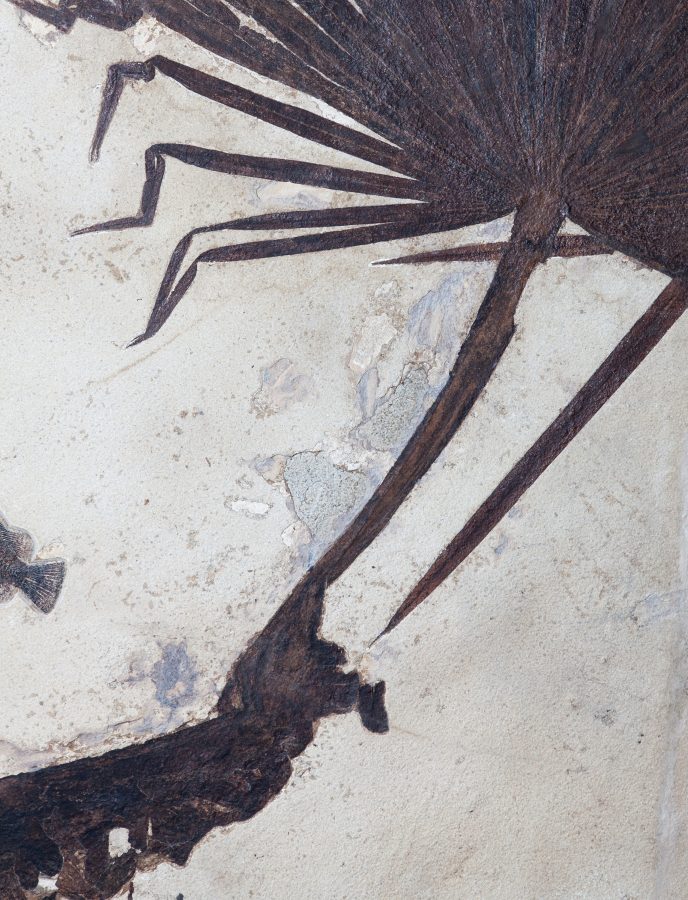
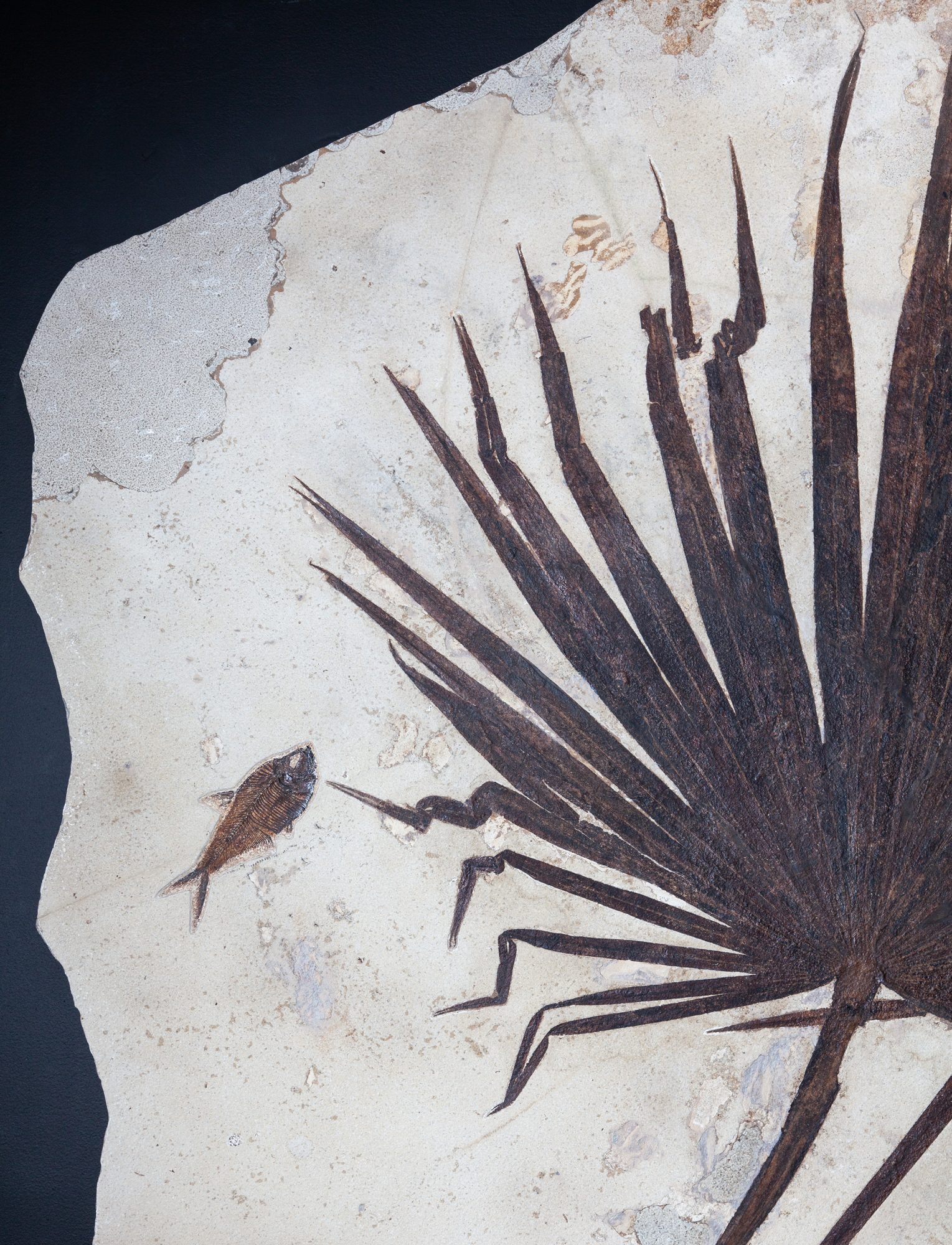
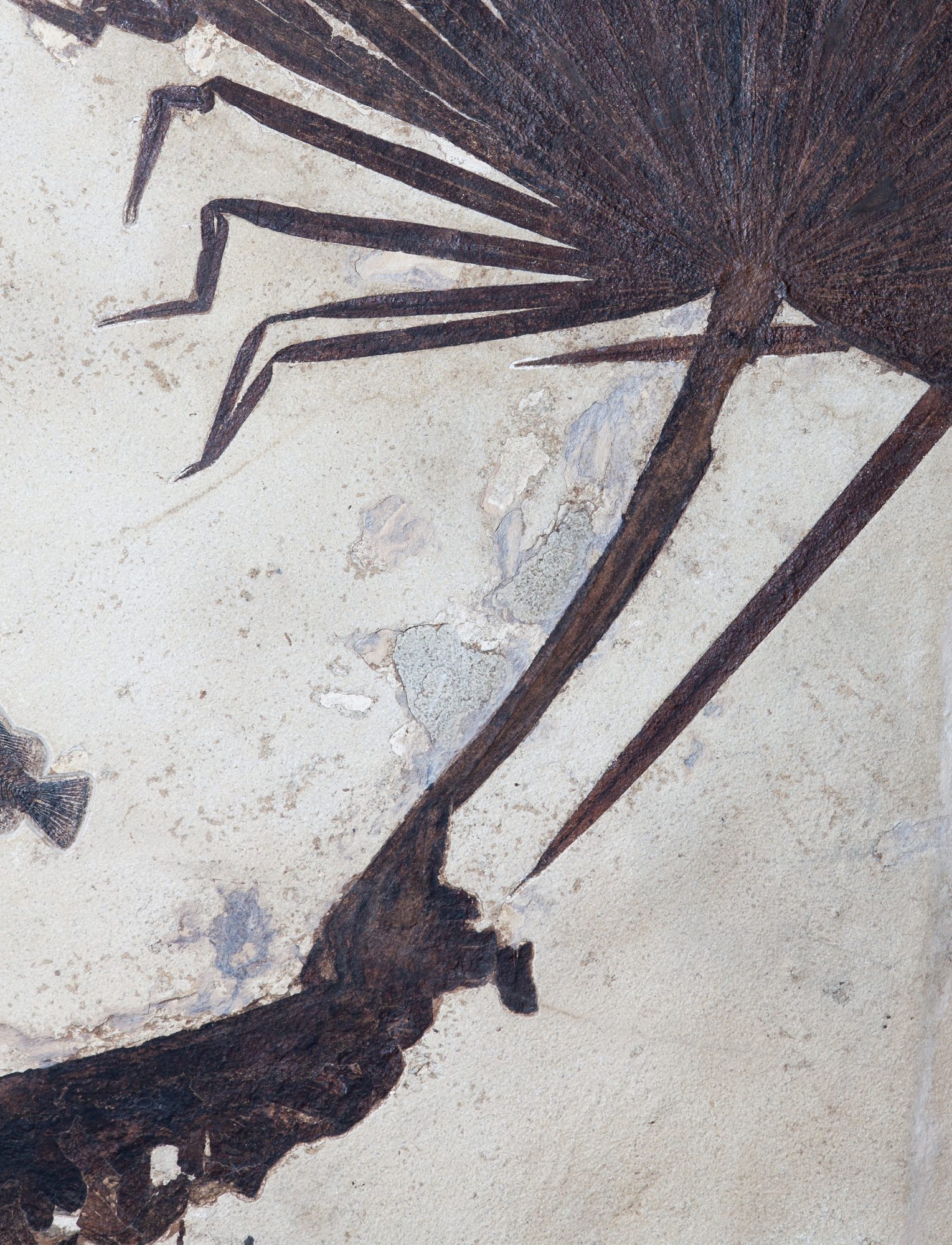
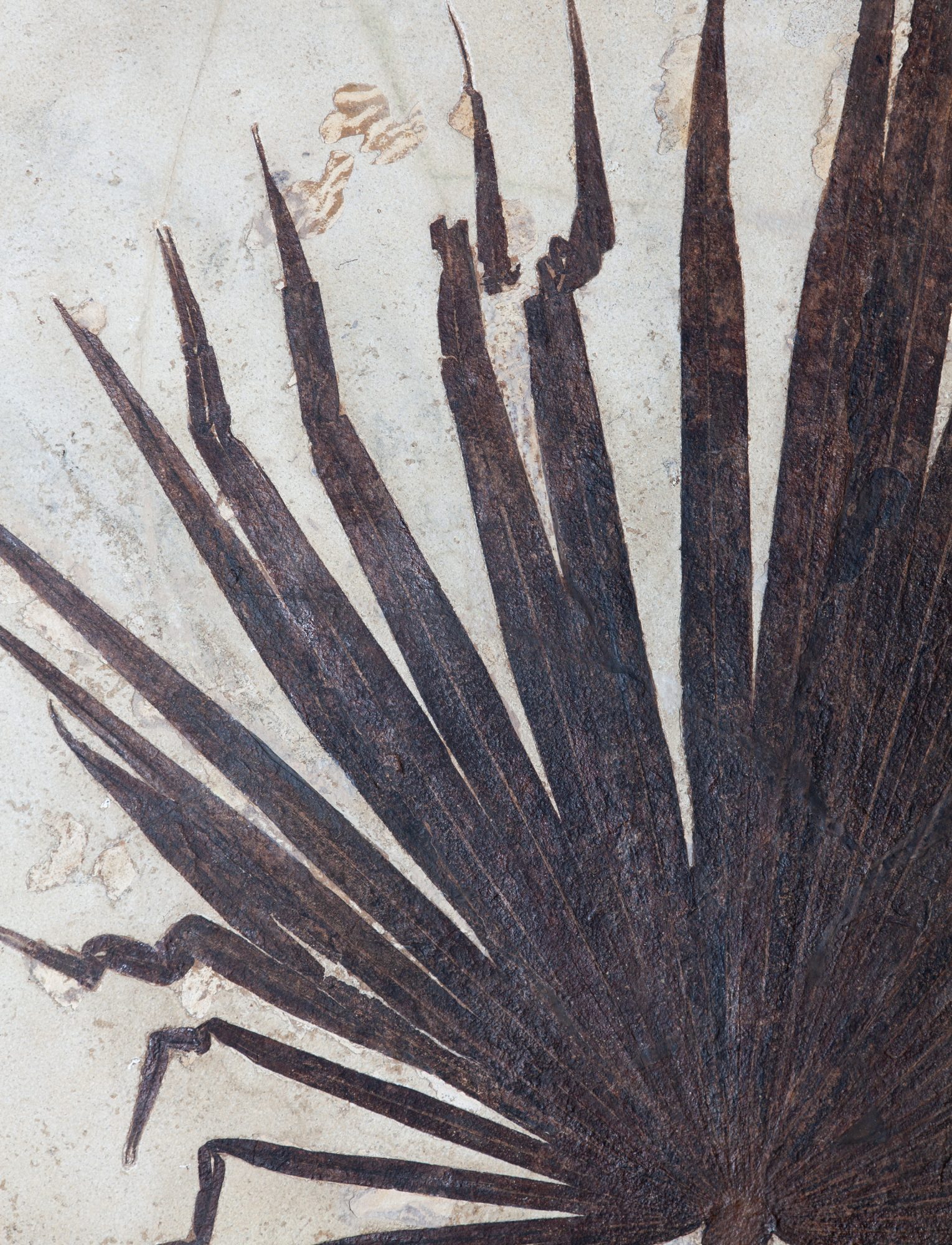
The formation of these remarkable fossils is a story of patient transformation. Leaves settled into fine-grained, anoxic sediments—mud and silt deposited in ancient channels and floodplains—where rapid burial shielded them from decay. Over countless millennia, minerals gradually replaced organic matter, and the surrounding sediment lithified into rock, preserving the leaf impressions as negative or positive contours. The resulting Sabalites fronds typically exhibit a clean, striking outline and crisp venation, with enough detail to confirm taxonomic identity while preserving an overall aesthetic that feels both architectural and organic. When you examine them, you sense the careful balance of natural processes that created a lasting, museum-worthy tableau.
Exceptional Sabalites fossils such as this are coveted for their beauty, provenance, and ability to command a room. Pristine pieces with sharp margins and clearly defined venation read as sculpture—dark impressions set against lighter rock have the visual drama of an abstract work, yet they carry the authority of paleobotanical lineage. A carefully chosen Sabalites frond can anchor a collection, transform a wall into a focal point, and invite conversation about climate history, geological time, and the remarkable ways nature preserves beauty across millions of years.