| Location: | Northwest Africa |
|---|---|
| Age: | 4.5 Billion Years |
| Size: | H30.9cm W18cm D8cm |
| Price: | P.O.A |
| Availability: | Available | Enquire |
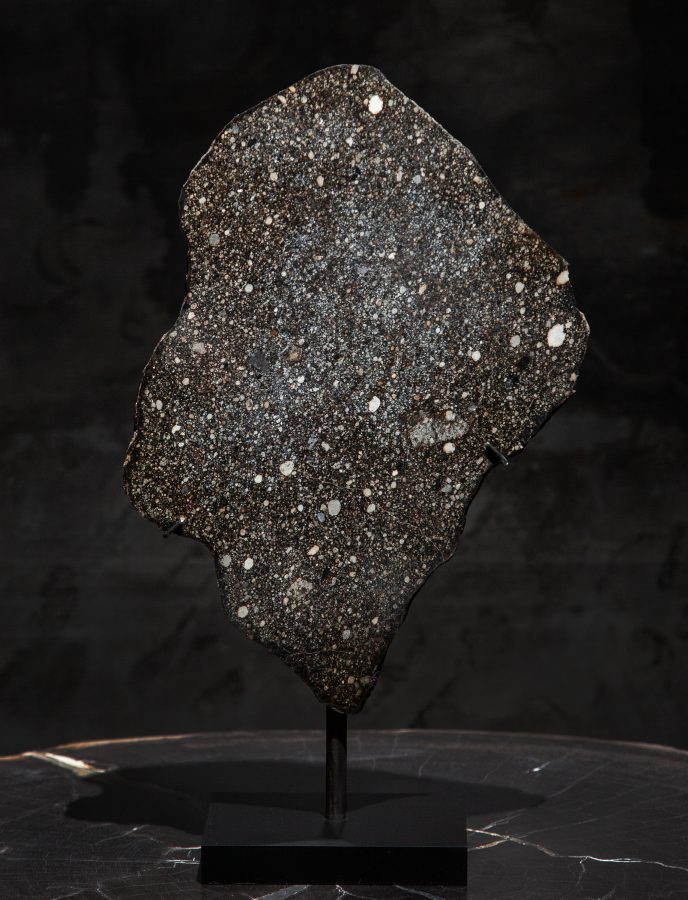
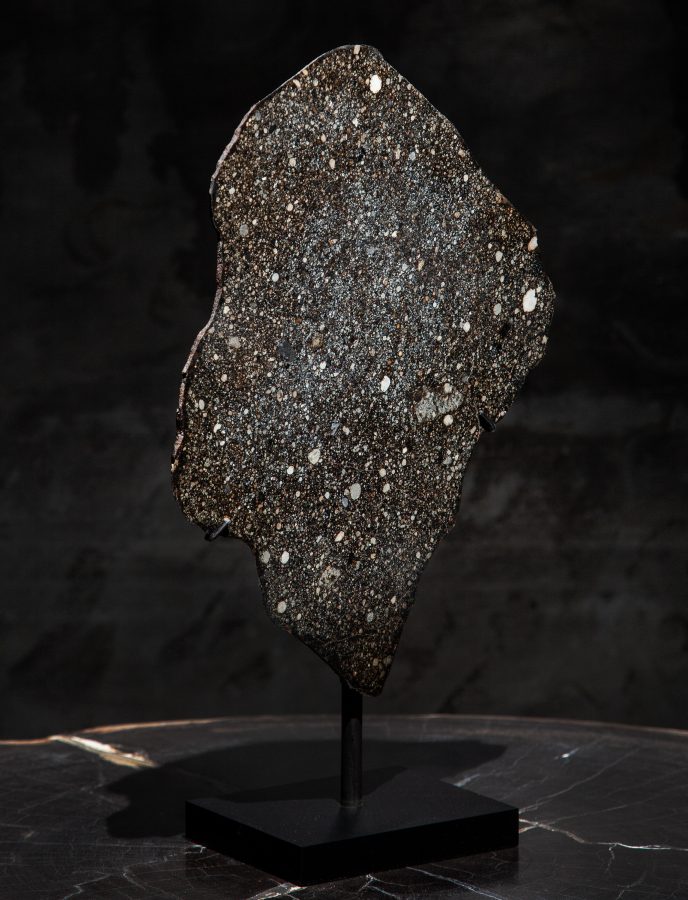
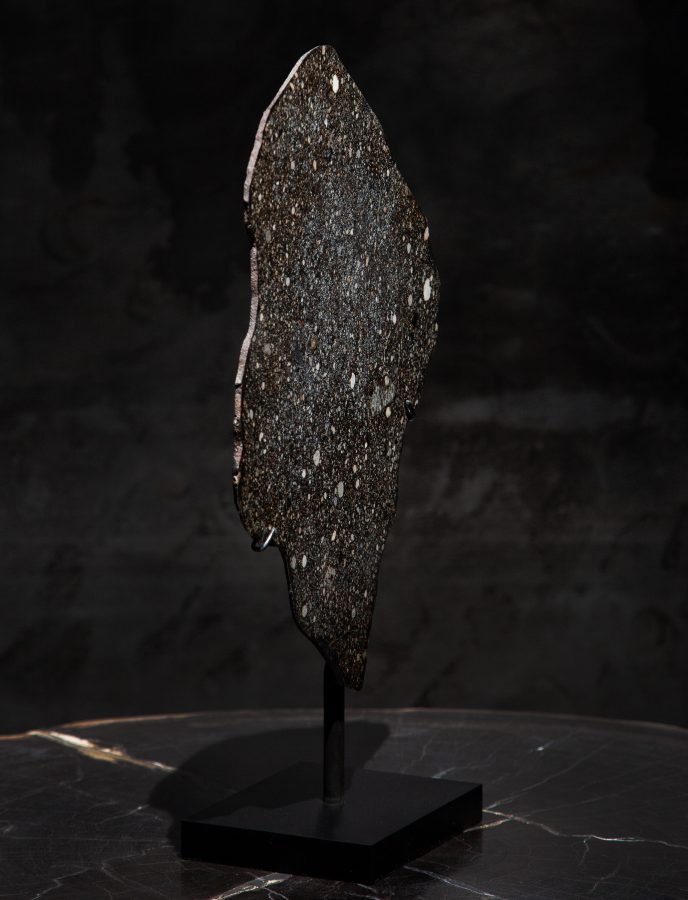
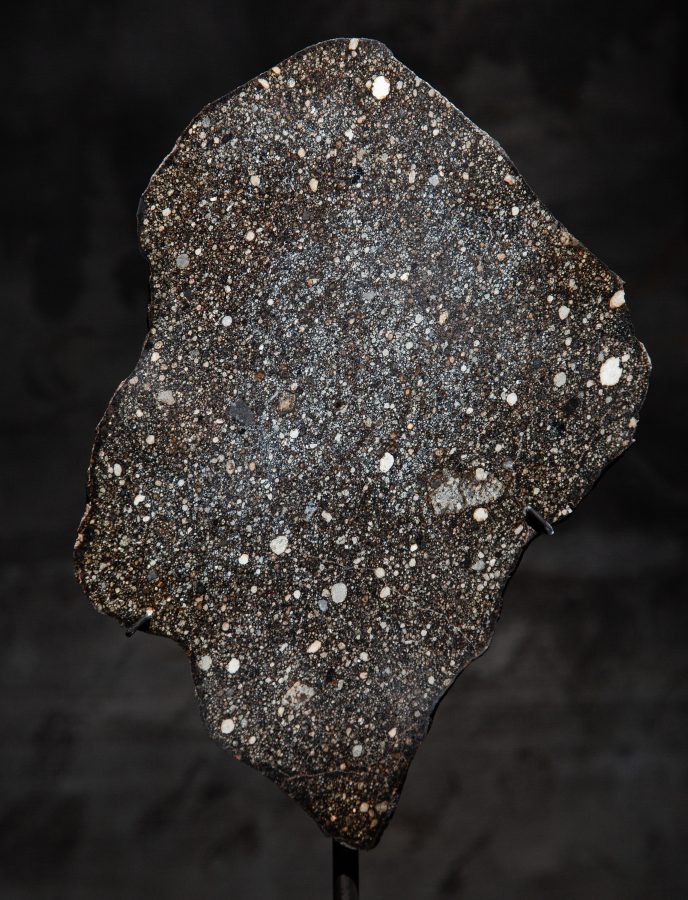
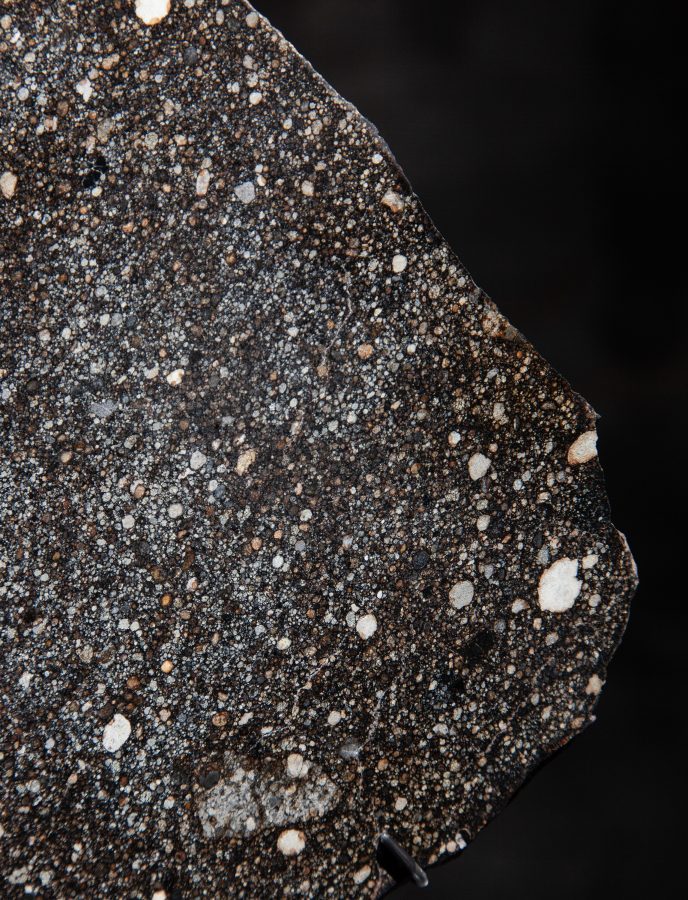
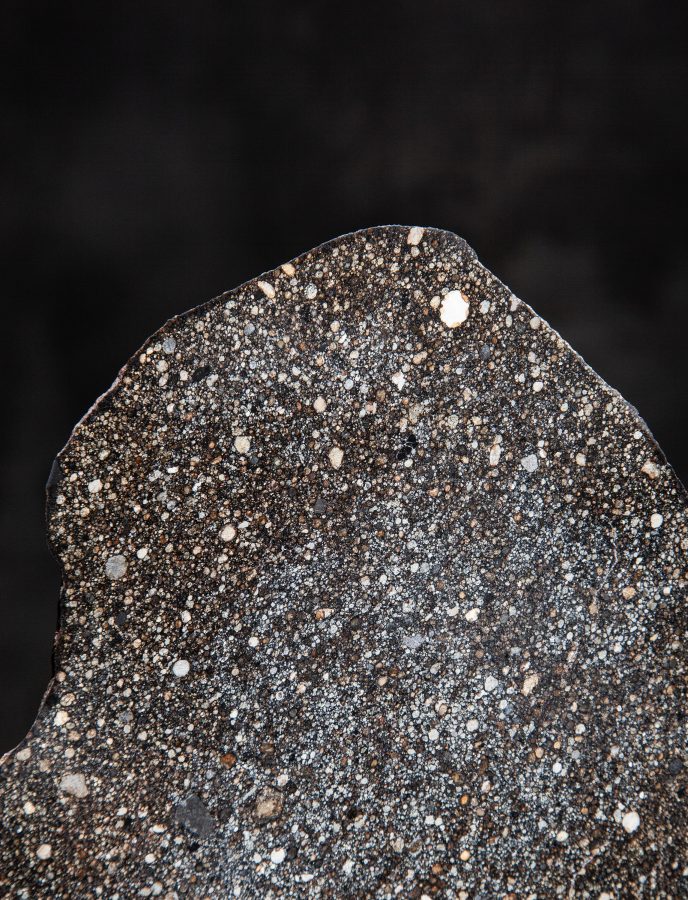
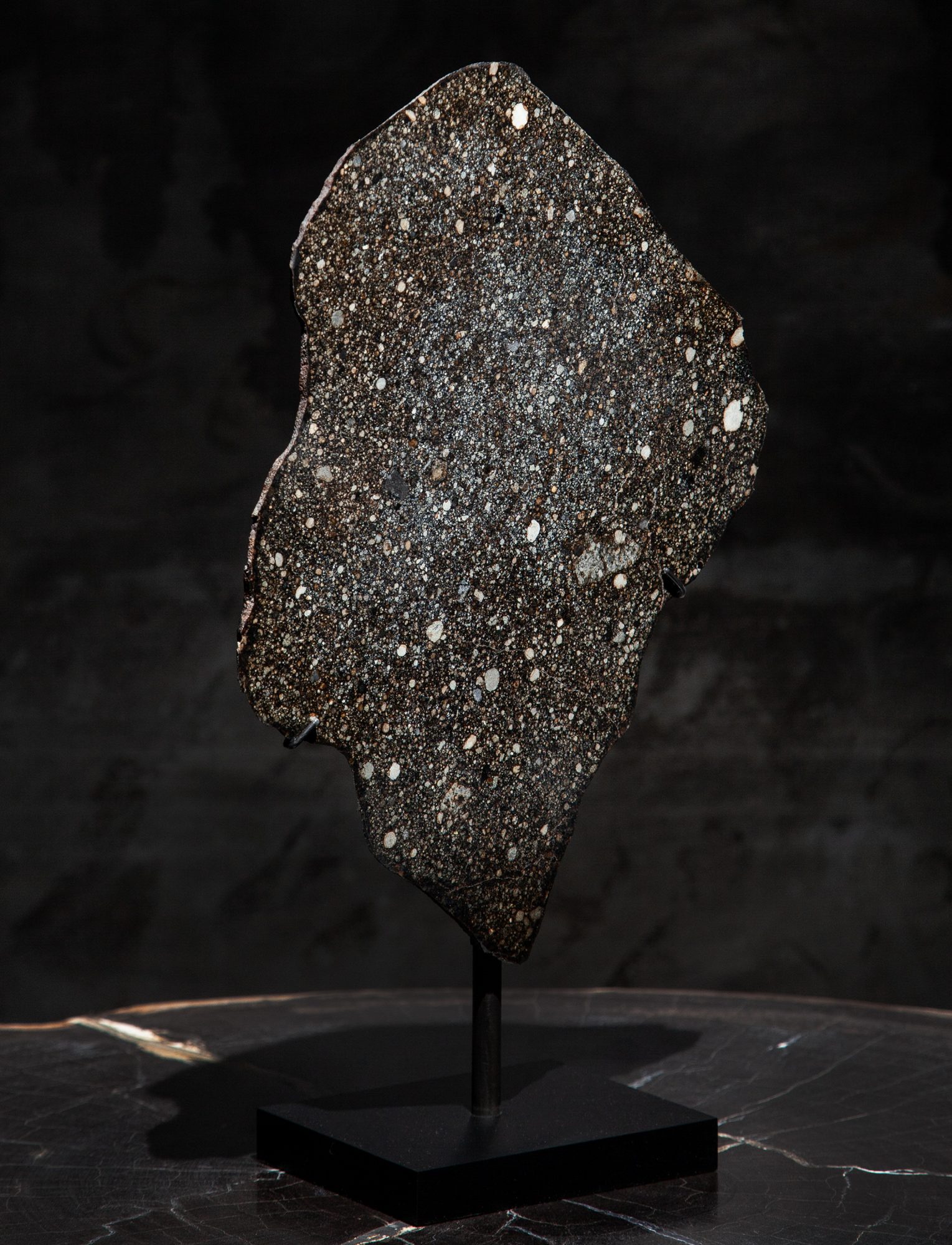
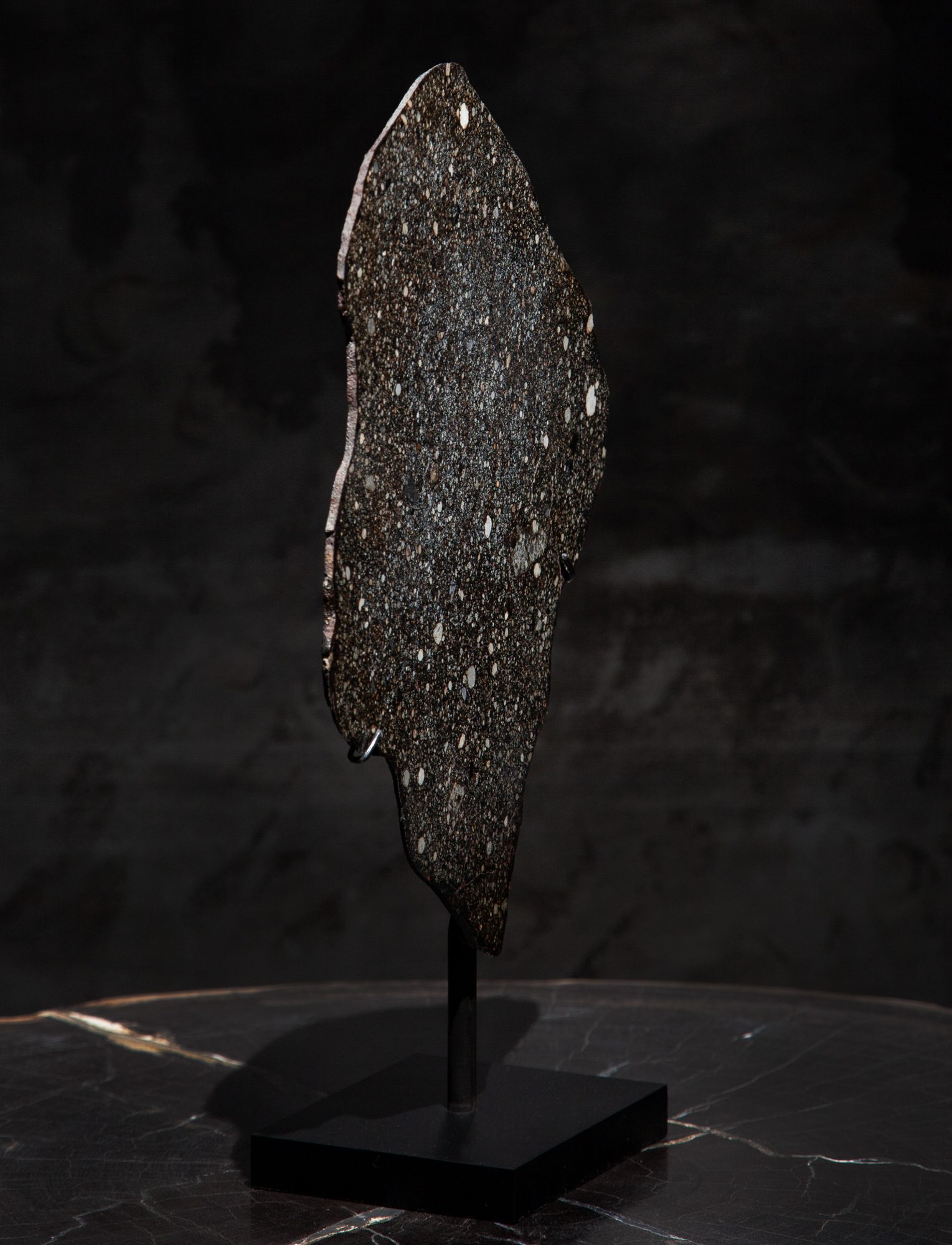
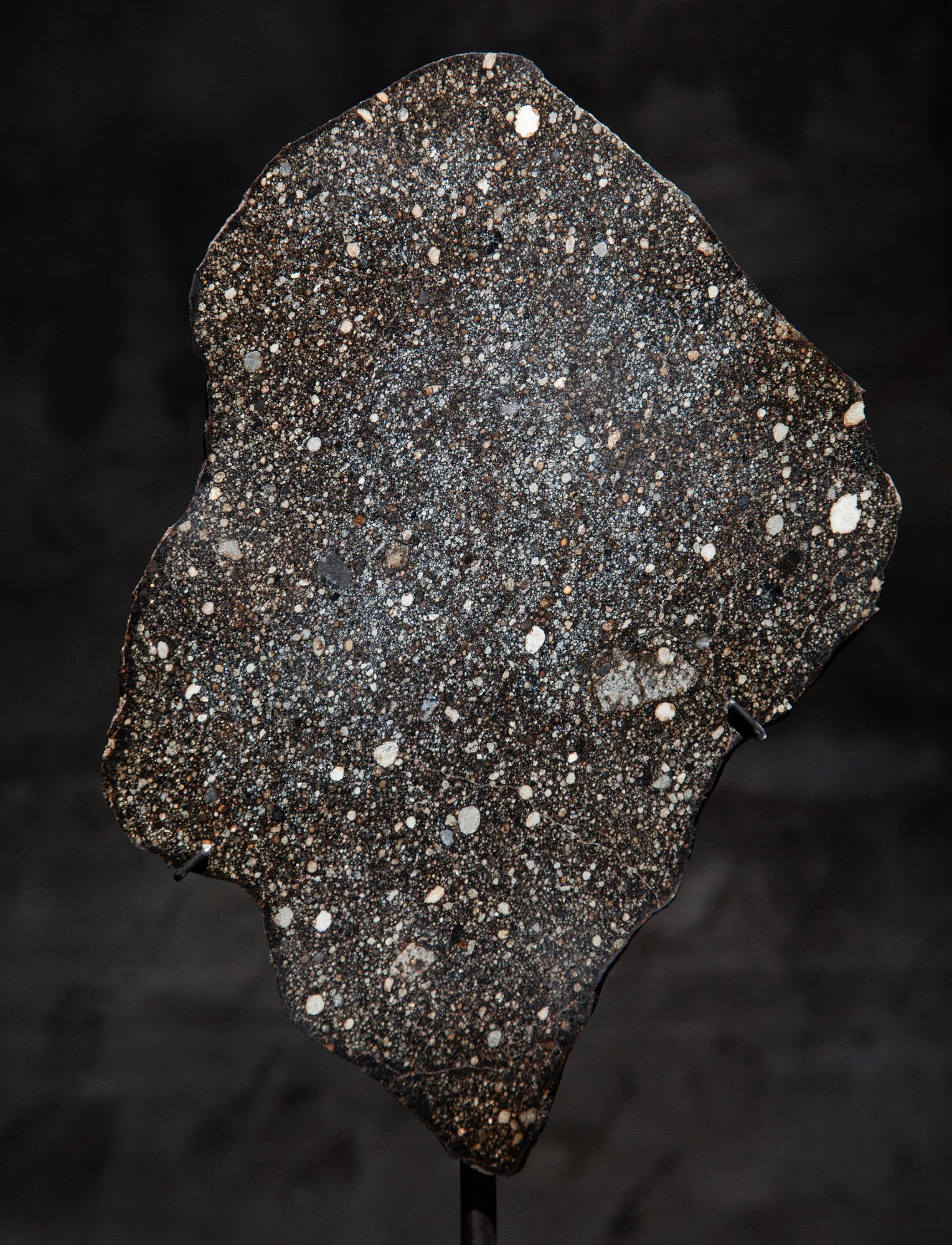
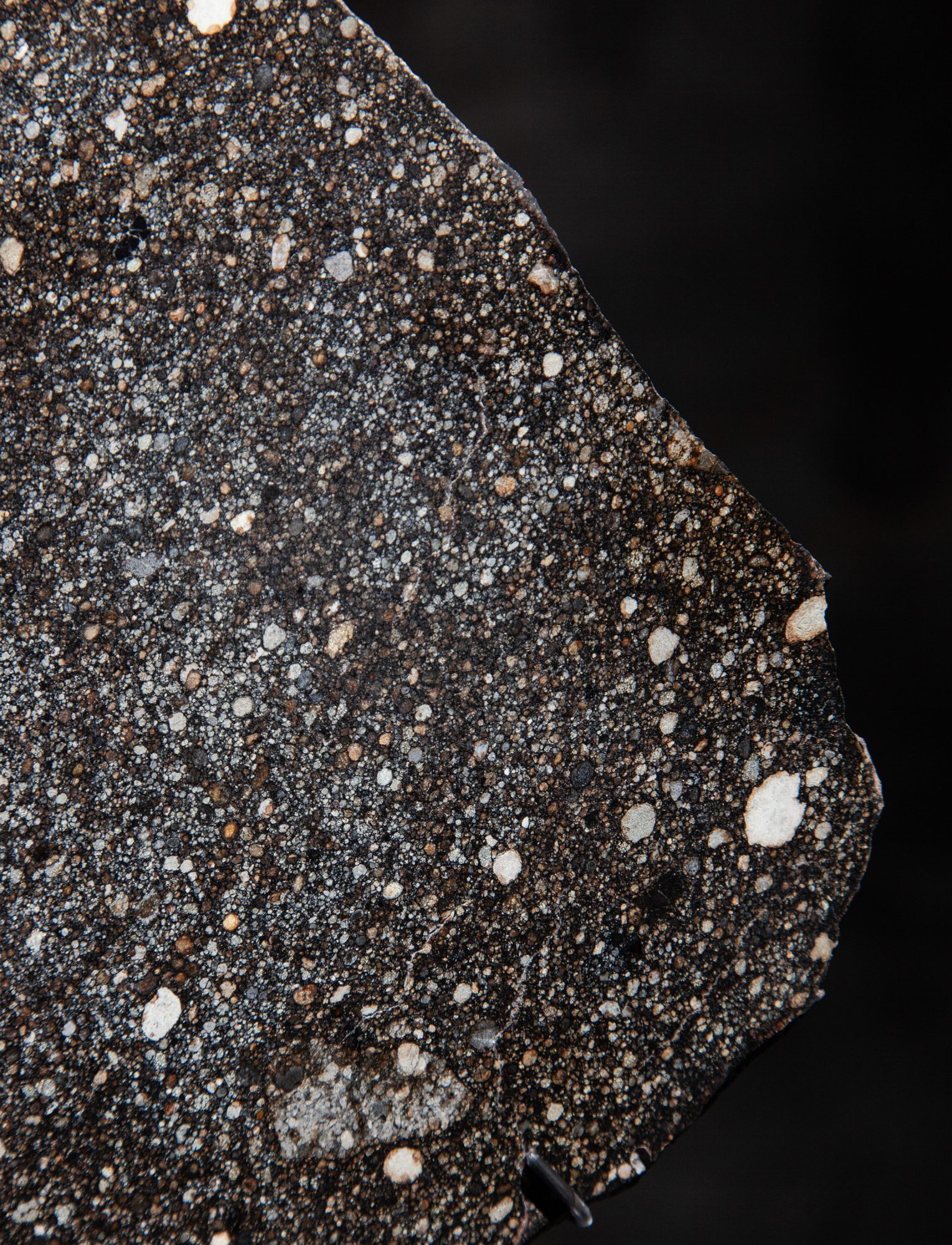
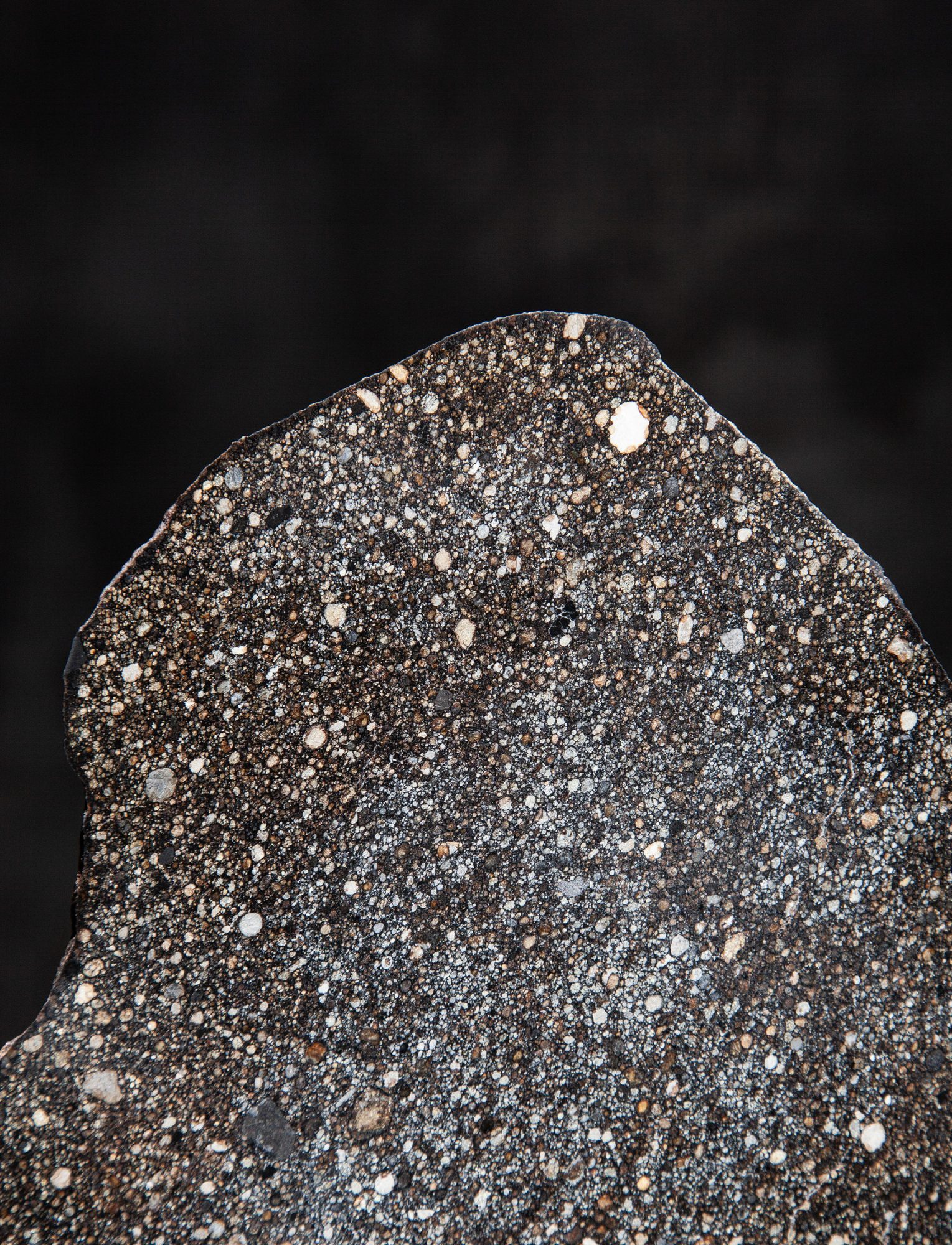
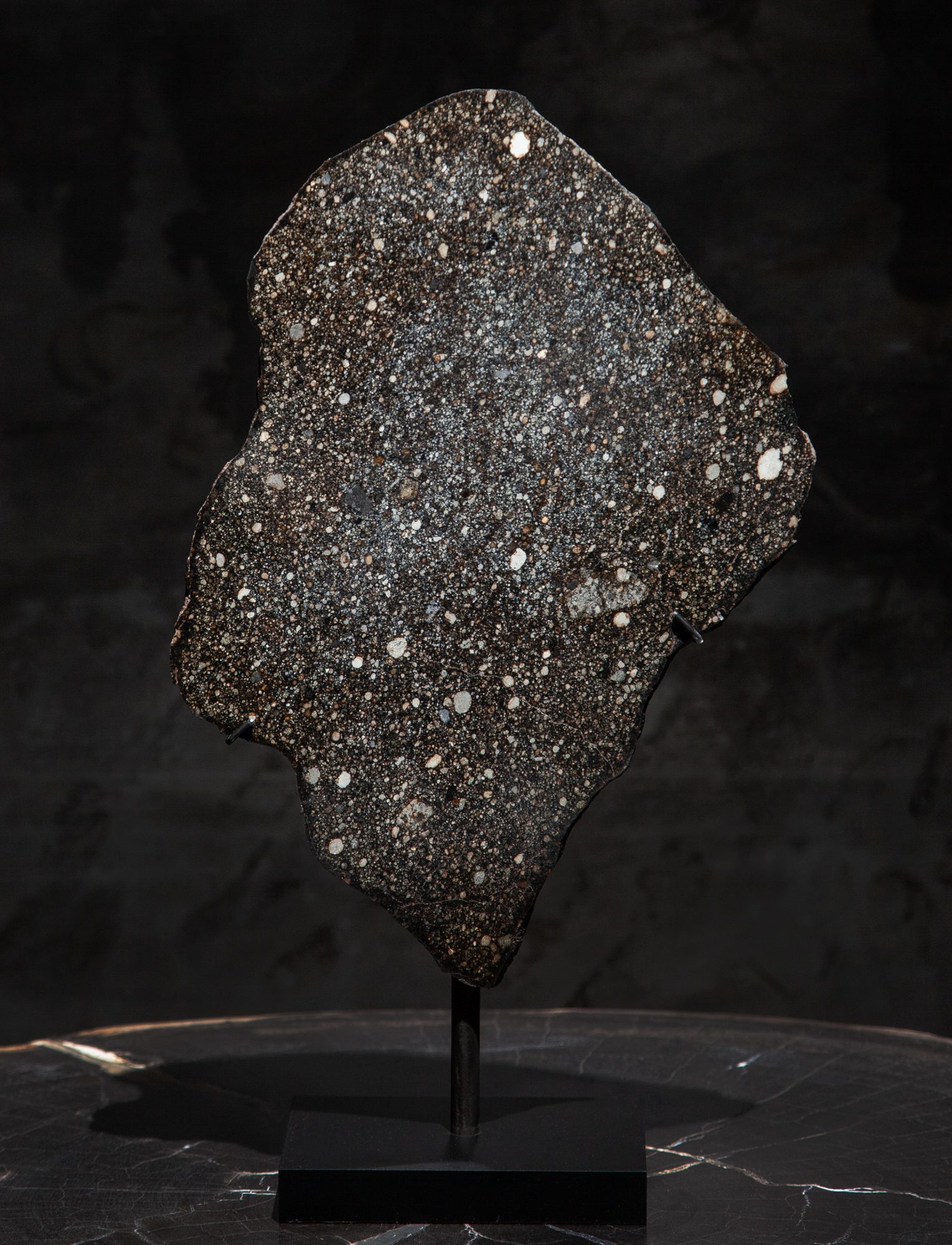
Looking into a slice of NWA 15662 is akin to peering into a star-studded night: the rock’s chondrules and mineral grains appear like tiny, embedded “stars” scattered within a dark, fine-grained matrix. The chondrules are round, glassy, or mineral-rich droplets that formed as molten bodies in the early solar system and cooled into solid spheres. Under a microscope, they display a striking variety of colours, textures, and outlines—sparkling with a visual rhythm reminiscent of distant stars twinkling through deep space. Meanwhile, the surrounding matrix—comprised of fine silicate dust and small mineral grains—serves as an inky backdrop, much like the vast void between constellations. The resulting contrast between bright, well-defined chondrules and the subdued granular field creates an effect that feels almost cosmic: a miniature universe preserved within stone.
This “starry” appearance is rooted in the meteorite’s LL3 classification, which indicates a primitive character and minimal thermal metamorphism. In such relatively undisturbed material, chondrules retain much of their original textures and chemical signatures, preserving a more direct record of condensation and cooling in the early solar nebula. Because metamorphic overprinting has been limited, the boundaries between luminous chondrules and the darker matrix remain distinct, preventing the formation from becoming visually homogenized. Each visible chondrule can therefore be read as a compact historical artifact—an individual fossil of solar-system infancy—allowing the eye to “map” the rock into patterns analogous to constellations. Beyond its aesthetic power, the microscopic distribution of chondrules and associated phases also supports scientific reconstruction of formation conditions, including temperatures, cooling rates, and the sequence of events that assembled precursor planetesimals. In sum, a polished slice of NWA 15662 invites viewers to imagine billions of years of planetary history crystallized into a small, luminous window—an accessible, tangible glimpse of the processes that shaped our solar system long before Earth existed.