| Location: | Algeria |
|---|---|
| Age: | 4.5 Billion Years |
| Size: | H22.5cm W13.2cm D7cm |
| Price: | P.O.A |
| Availability: | Available | Enquire |
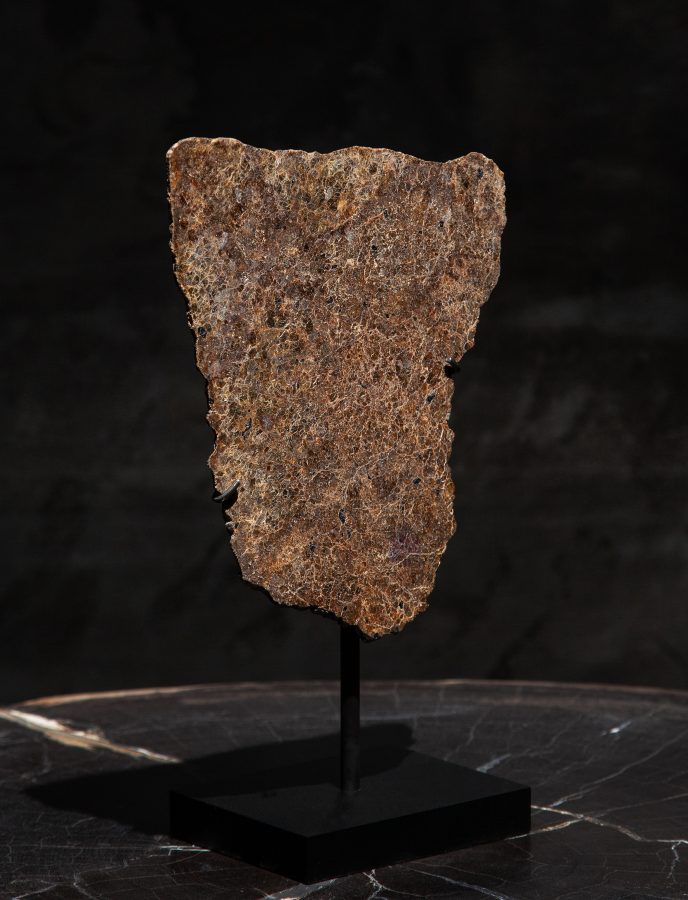
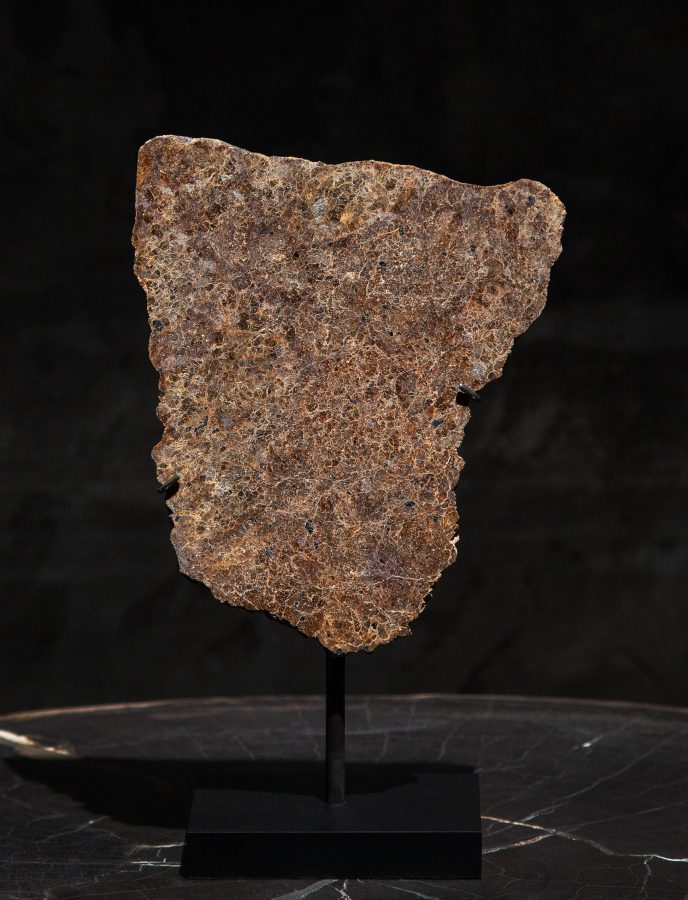
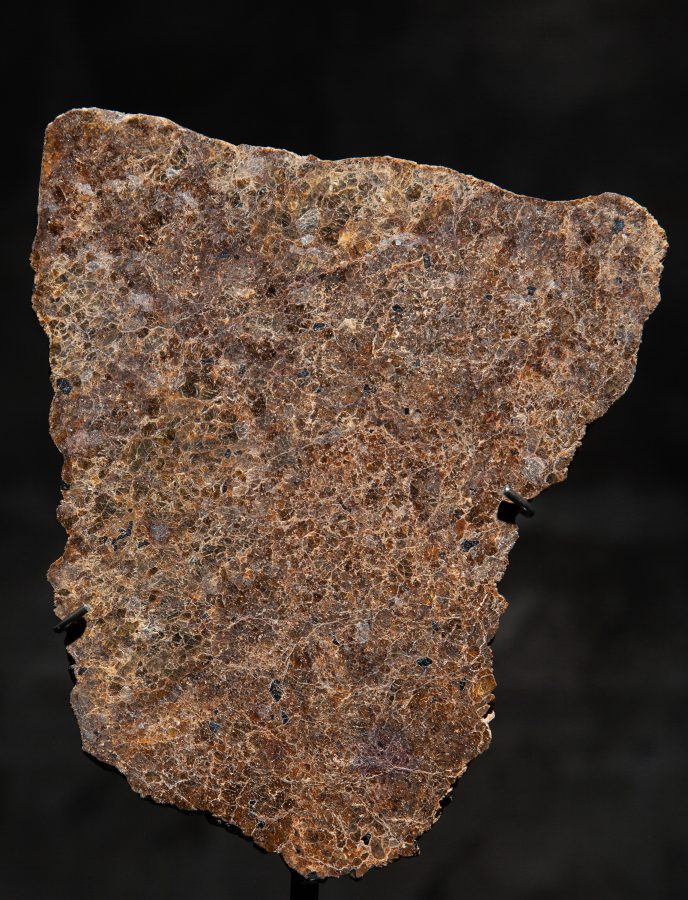
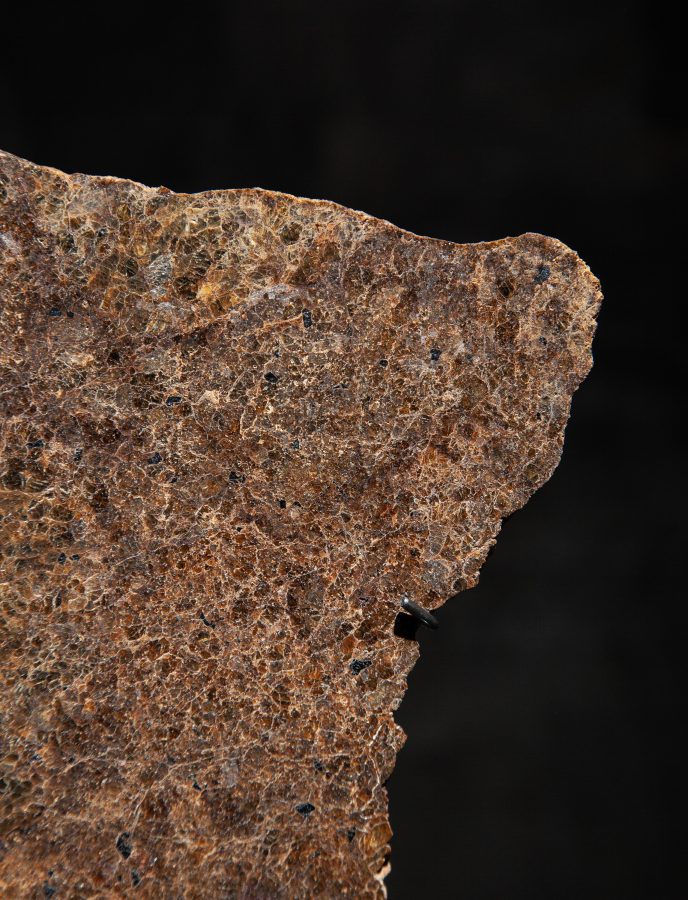
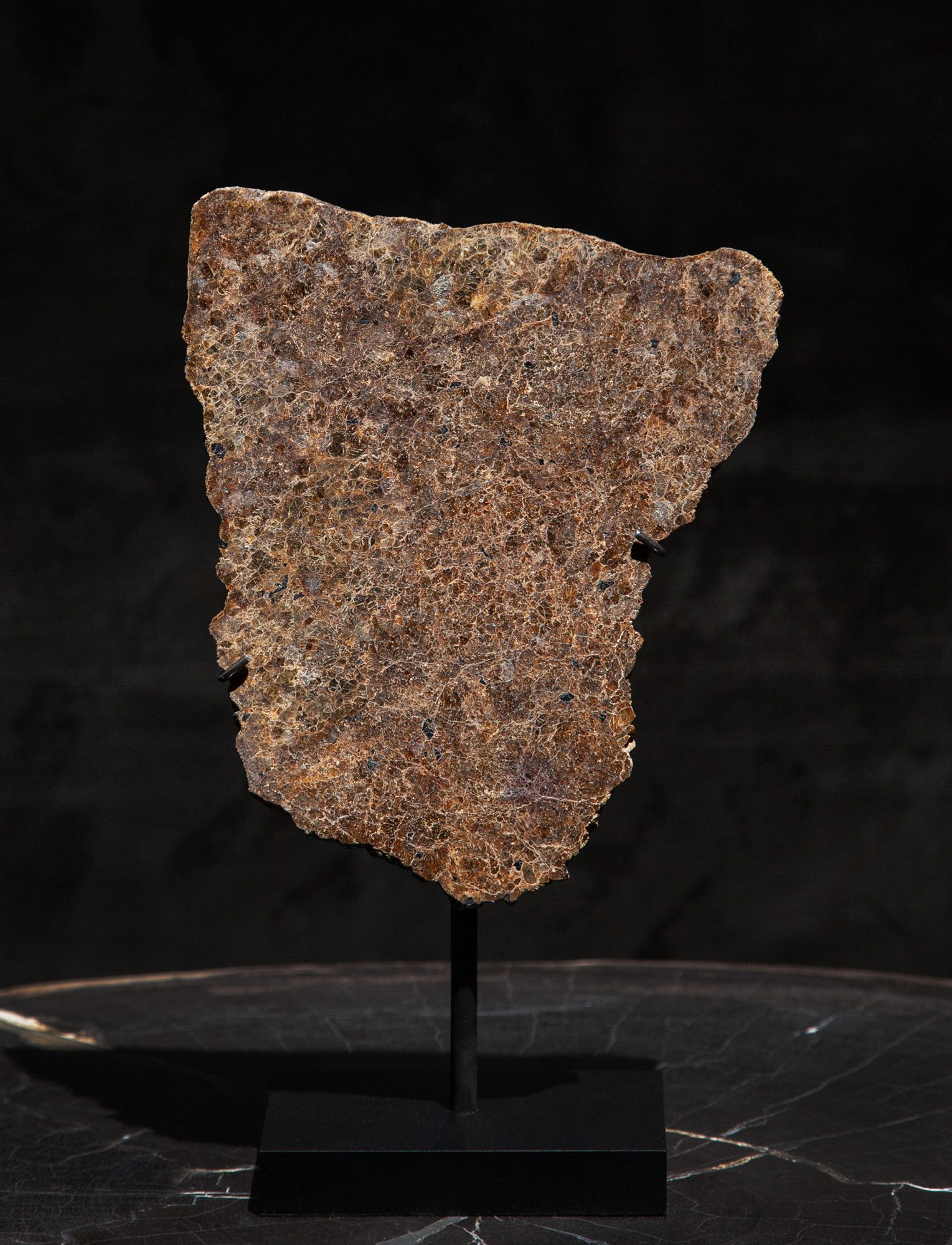
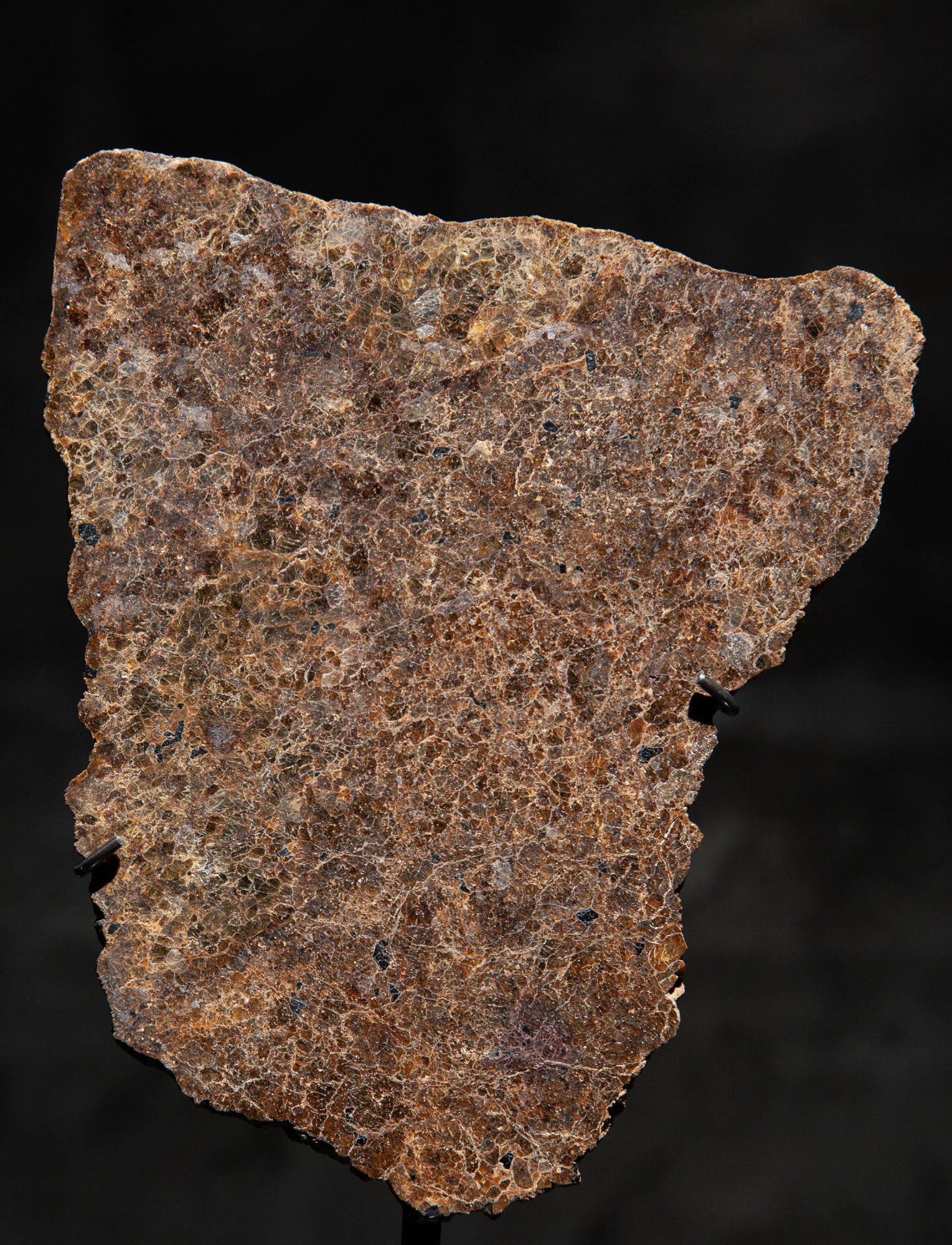
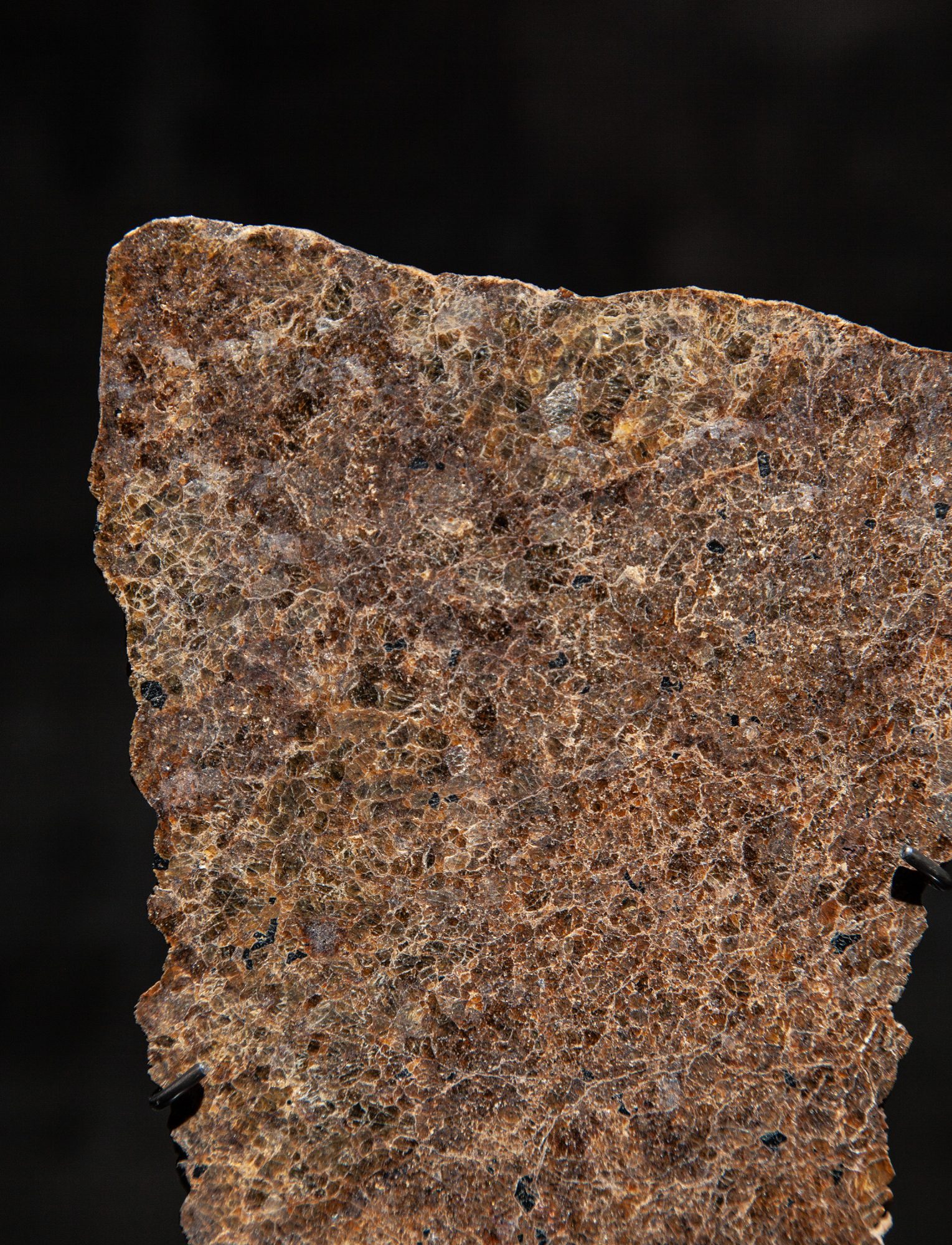
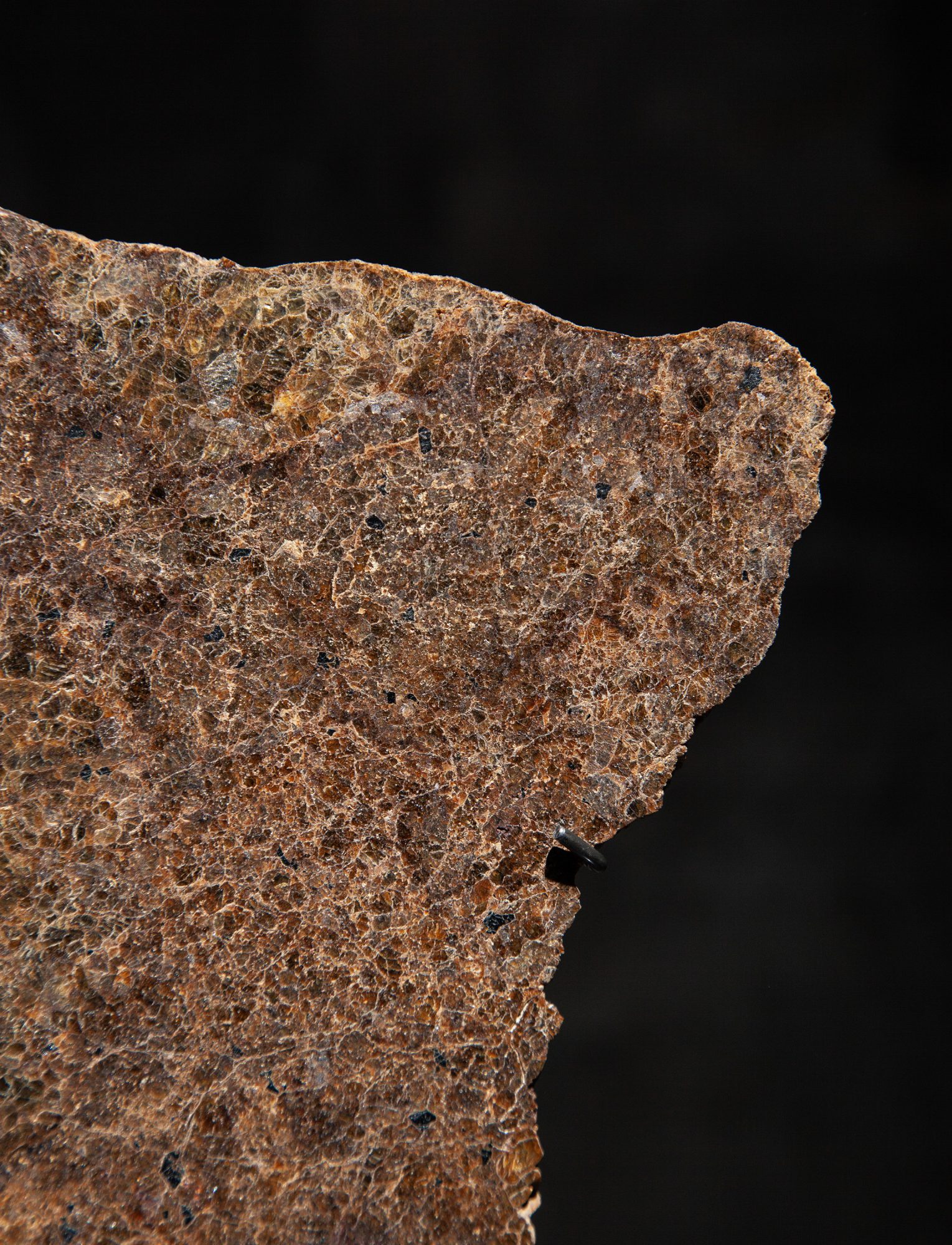
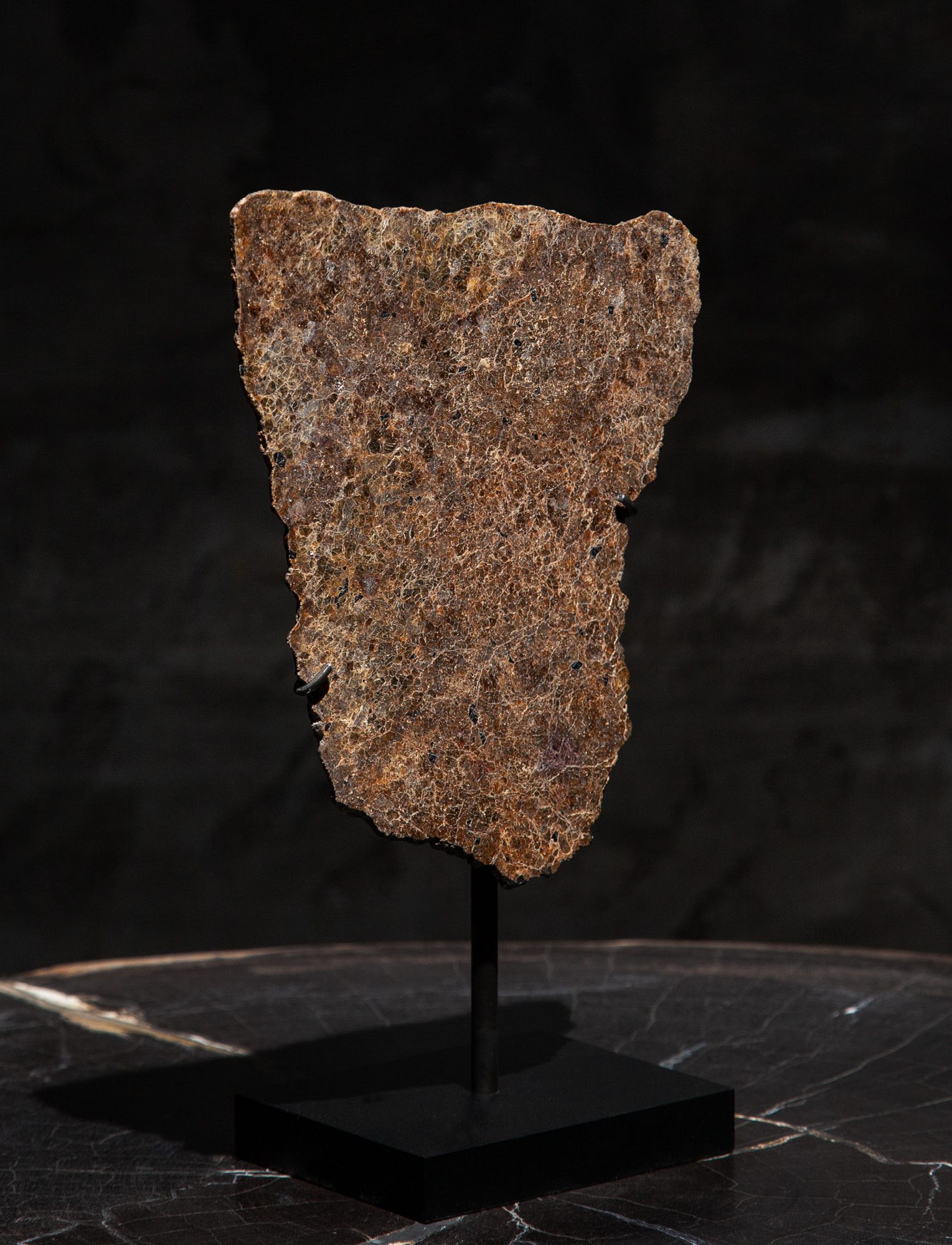
Complete NWA 16317 slice – A mounted Red Diogenite from the Asteroid Vesta
Dimensions include stand
Meteorite only – H16.1cm W13.2cm D2mm
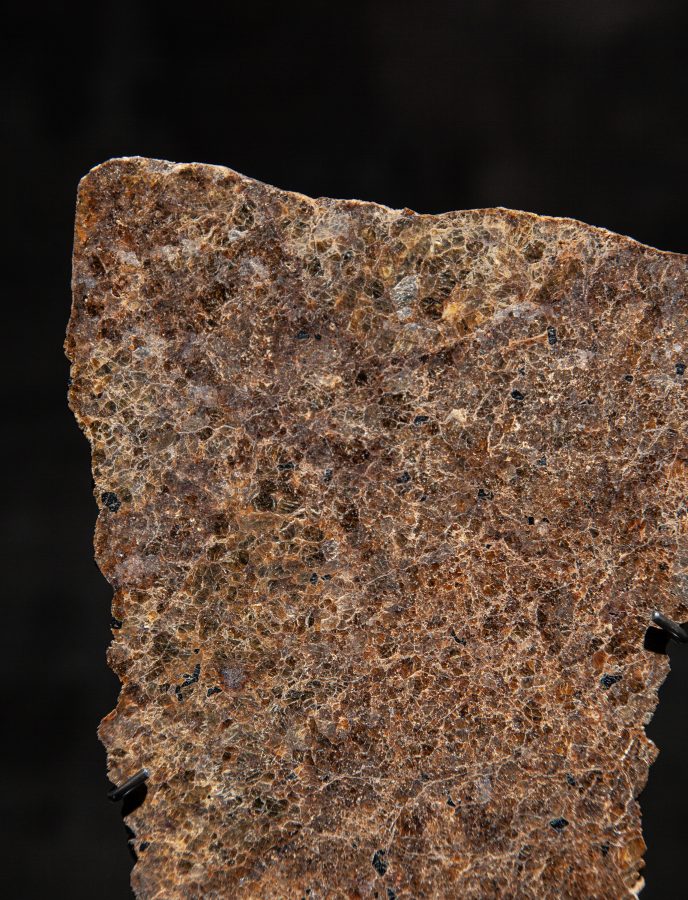
NWA 16317 is a particularly fascinating and visually distinctive meteorite, belonging to the rare and scientifically significant Diogenite group of achondrites, a family of extraterrestrial rocks believed to originate from the deep interior of the asteroid Vesta. Its origins reach back approximately 4.5 billion years, to the earliest period of our solar system, when planetary bodies were undergoing the extraordinary processes of formation and differentiation. Recovered in Algeria and officially classified in 2026, NWA 16317 is composed predominantly of low-calcium pyroxene (approximately 74%), accompanied by plagioclase feldspar (22.5%), chromite and traces of iron metal. Its naturally dark brown exterior conceals an extraordinary mineralogical character, including sharply defined black chromite crystals. When carefully cut and polished, the specimen reveals its most captivating feature: beautiful, translucent green orthopyroxene crystals, creating an almost otherworldly appearance and a striking interplay between light, colour and mineral structure. It is a remarkable example of natural extraterrestrial artistry, offering a glimpse into the geological interior of an ancient asteroid.
Beyond its exceptional aesthetics, NWA 16317 possesses considerable scientific and collector significance. Diogenites are particularly intriguing because they represent material from the deeper regions of a differentiated asteroid, preserving evidence of the intense geological processes that shaped planetary bodies long before Earth had reached its present form. Its discovery in the Algerian Sahara, followed by its acquisition in 2022 and subsequent scientific classification, adds another chapter to the continuing exploration of Northwest African meteorites. With a documented total mass of just 6.3 kilograms, represented by a single recorded main specimen, NWA 16317 is an uncommon addition to the world of meteorite collecting. Its combination of ancient asteroid provenance, distinctive mineral composition, striking translucent crystals and limited documented availability makes it an especially compelling specimen. More than simply a beautiful extraterrestrial stone, it is a tangible fragment of another world — a rare opportunity to own a piece of the primordial history of our solar system.