| Location: | Imilac, Chile |
|---|---|
| Age: | 4.5 Billion Years |
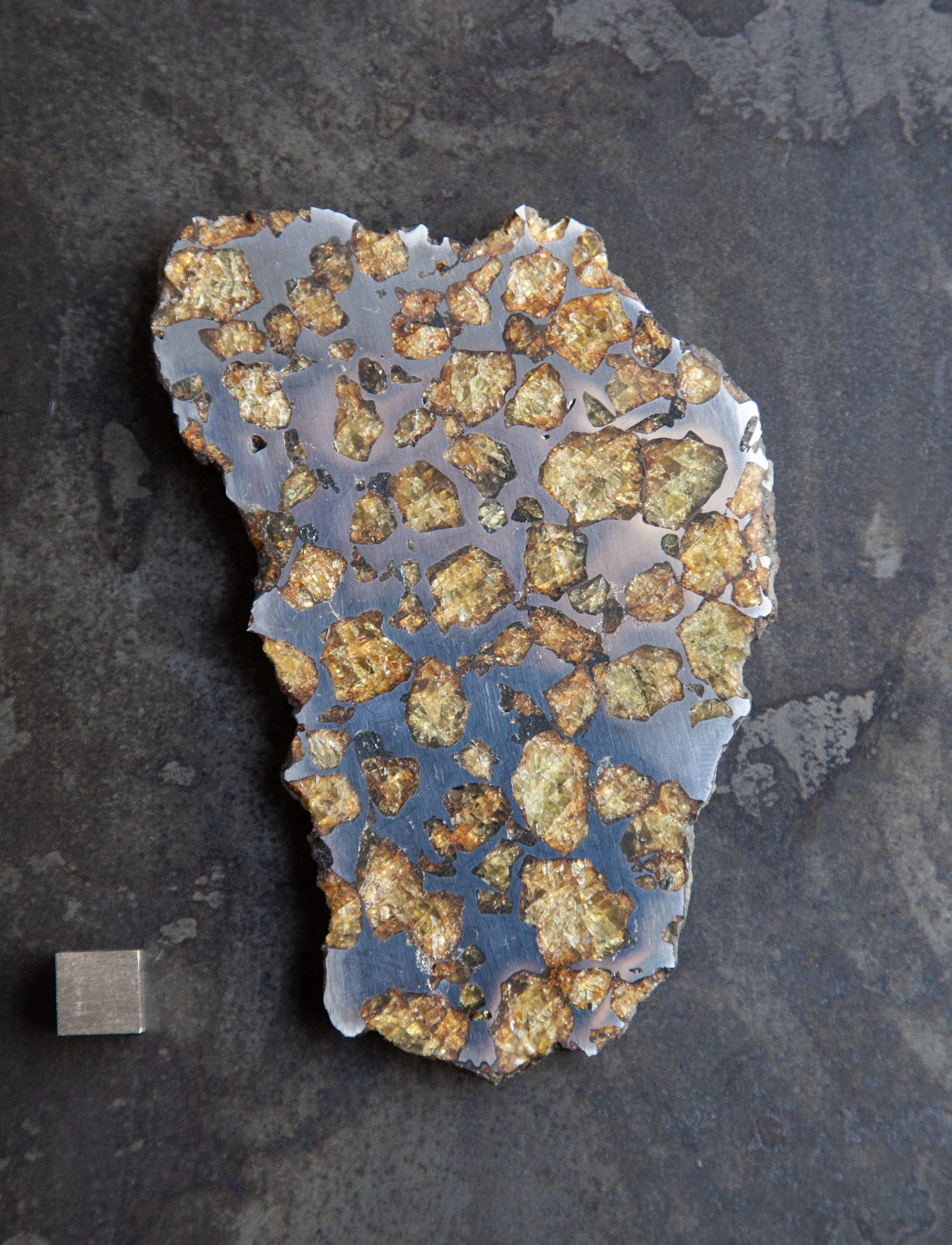
| Size: | H10.5cm W8cm D2mm |
| Price: | P.O.A |
| Availability: | Available | Enquire |
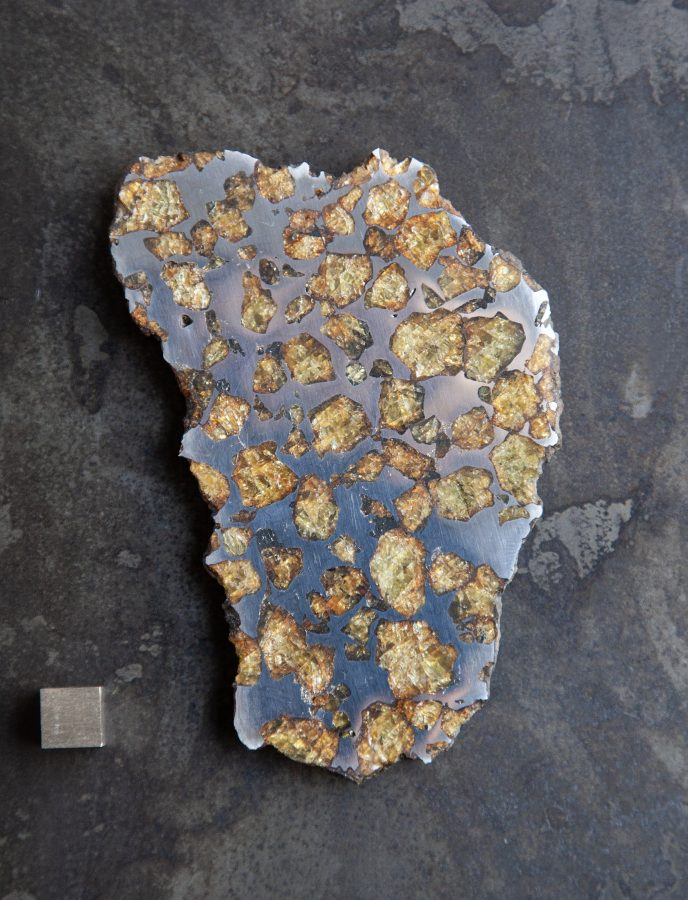
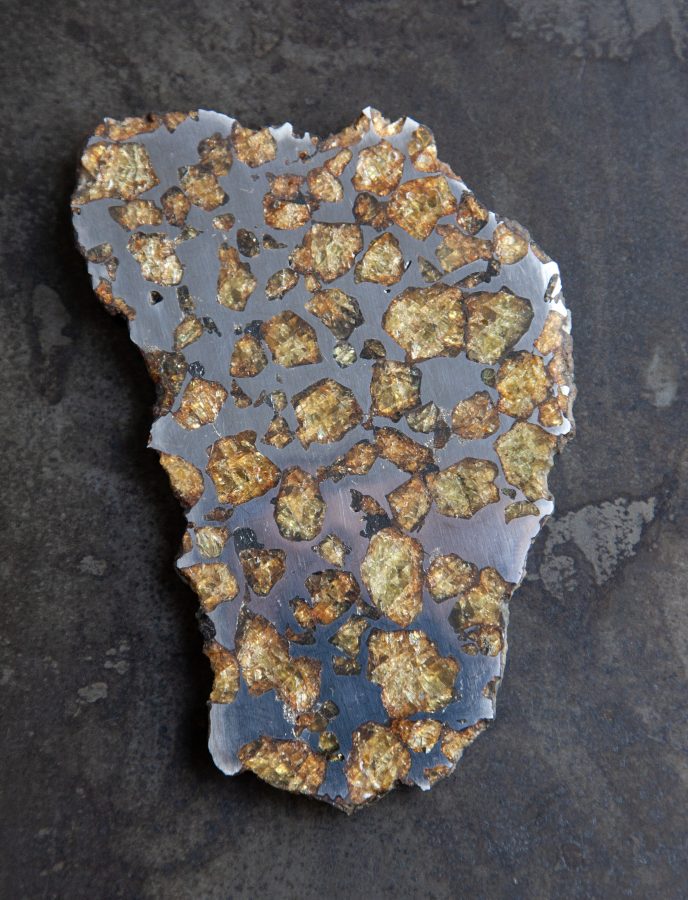
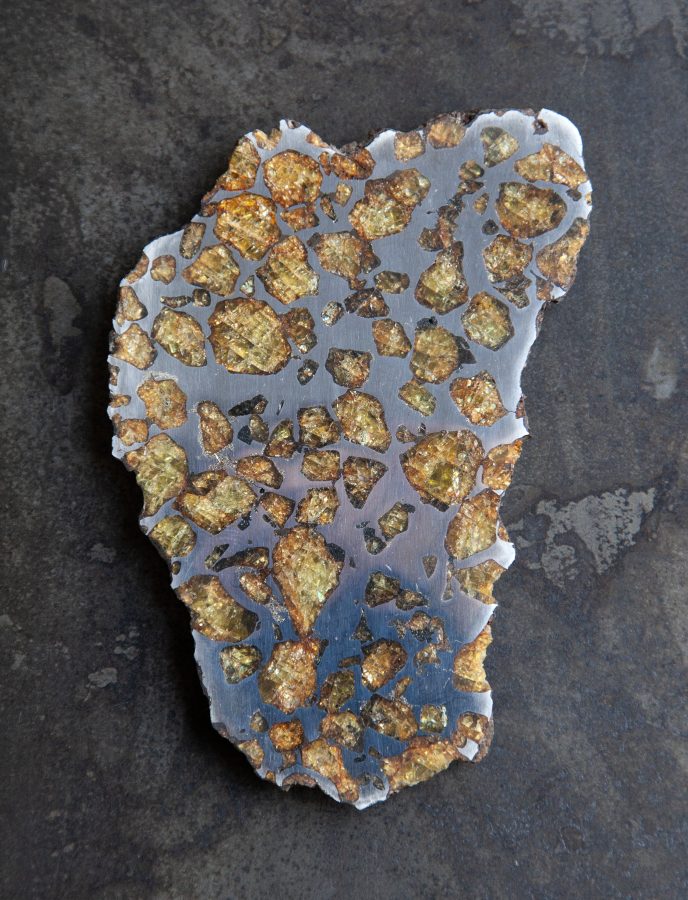
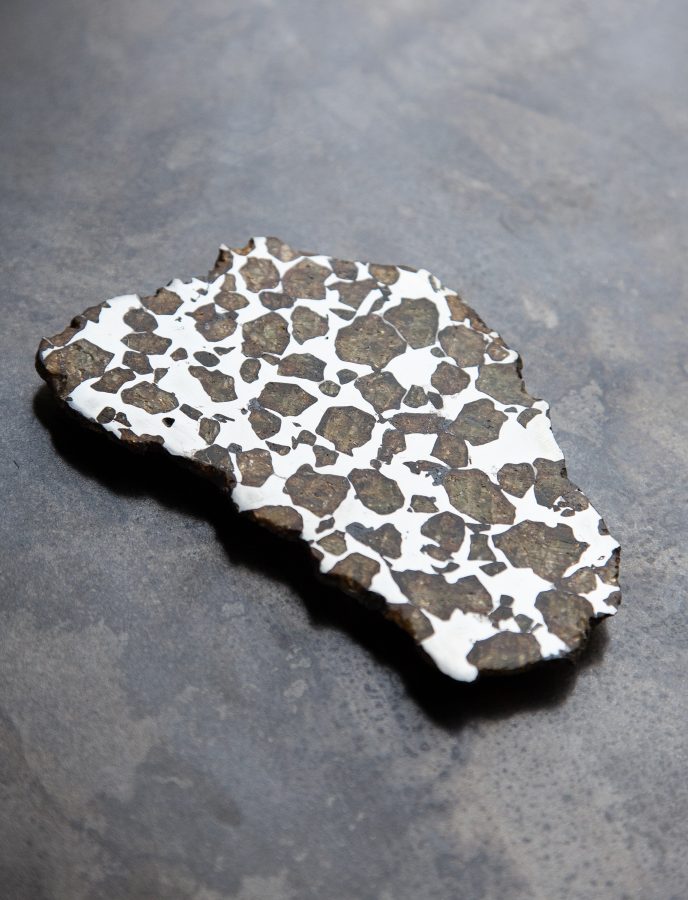
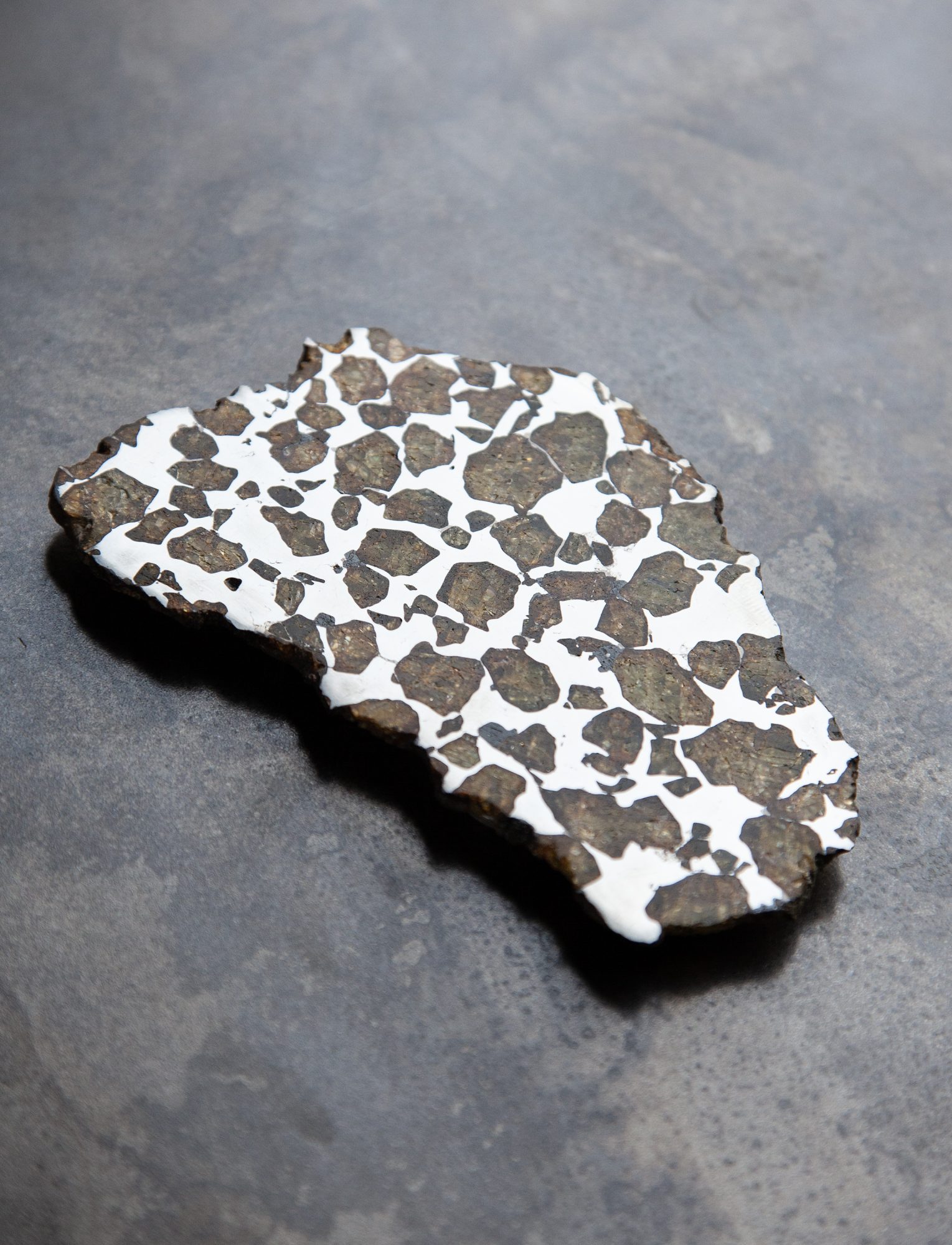
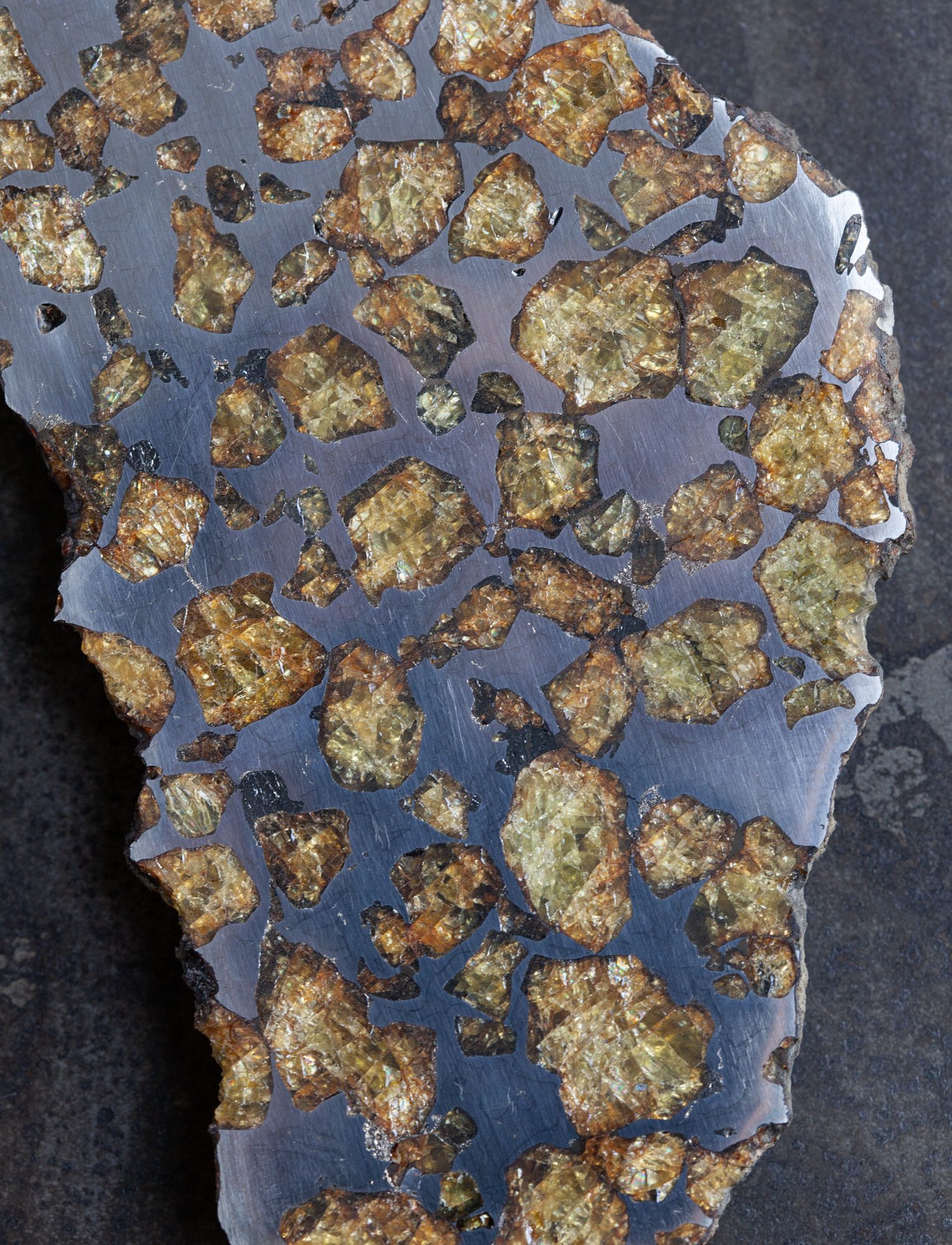
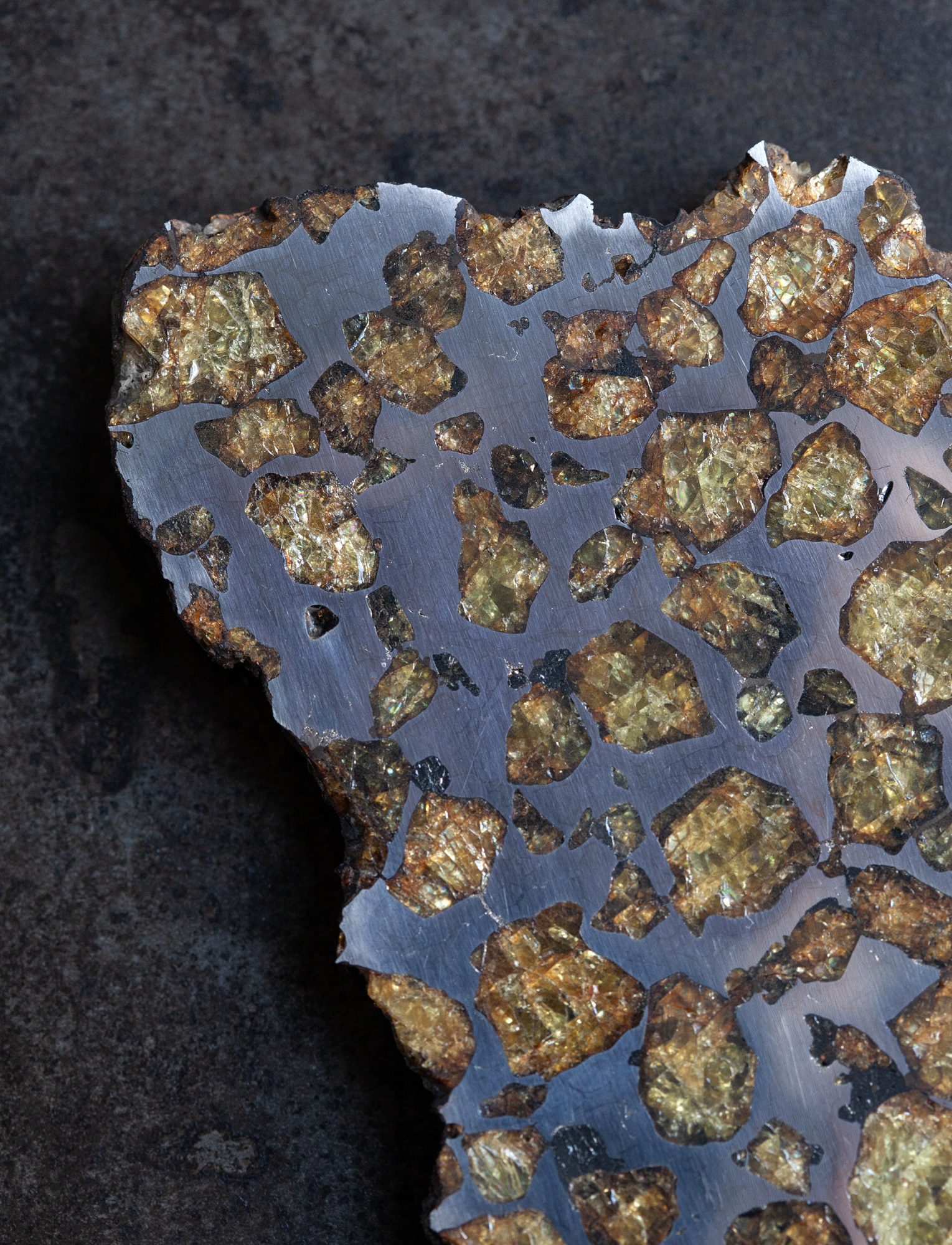
A striking Pallasite meteorite from the remarkable Imilac fall
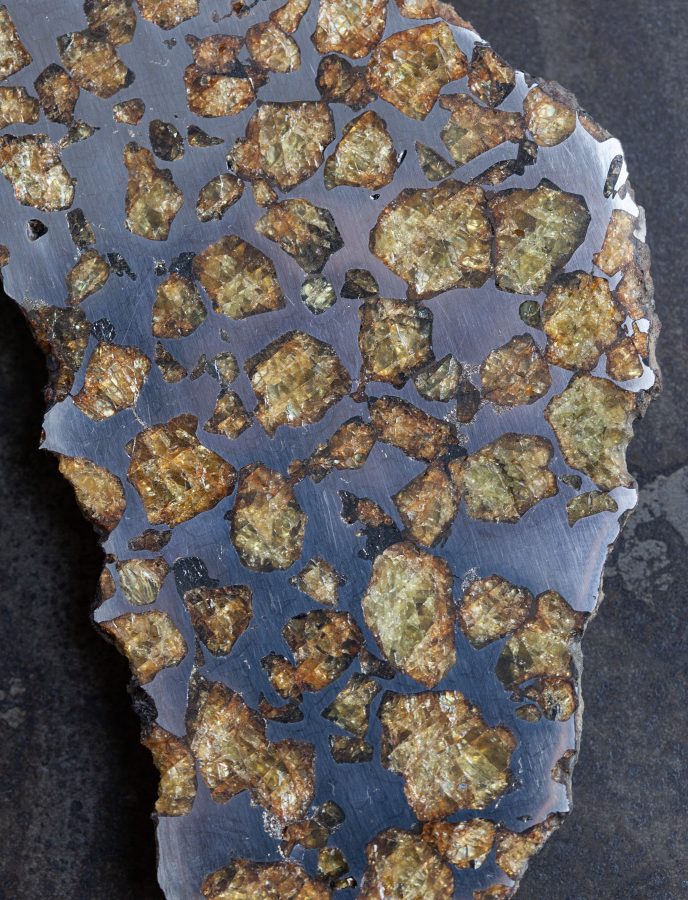
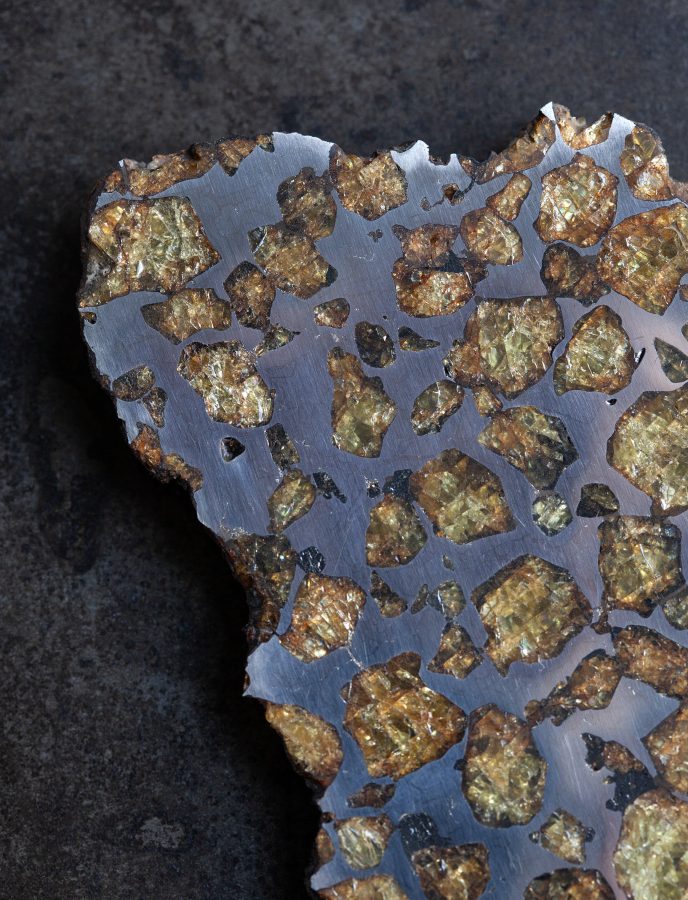
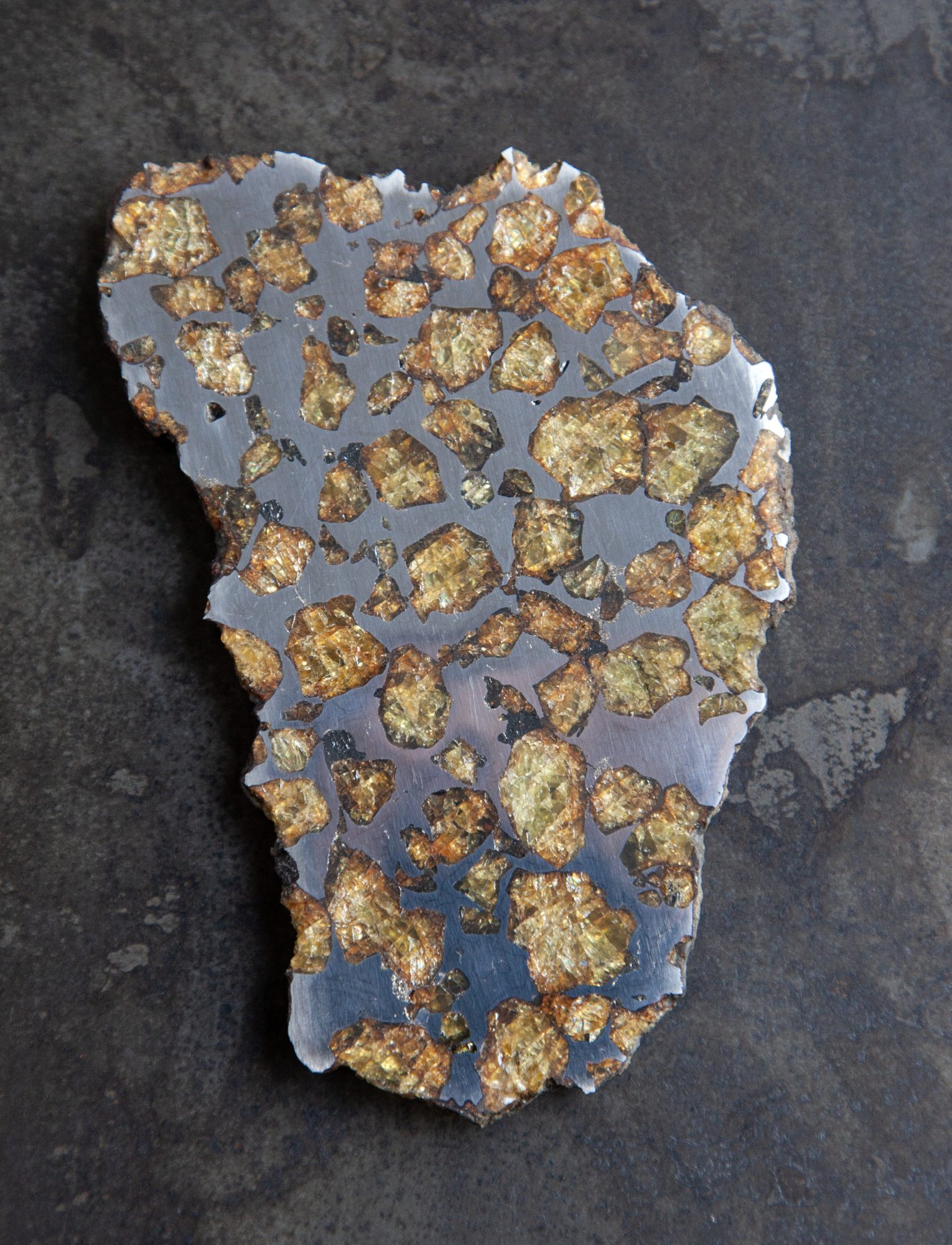
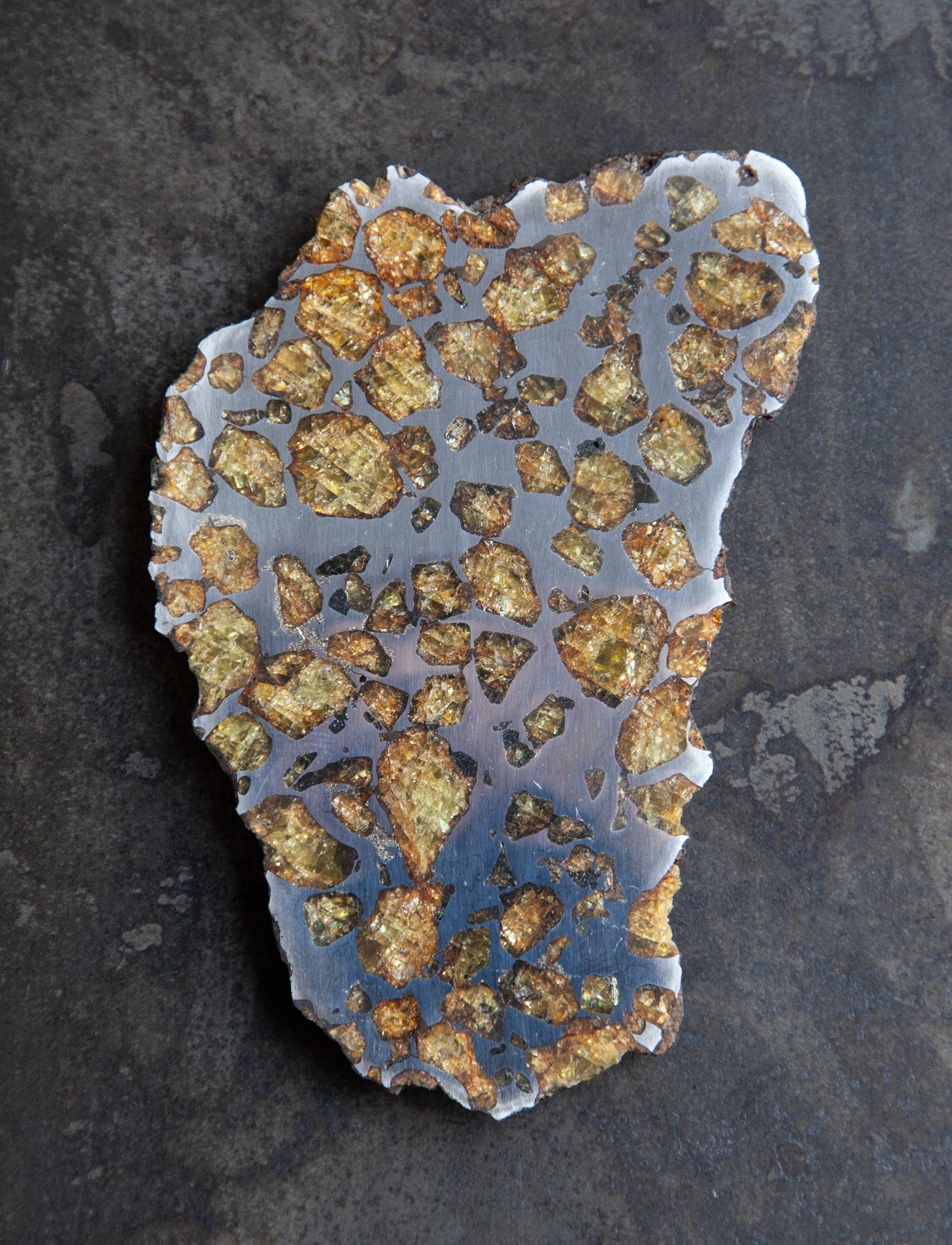
The Imilac meteorite is one of the most beautiful and highly regarded examples of extraterrestrial material ever discovered, renowned for its extraordinary combination of metallic brilliance and translucent gemstone-like crystals. Found in Chile’s Atacama Desert in 1822, this remarkable stony-iron meteorite belongs to the Main Group Pallasites, a rare class believed to originate from the complex interior of an ancient asteroid. Formed approximately 4.5 billion years ago, Imilac is composed predominantly of an iron-nickel metallic matrix, within which spectacular crystals of olivine — the mineral prized in its gem-quality form as peridot — are naturally suspended. When sliced and polished, these luminous crystals reveal exquisite shades of emerald green, golden yellow and warm amber, contrasting magnificently against the reflective silver-grey metal surrounding them. The result is an extraordinary natural mosaic, created through the collision and mixing of materials from the metallic core and rocky mantle regions of an ancient celestial body. Each specimen possesses its own distinctive arrangement of crystals, making every substantial slice a unique expression of nature’s artistry and one of the most visually captivating objects in the world of meteorite collecting.
What makes Imilac particularly desirable is its rarity within an already exceptionally scarce category of meteorites. Pallasites account for approximately 0.2% of all known meteorite finds, making them among the rarest major meteorite classifications; by comparison, ordinary chondrites represent the overwhelming majority of recovered specimens. Although Imilac has a substantial documented total known mass of approximately 920 kilograms, this figure represents the combined weight of material recovered over many years, rather than the availability of exceptional individual specimens. Its discovery history dates back to the early nineteenth century, with further significant masses recovered in subsequent years, and its reputation has grown steadily among collectors and institutions worldwide. Imilac is particularly prized for its large, translucent olivine crystals, which are often beautifully preserved in substantial pieces, whereas smaller or more heavily weathered fragments may have lost much of their original crystalline beauty. The Natural History Museum in London, for example, holds 22 registered Imilac specimens within its collection, testament to its scientific and historical importance. Combining extraordinary antiquity, exceptional aesthetics and membership of one of the rarest meteorite families, Imilac occupies a distinguished position among the world’s finest natural treasures — a spectacular fragment of another world, in which the beauty of precious gemstones meets the history of the cosmos.