| Location: | Saaremaa, Estonia |
|---|---|
| Age: | 4.5 Billion Years |
| Size: | H22.9cm W12cm D7cm |
| Price: | P.O.A |
| Availability: | Available | Enquire |
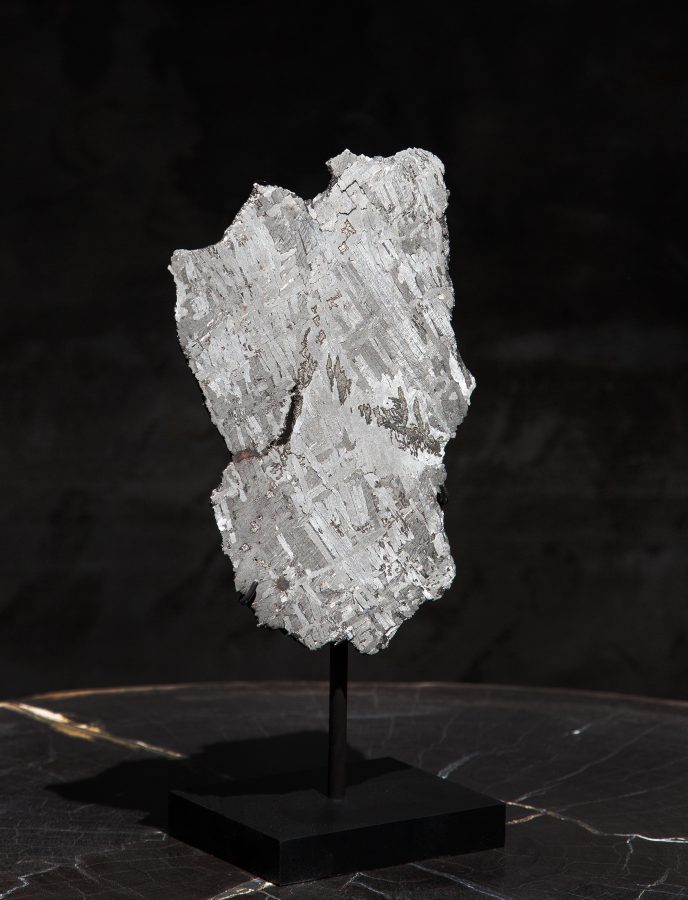
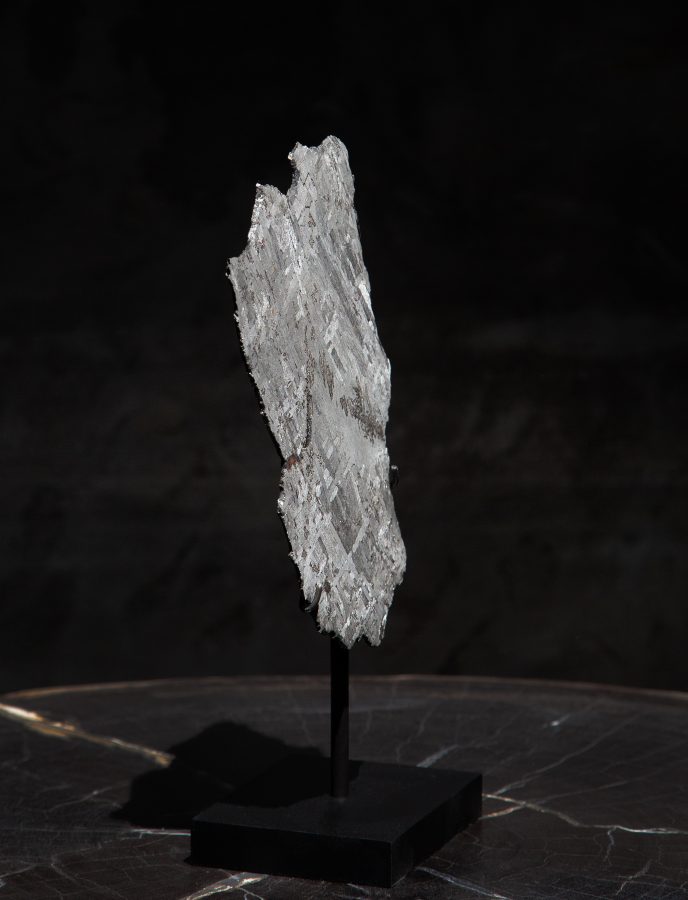
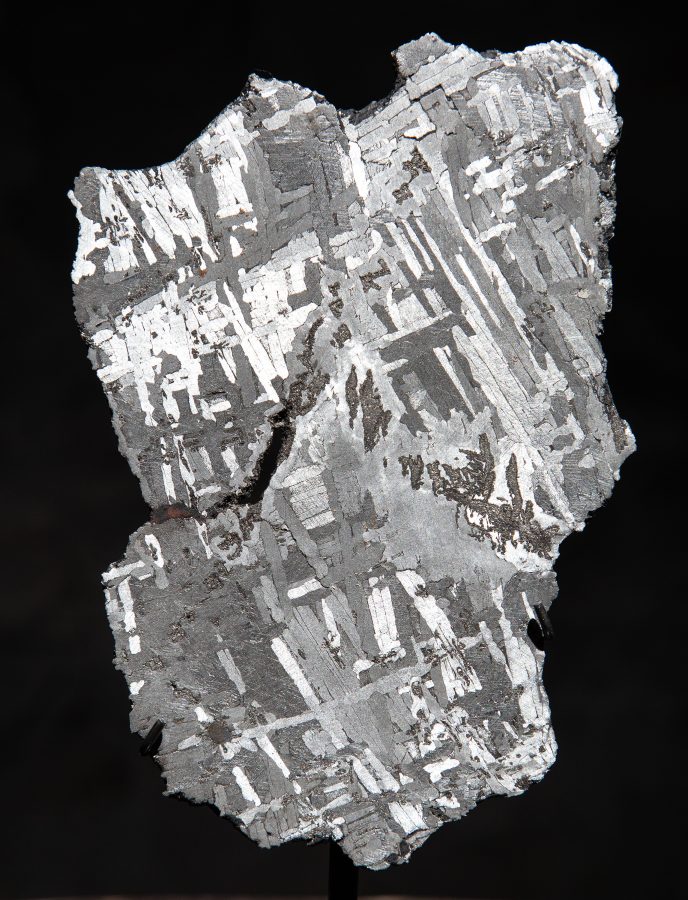
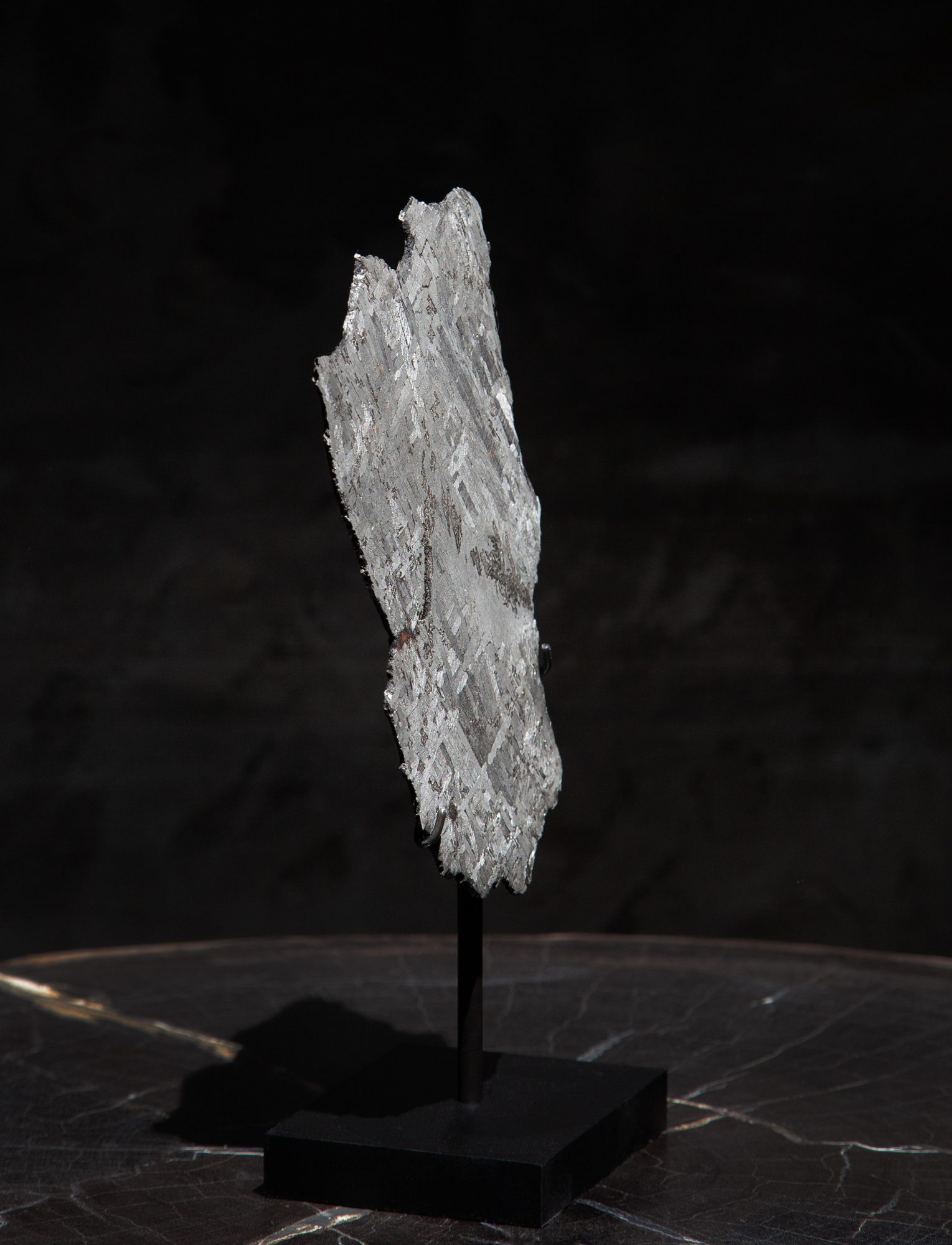
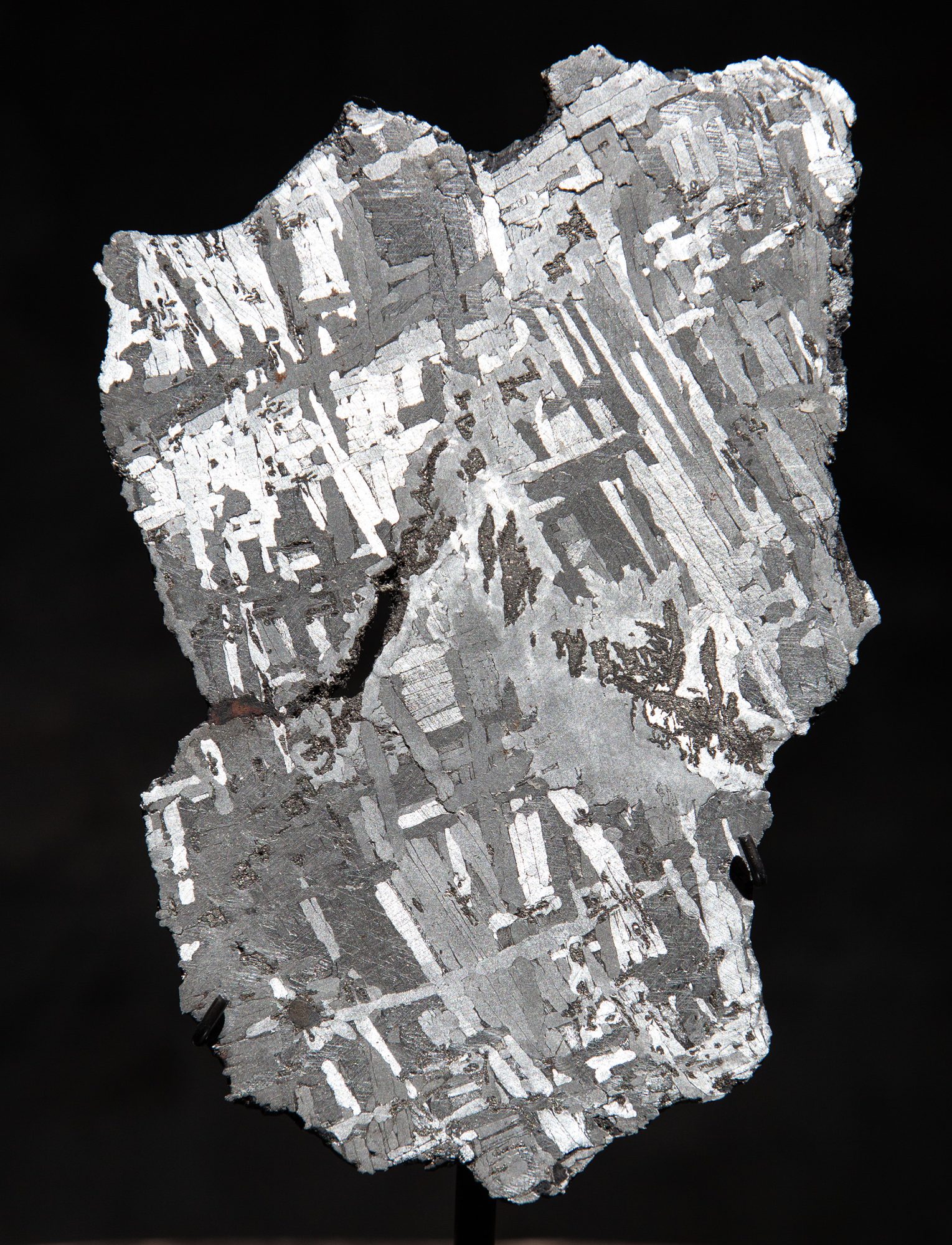
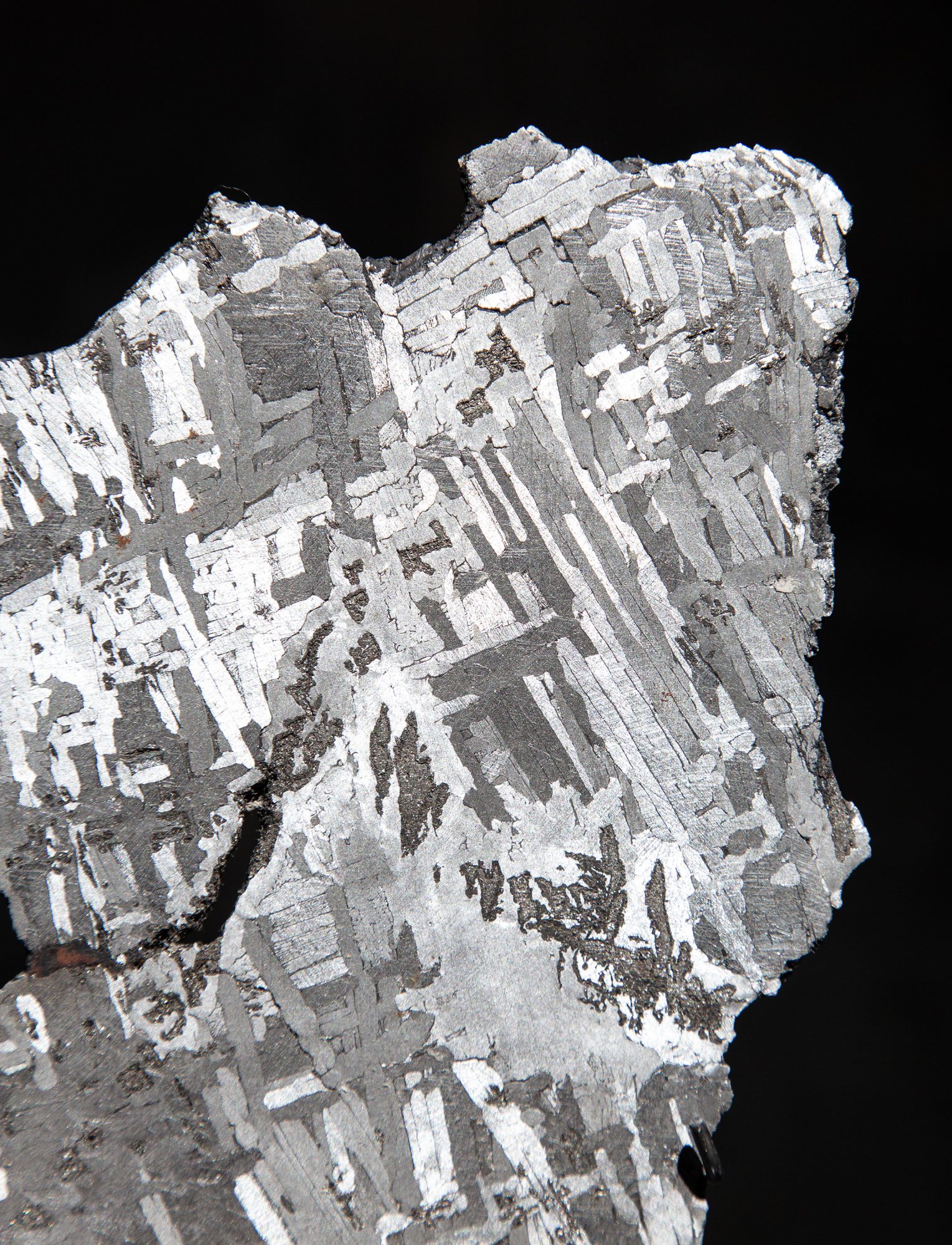
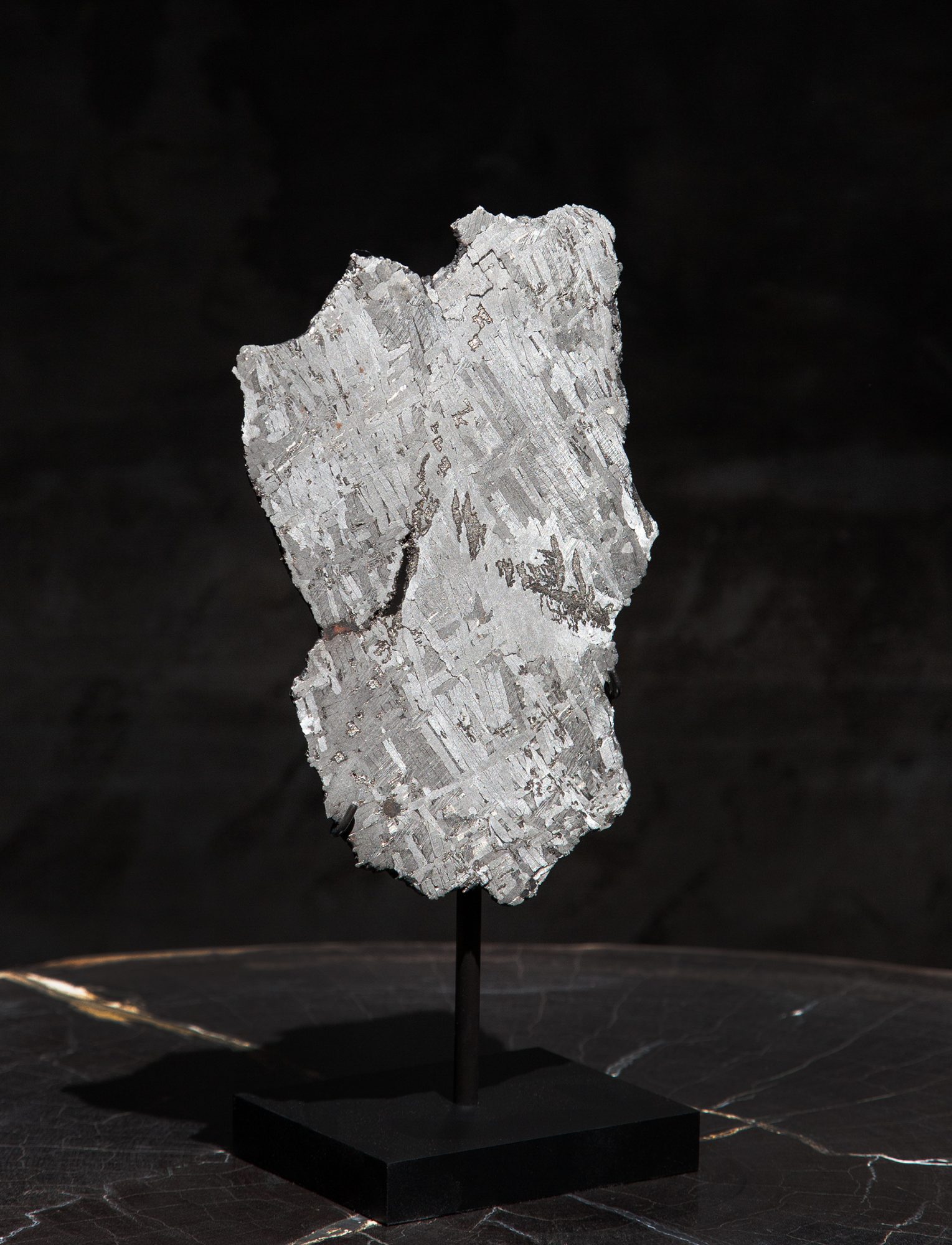
Mounted Kaalijarv Iron Meteorite Slice
Dimensions include stand
Meteorite only H17.5cm W12cm D2mm
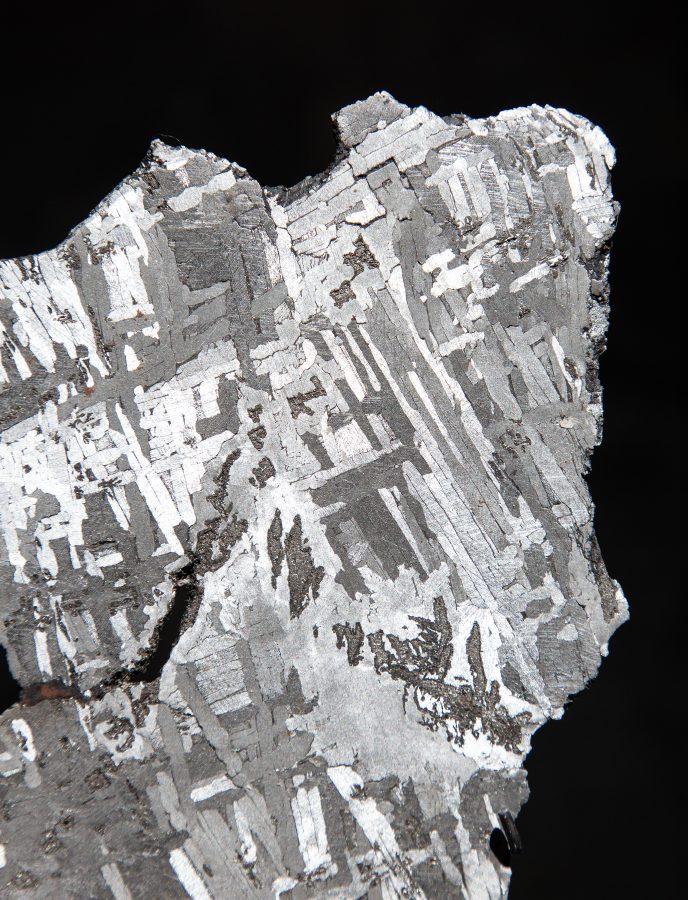
The Kaalijärv meteorite is an extraordinary chapter in the history of extraterrestrial impacts, renowned for the remarkable event that transformed the landscape of Saaremaa Island in Estonia. Classified as an iron meteorite of the coarse octahedrite group, it is composed predominantly of iron and nickel, with a distinctive mineral structure comprising kamacite, taenite and schreibersite. Its metallic interior, when expertly cut, polished and etched, reveals the mesmerising Widmanstätten pattern — an intricate crystalline geometry created through the extraordinarily slow cooling of molten metal within its parent asteroid over millions of years. Rich in nickel and containing trace elements including iridium, gallium, germanium, platinum and gold, Kaalijärv preserves a fascinating chemical record of its extraterrestrial origins. These surviving fragments are particularly compelling because they represent the remnants of a cosmic visitor whose arrival left one of Europe’s most remarkable meteorite crater fields.
The meteorite’s history is inseparable from the dramatic impact that created the famous Kaali crater field, comprising nine individual craters, including the spectacular 110-metre-wide Kaalijärv crater, now occupied by a lake. Although the precise date remains debated, scientific studies place the event thousands of years ago, with estimates ranging from approximately 3,500 to 7,600 years before present. The meteorite fragmented during its descent, scattering iron-rich material across the landscape and leaving an extraordinary geological signature. Its extraterrestrial origin was conclusively established in 1937, when mining engineer Ivan Reinwald recovered small fragments of nickel-iron from the surrounding craters. Remarkably, only a few kilograms of documented meteoritic material have ever been recovered, making authentic Kaalijärv specimens particularly scarce and historically significant. Combining exceptional metallic beauty, a fascinating mineralogical composition and an extraordinary connection to one of Europe’s most celebrated impact events, Kaalijärv is far more than a meteorite: it is a tangible fragment of a cosmic event that forever altered a landscape and became part of human history.