| Location: | Algeria |
|---|---|
| Age: | 4 Billion Years |
| Size: | H24.7cm W17.2cm D7cm |
| Price: | P.O.A |
| Availability: | Available | Enquire |
Dimensions listed include stand.
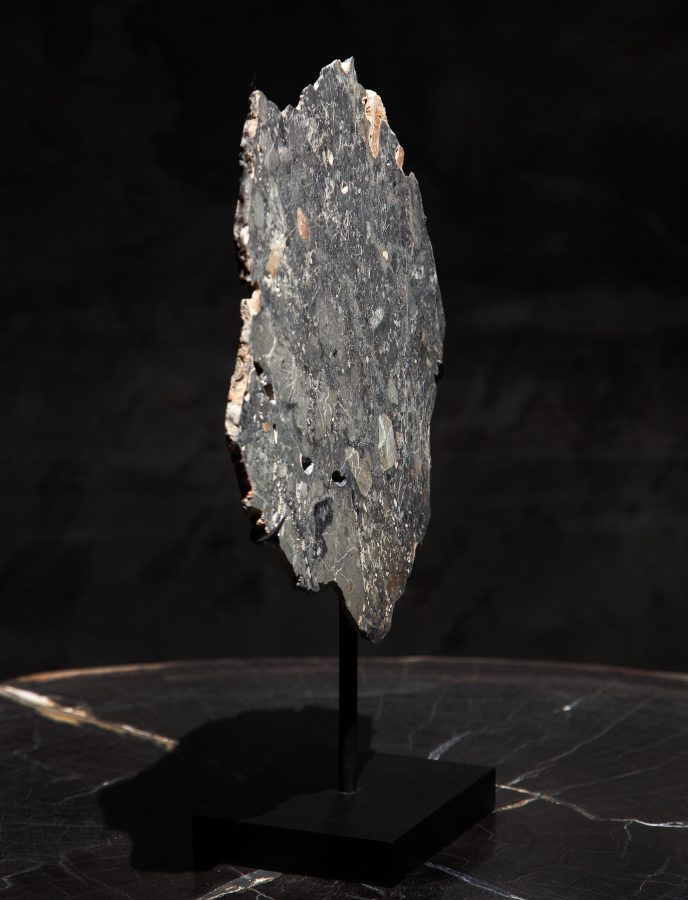
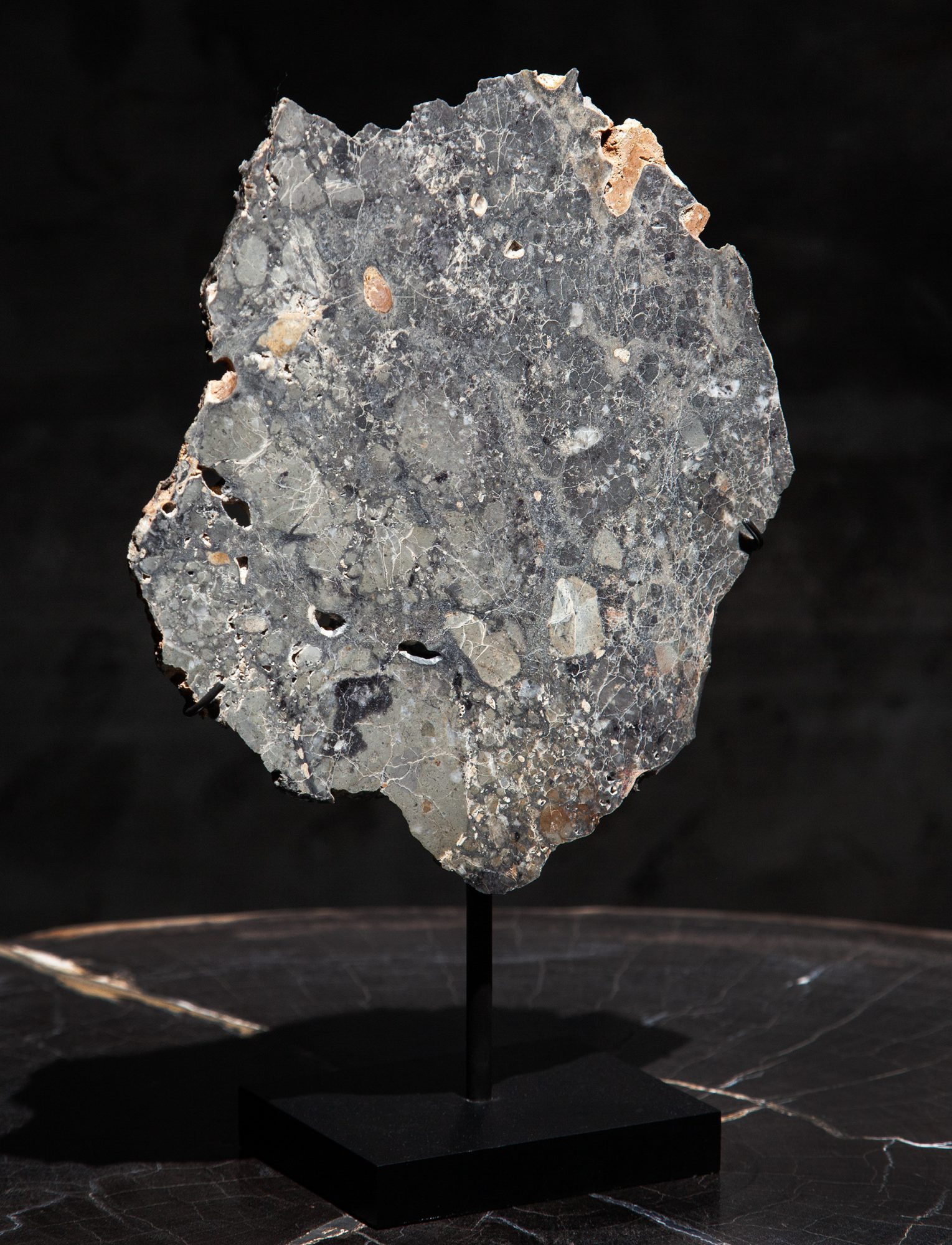
Meteorite Only H18.6cm W17.2cm D4.5mm
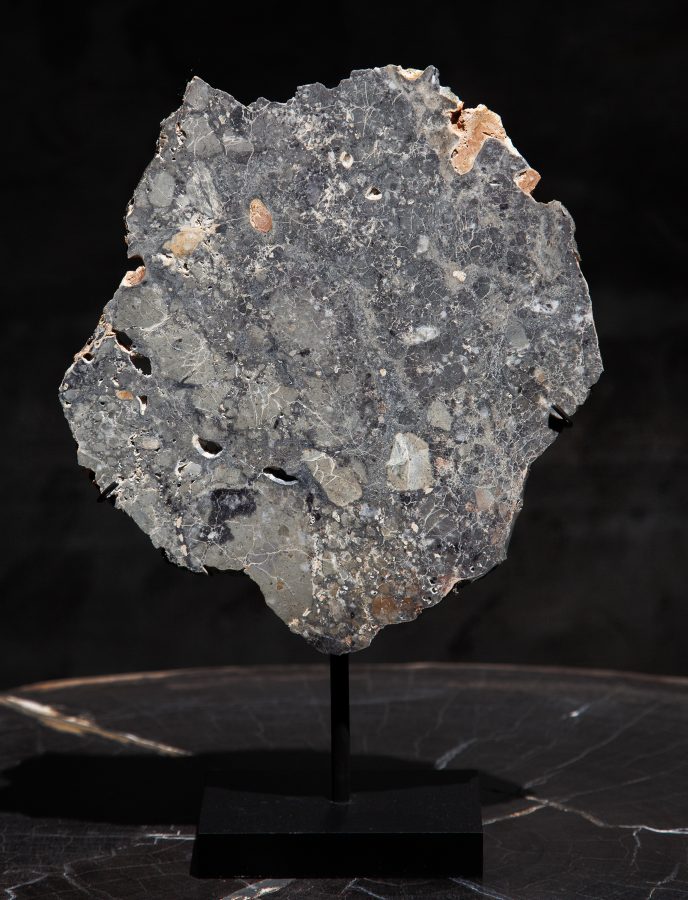
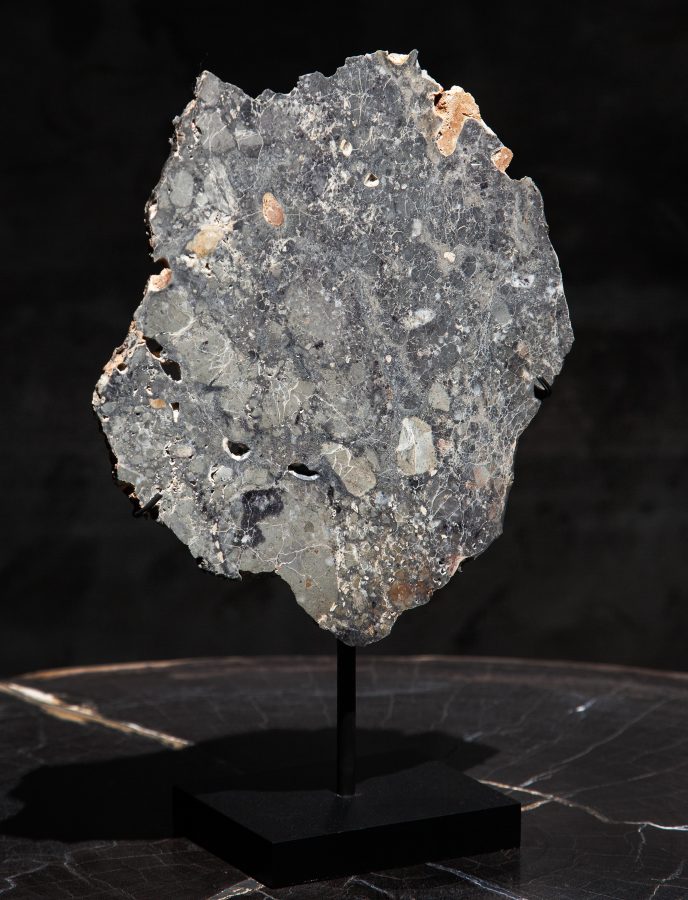
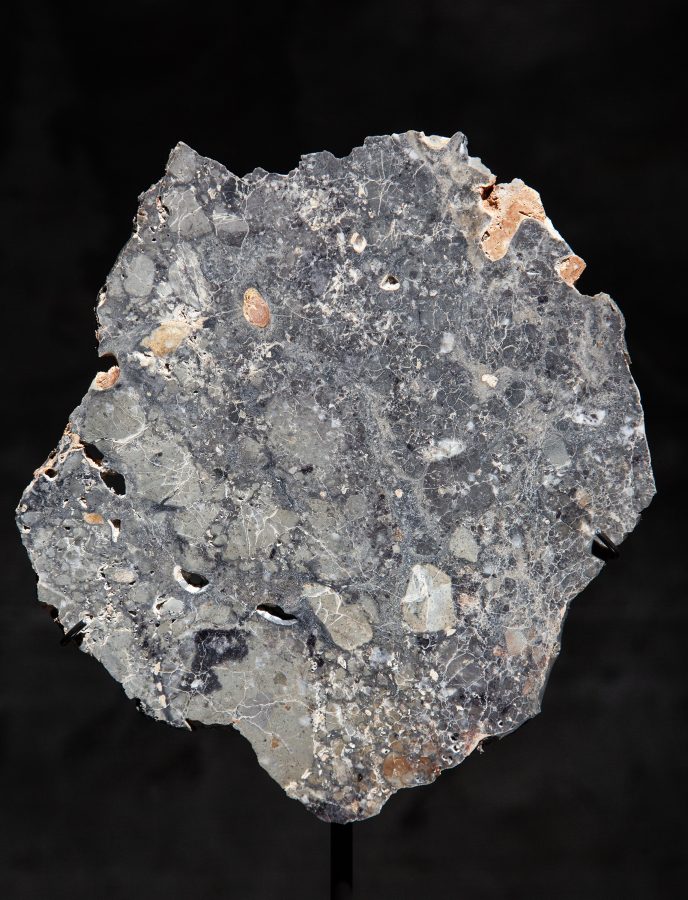
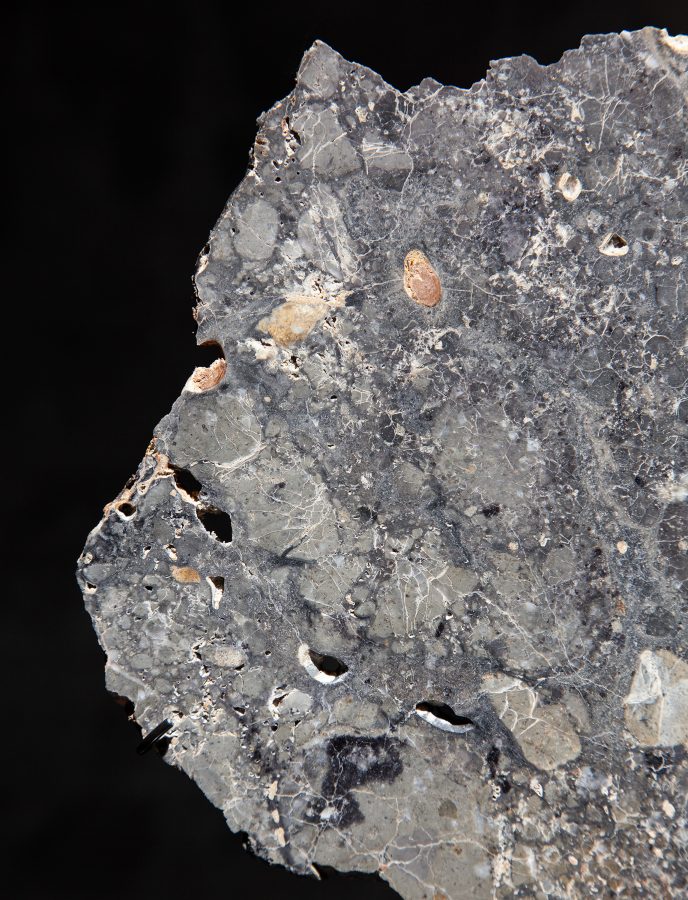
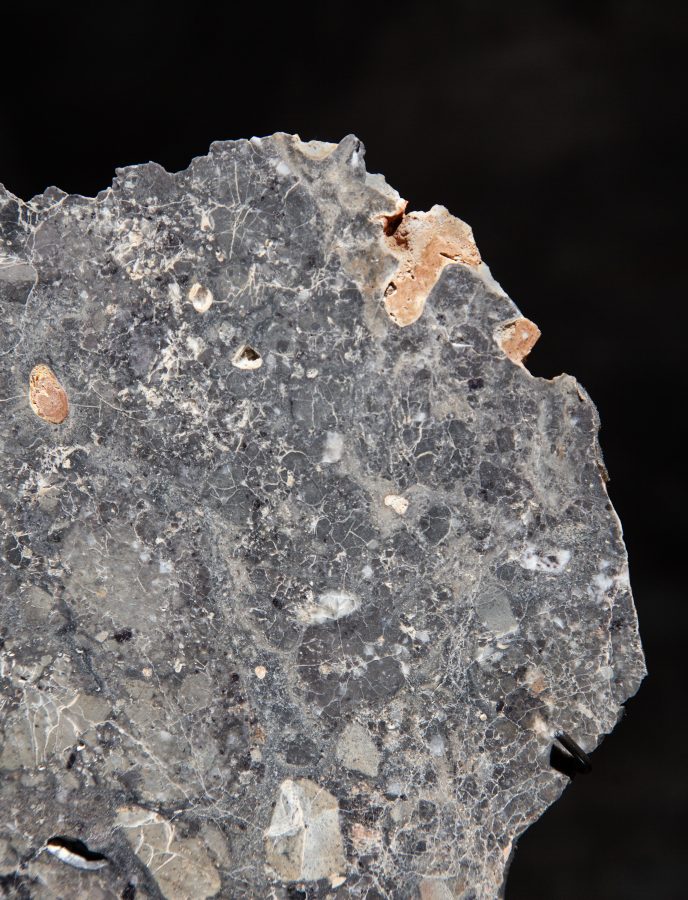
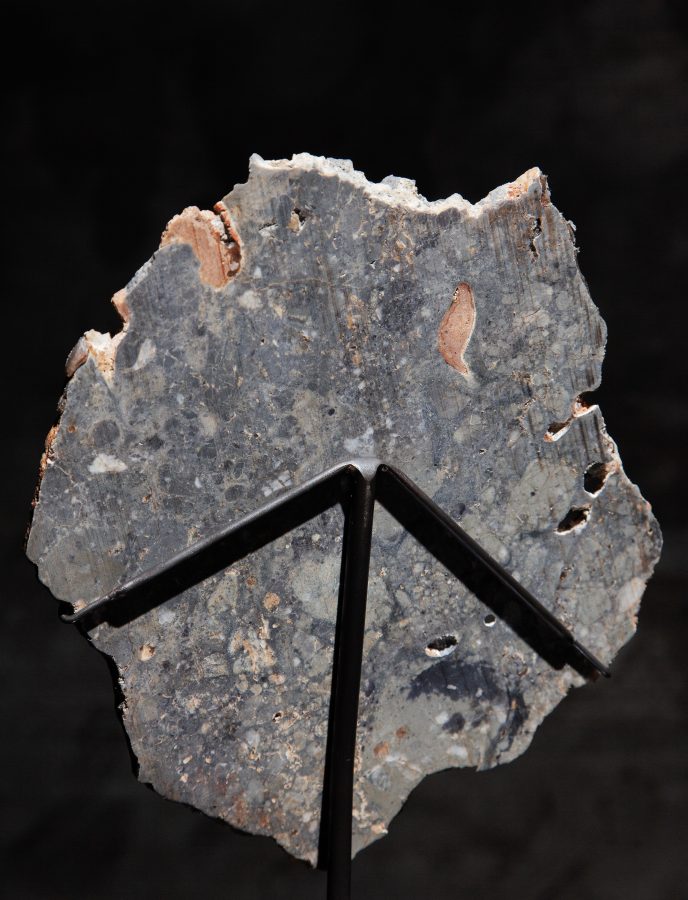
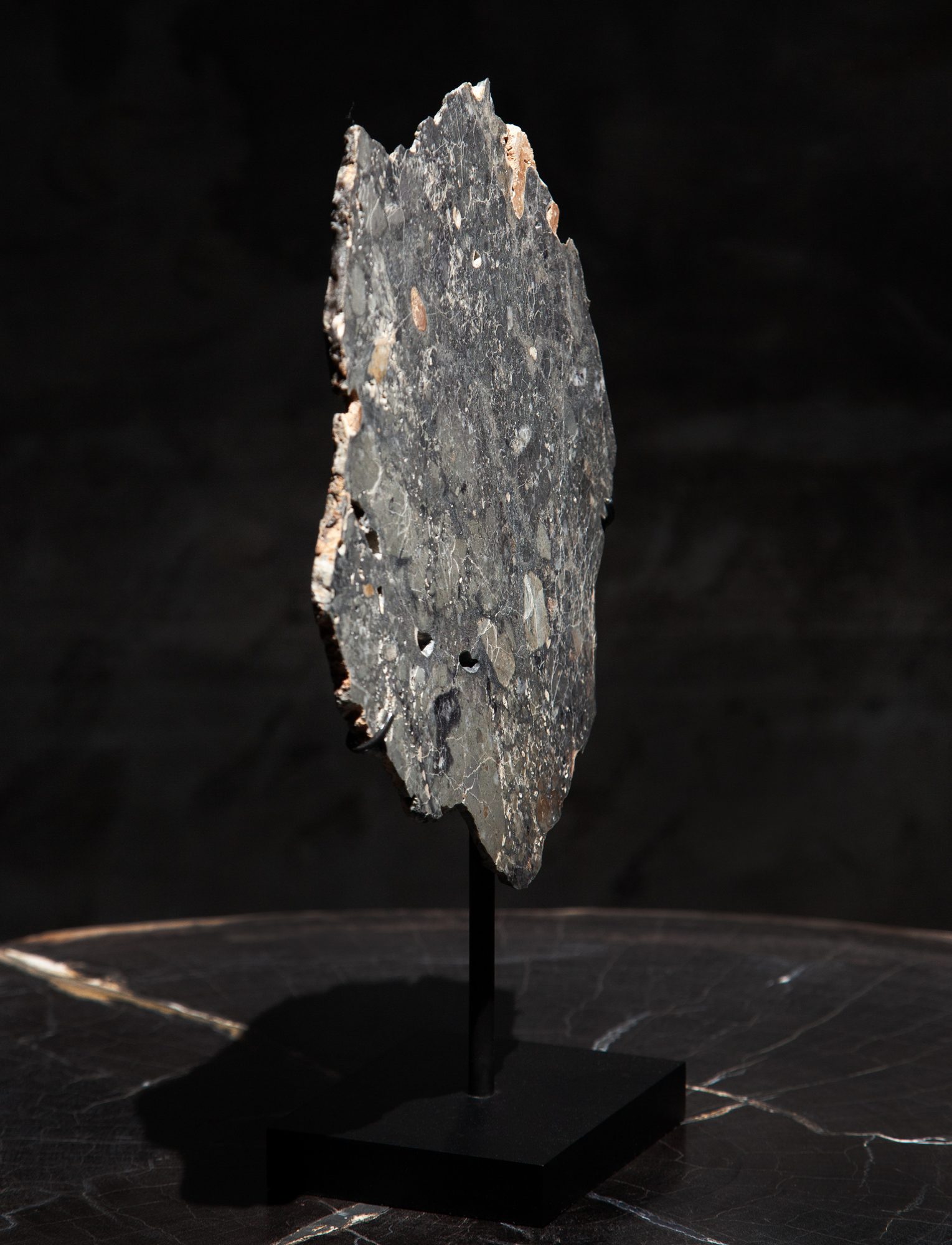
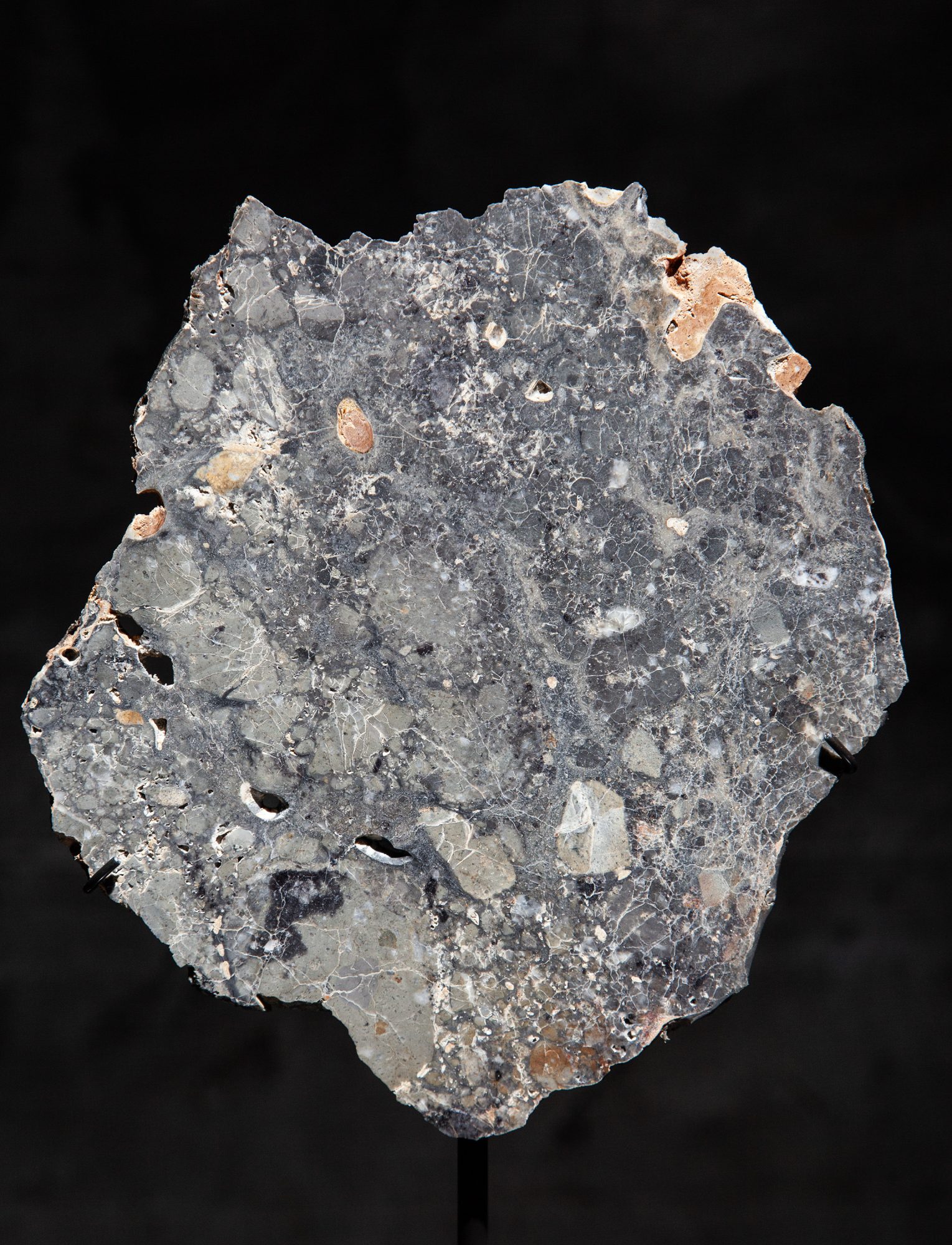
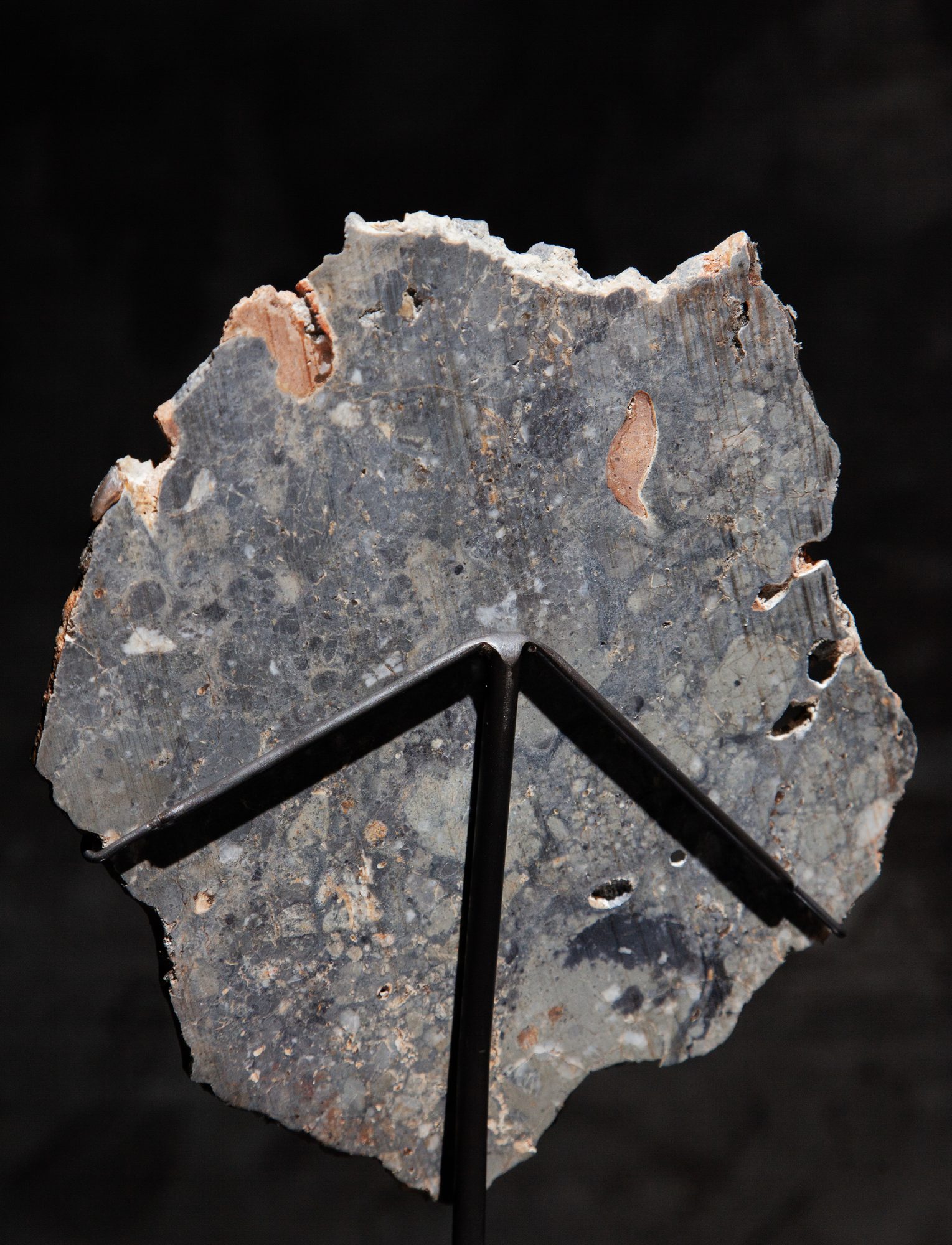
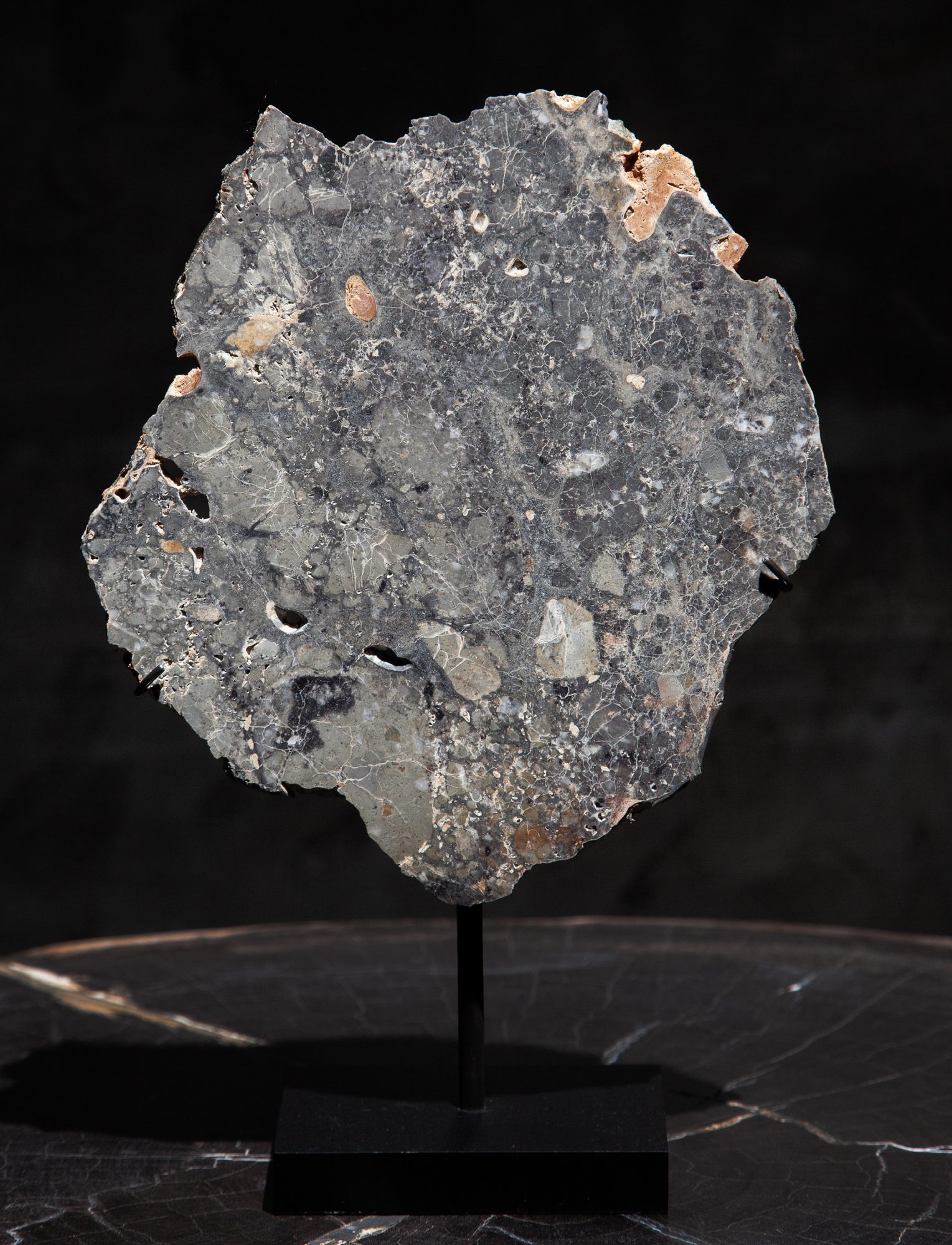
Adrar 017 Lunar Meteorite – A large slice of The Moons primordial highlands
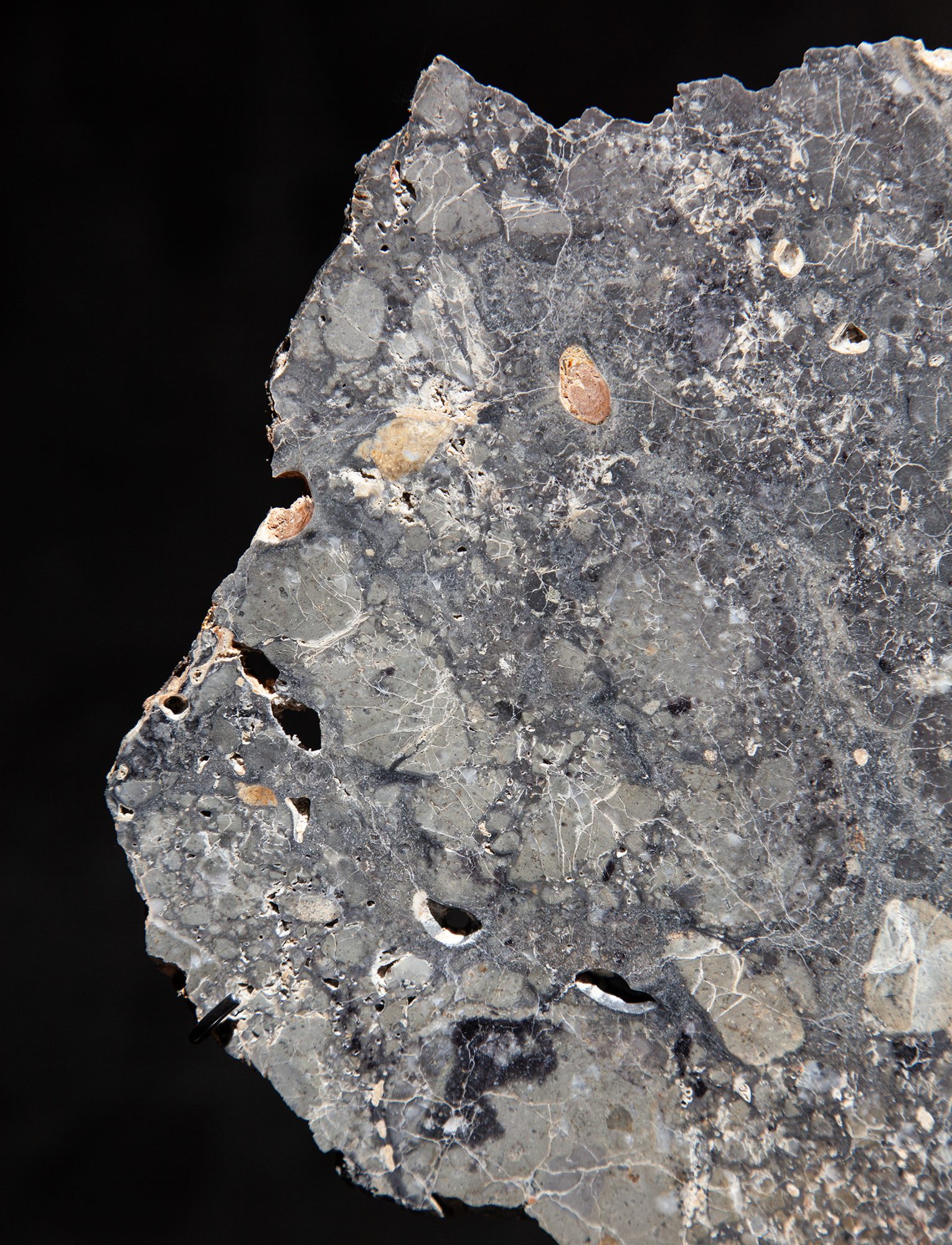
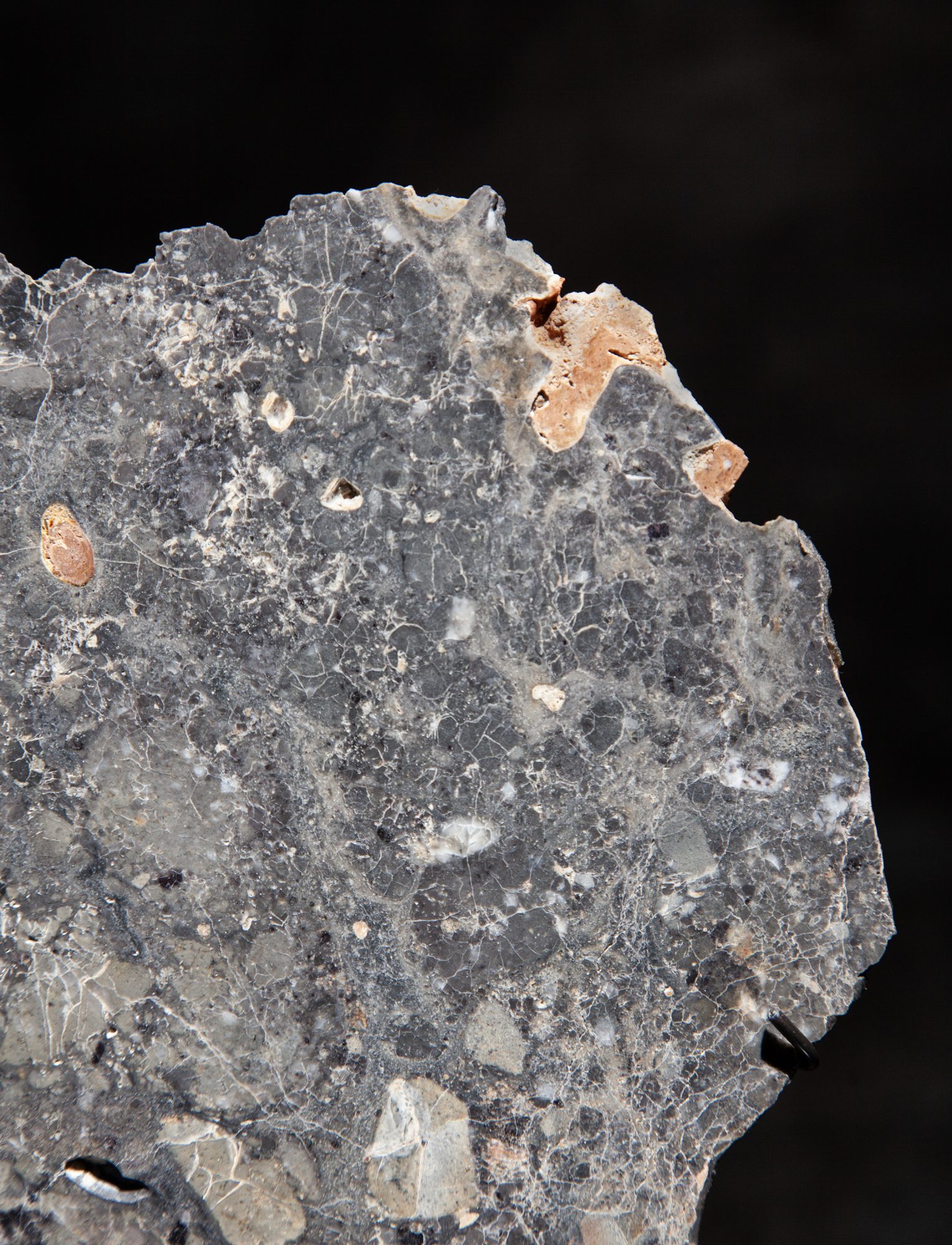
The Adrar 017 lunar meteorite is a remarkable treasure from the Moon, classified as a troctolitic anorthosite—a plutonic rock type that records the Moon’s early crust as it crystallized from cooling magma. Troctolitic means it is dominated by large, plagioclase-rich crystals (anorthite) with intergrown olivine and pyroxene, forming a coarse, nearly bedrock-like texture. This composition speaks to the Moon’s primordial crustal assembly, likely originating from highlands regions formed as the early crust thickened and differentiated. In broad terms, Adrar 017 preserves the cool, slow crystallization history of lunar rocks, offering a pristine glimpse into the processes that built the Moon’s ancient surface.
In space, Adrar 017 embarked on an epic journey that began with its birth in the Moon’s crust, far from Earth’s atmosphere. As a lunar fragment, it was blasted loose by a colossal impact, then rode the vacuum and radiation of interplanetary space for eternity. Its troctolitic anorthosite composition helps scientists trace its origin to the Moon’s northern highlands region or other crustal domains where anorthosite suites are common, though precise provenance remains a topic of ongoing research. The rock’s survival through atmospheric entry would have included brief heating and partial melting in melt pockets, followed by rapid cooling as it settled into Earth’s neighbourhood, delivering a fiery but fleeting meteor event to observers below.
Lunar Meteorites are amongst the rarest natural materials on Earth – often cited as being far scarcer than diamonds or gold. Of all meteorites discovered around 0.6% of these are Lunar. The discovery of Adrar 017 is a landmark moment for lunar science, reflecting the rarity and scientific value of large lunar meteorites. Found in a desert landscape of Algeria where the sun scorches and wind erases footprints, this specimen immediately stood out for its size and the striking contrast of its light-coloured plagioclase against a darker mineral matrix. Large lunar meteorites like Adrar 017 are exceptionally scarce, making each discovery a priceless bridge to the Moon’s crustal history and a powerful reminder that the cosmos occasionally writes a direct, tangible note to Earth.