| Location: | Libya |
|---|---|
| Age: | 500 Million Years |
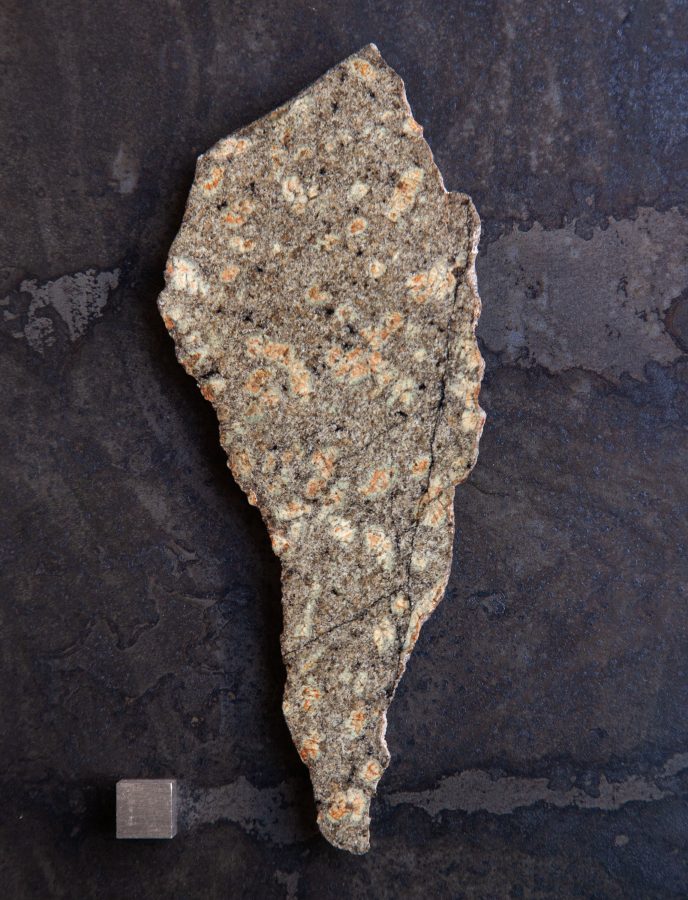
| Size: | H14.5cm W6cm D2.5mm |
| Price: | P.O.A |
| Availability: | Available | Enquire |
Newly discovered Bir al Jahmah 002 Martian Meteorite Slice
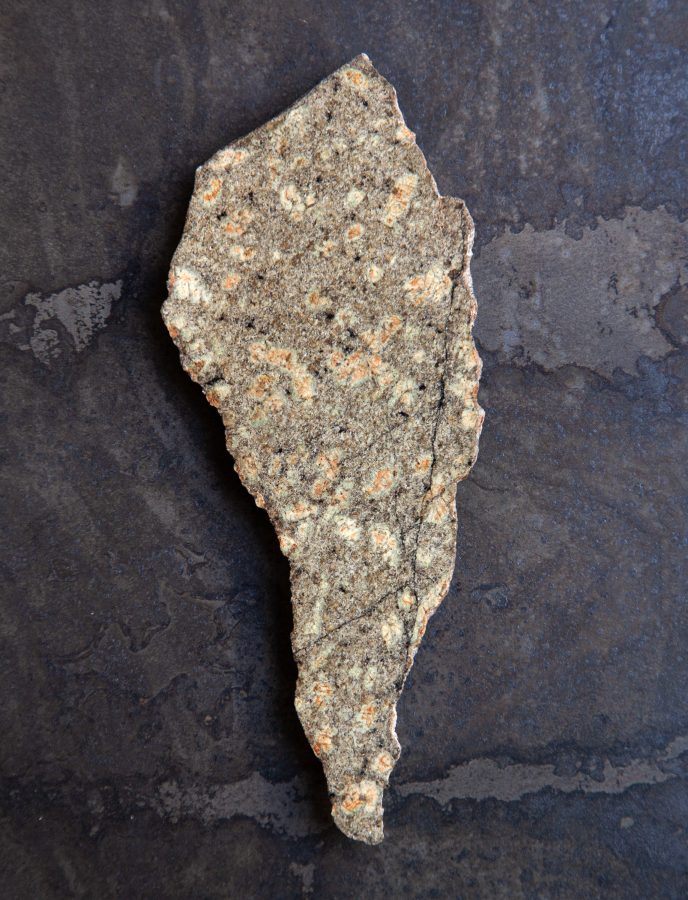
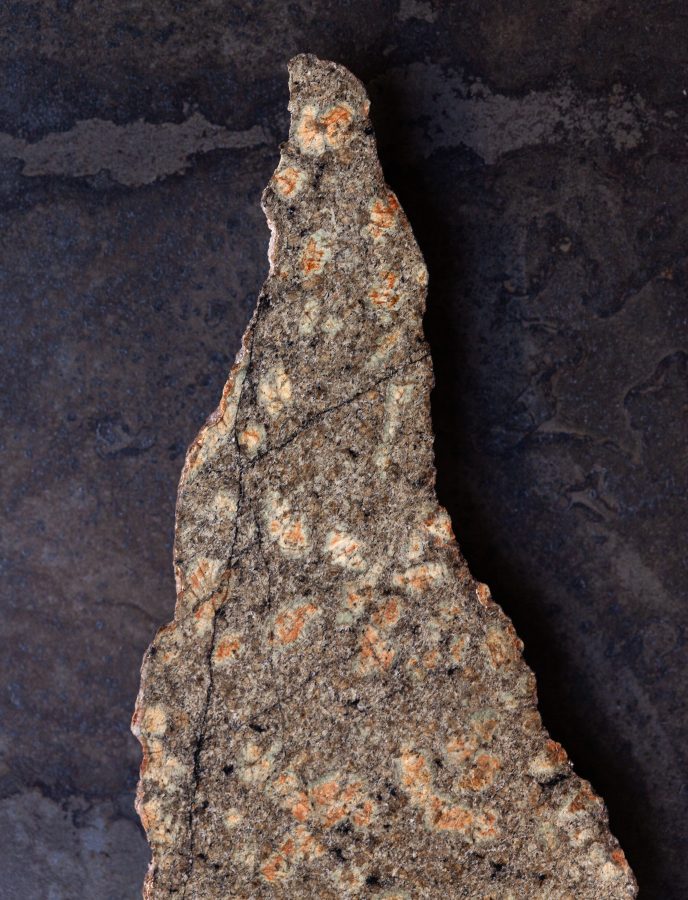
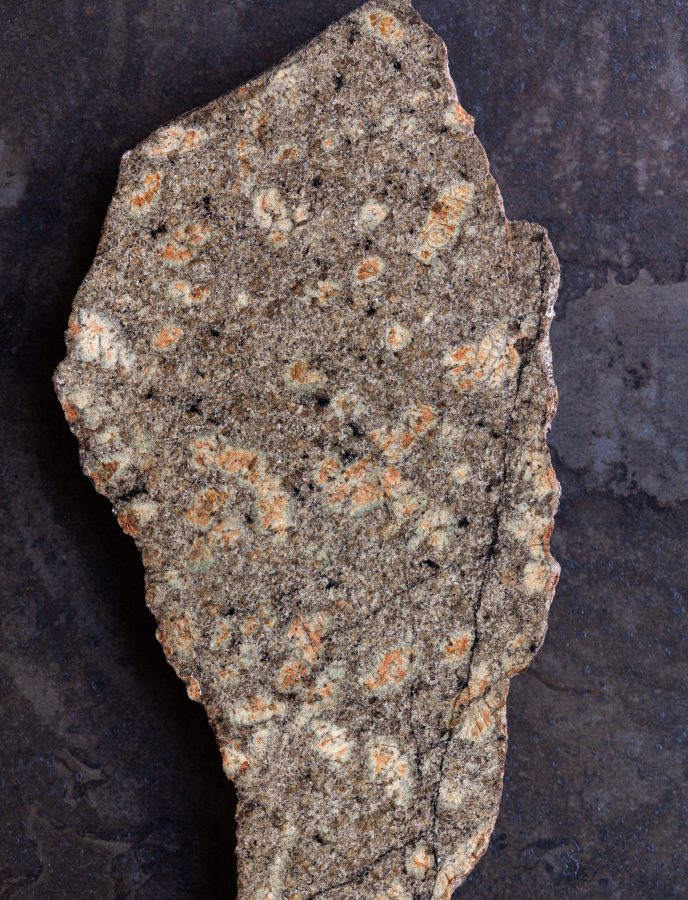
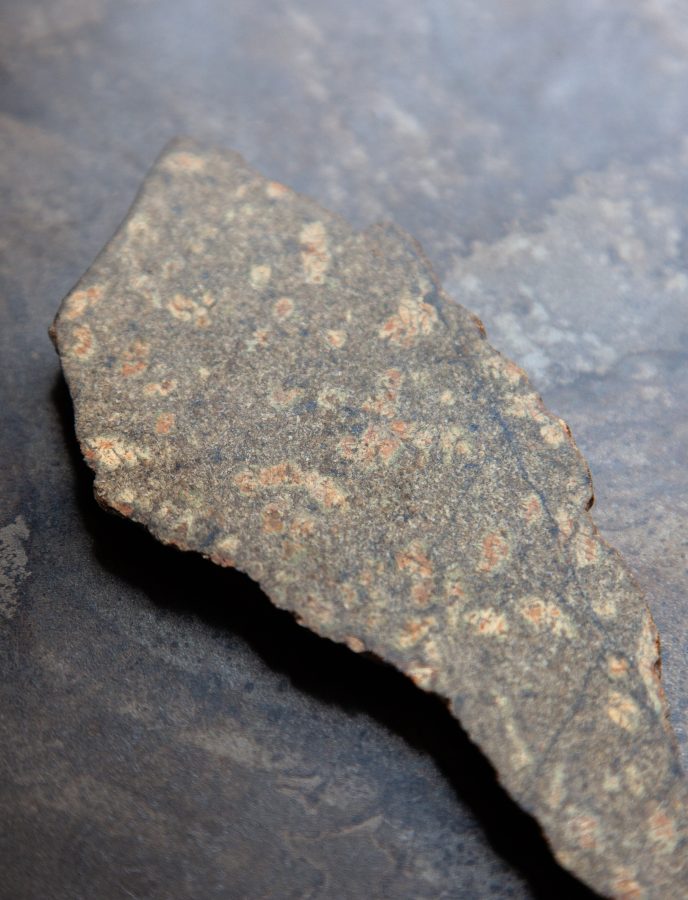
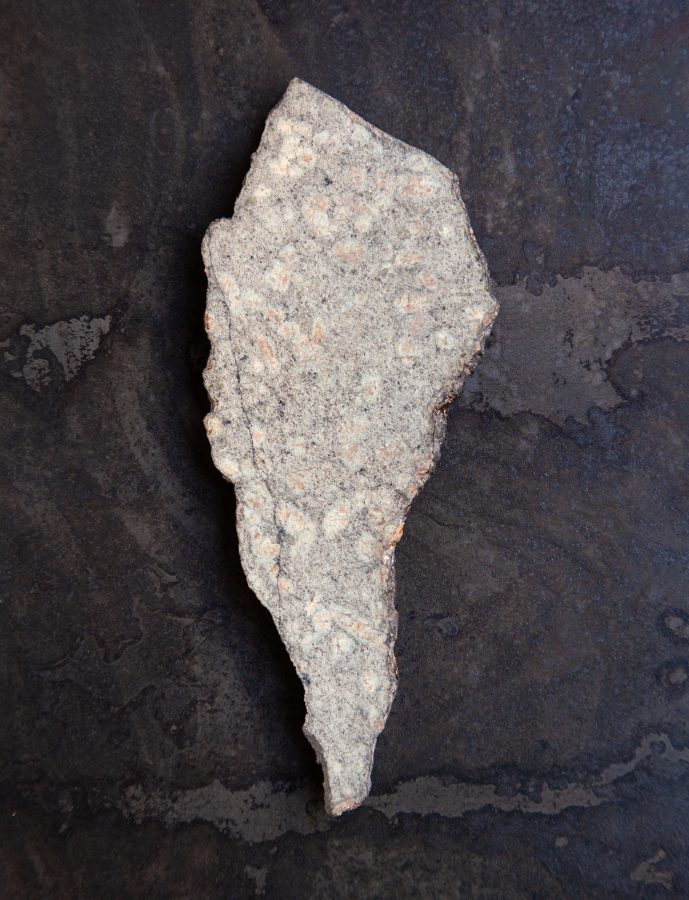
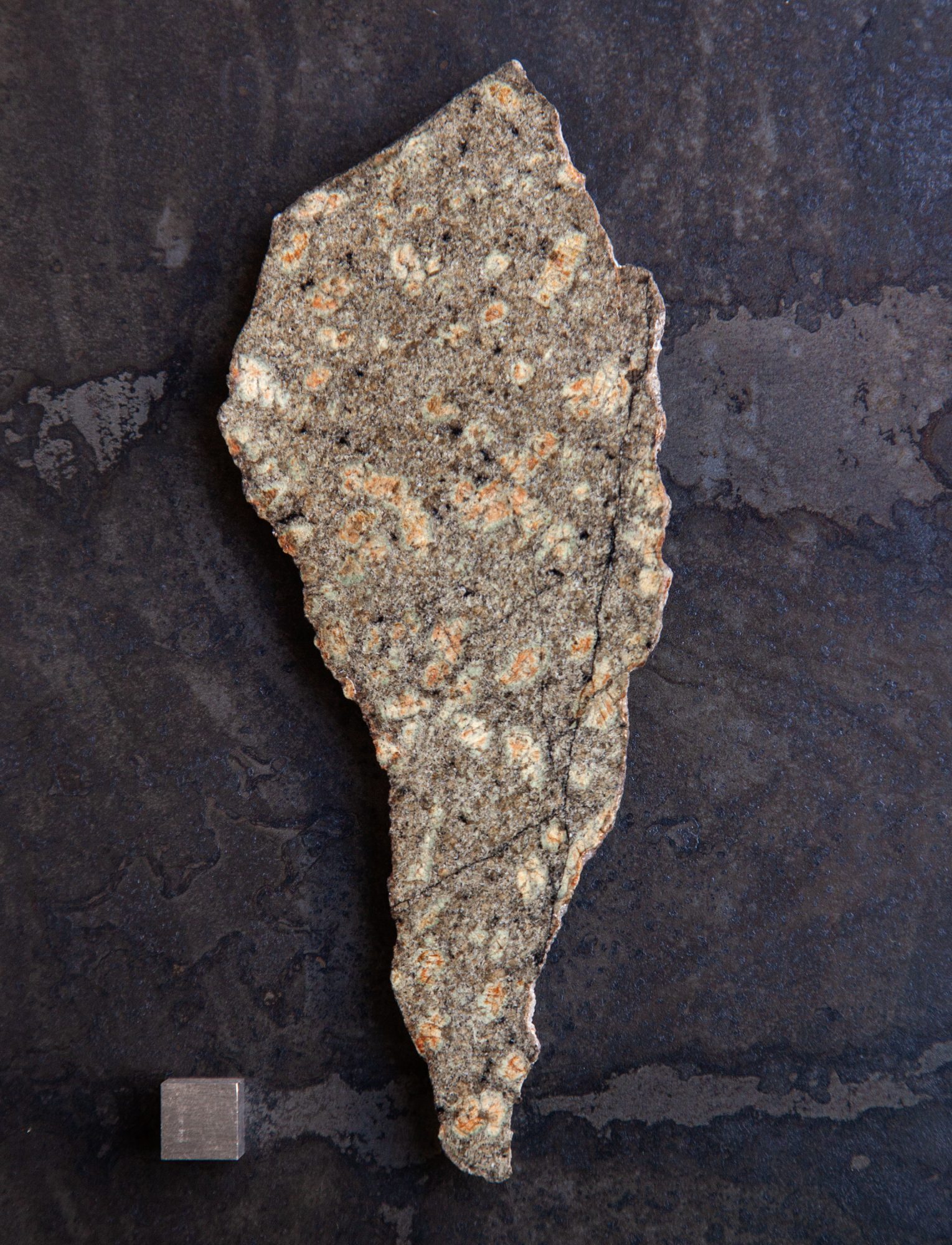
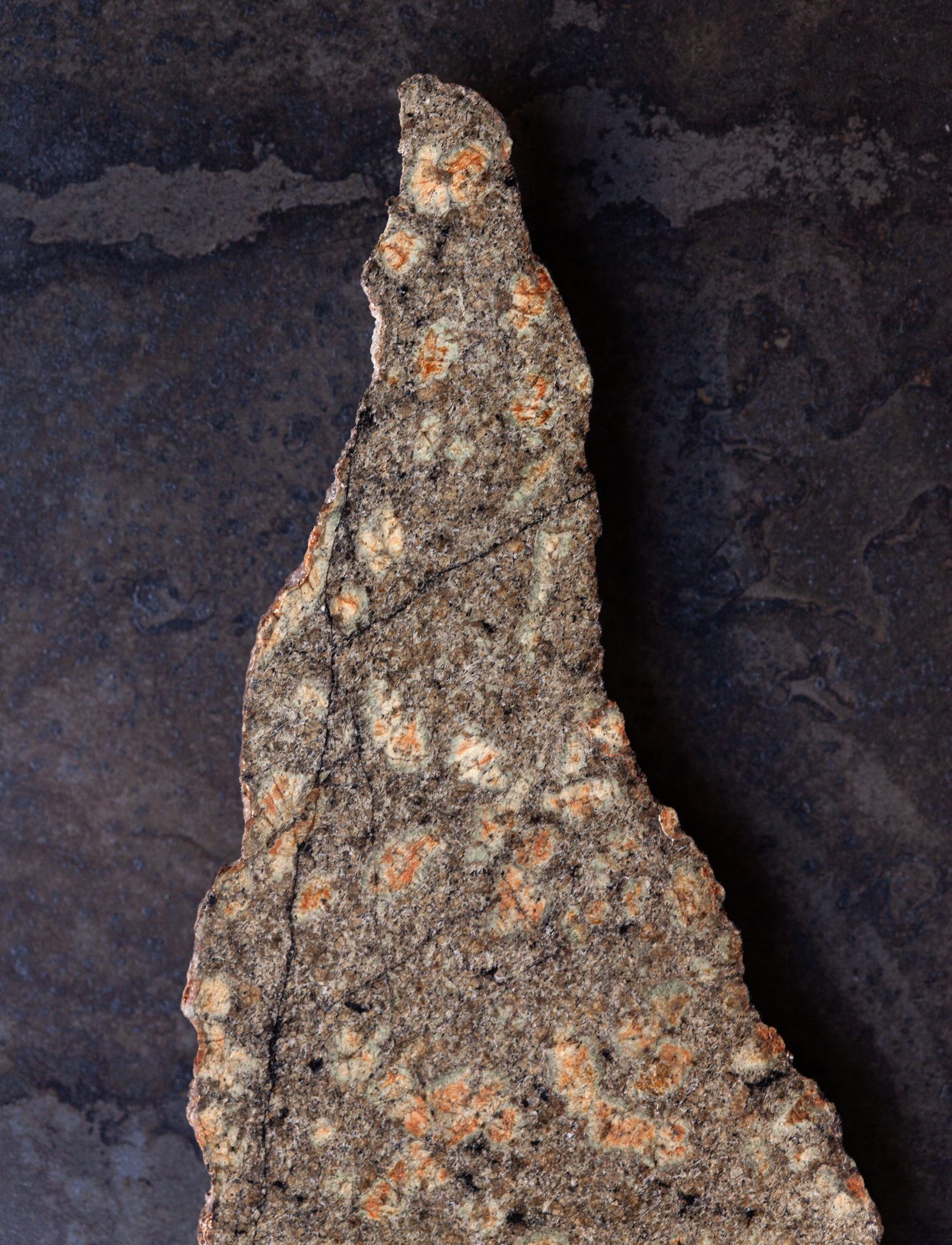
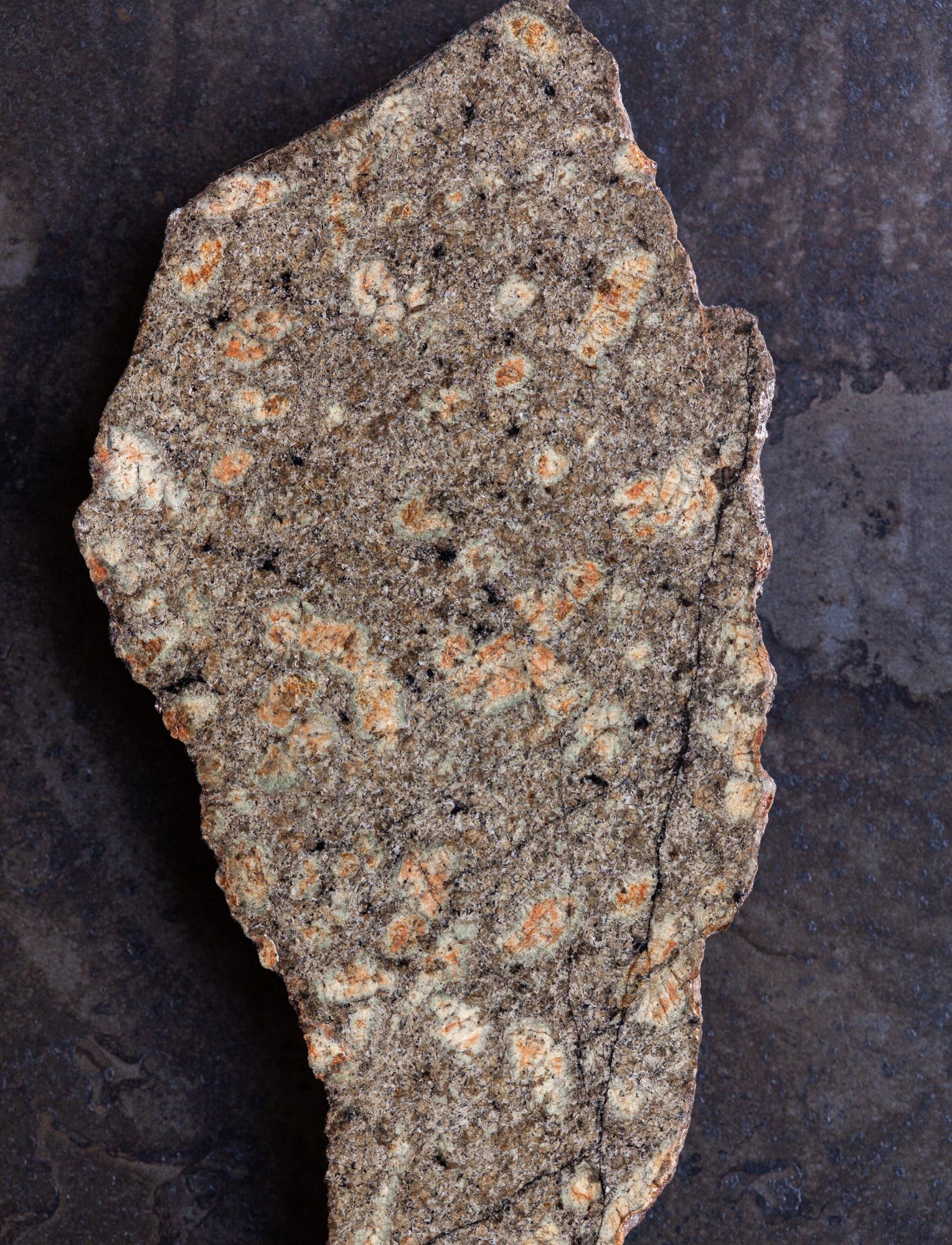
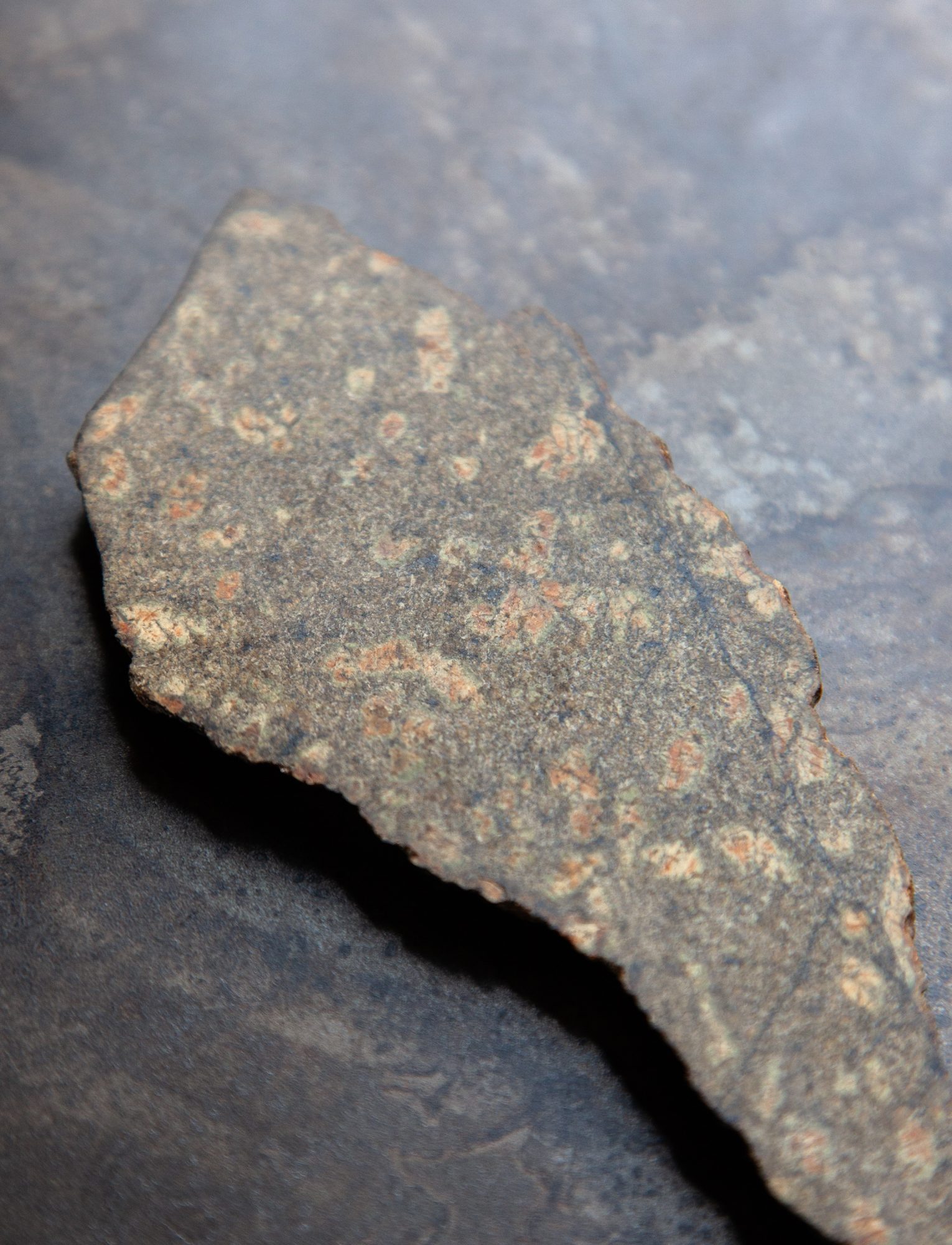
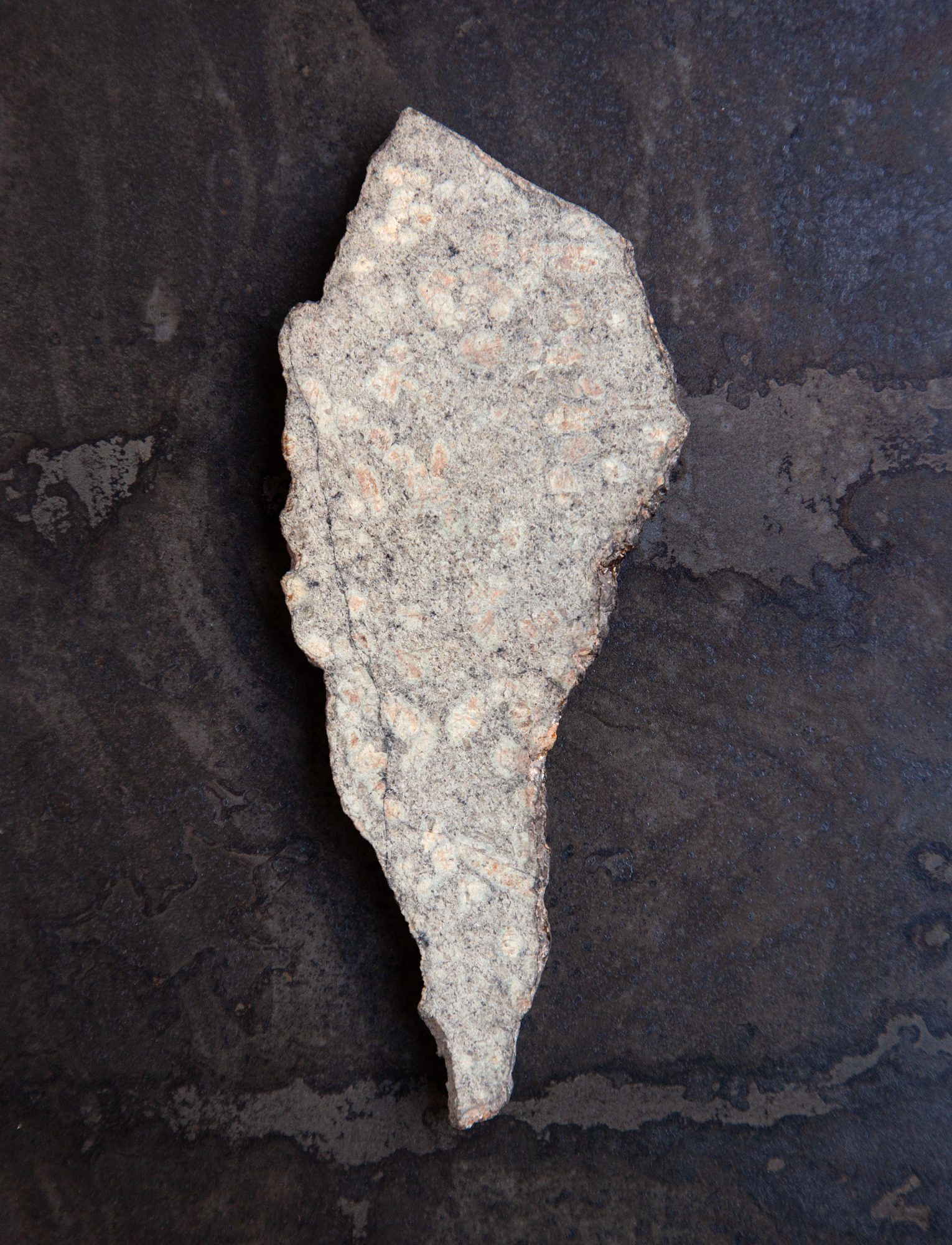
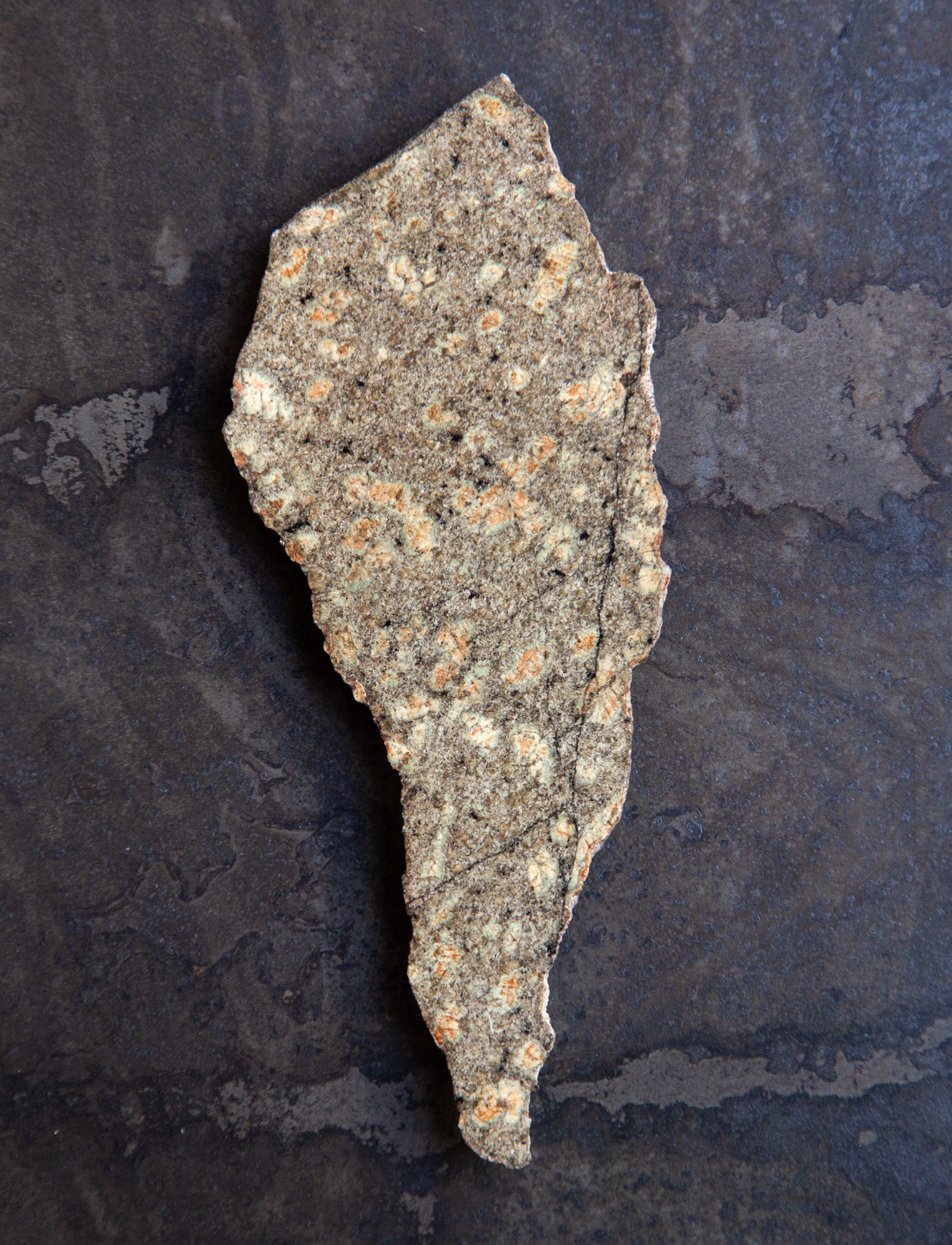
The Northeast Africa 146 meteorite, known as NEA 146, is an exceptionally fascinating addition to the rare and scientifically significant family of Martian meteorites. Discovered in Libya in 2025 and officially classified in September 2026, this remarkable specimen belongs to the lherzolitic shergottite group, a particularly intriguing variety of igneous rocks originating from the interior of Mars. Its mineralogical composition is dominated by approximately 50% clinopyroxene, 30% olivine and 15% maskelynite, accompanied by smaller quantities of chromite and ilmenite. These minerals create a striking natural aesthetic: polished surfaces reveal numerous orange-tinted pyroxene crystals, some several millimetres across, beautifully contrasting against a finer-grained green-grey matrix. Its distinctive poikilitic texture, in which larger pyroxene crystals enclose smaller olivine grains, offers a captivating glimpse into the complex geological processes that shaped the Martian interior. Two partially fusion-crusted stones were recovered together, preserving evidence of their extraordinary journey through space and Earth’s atmosphere.
With a documented combined mass of just 1,217 grams, NEA 146 represents a particularly interesting and limited addition to the world of Martian meteorite collecting. Its recovery in the Libyan desert adds another chapter to the extraordinary story of meteorites travelling from Mars to Earth, having originally been excavated from the Martian crust by an ancient impact before spending an immense period travelling through interplanetary space. Its classification as a lherzolitic shergottite makes it especially significant, as these meteorites provide scientists with direct physical evidence of the mineralogy, magmatic evolution and geological history of another planet. Unlike the familiar iron meteorites, NEA 146 offers a completely different expression of extraterrestrial beauty, with its warm orange crystals, subtle green-grey tones and intricate mineral textures. Combining genuine Martian provenance, a distinctive mineralogical composition and a documented recovery of relatively modest mass, NEA 146 is a compelling specimen — quite literally a fragment of another world, carrying within it a story that began billions of years before humanity ever looked towards the red planet.